


Heavy Gauge Copper Pot
A heavy gauge copper pot brings genuine utility and warmth to a kitchen, forged to handle daily work across generations.
Heavy Gauge Copper Pot
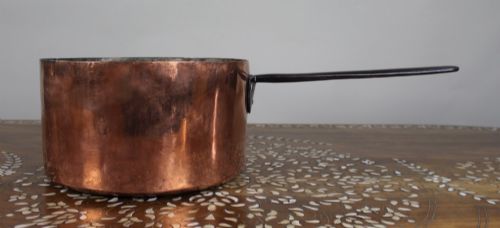
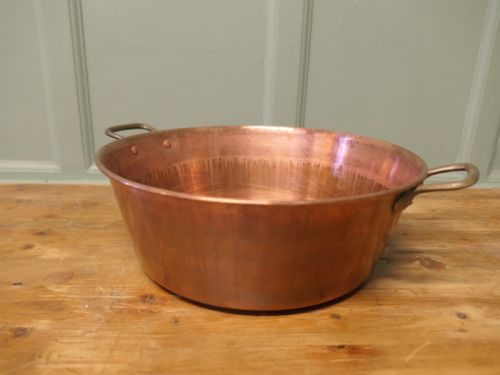
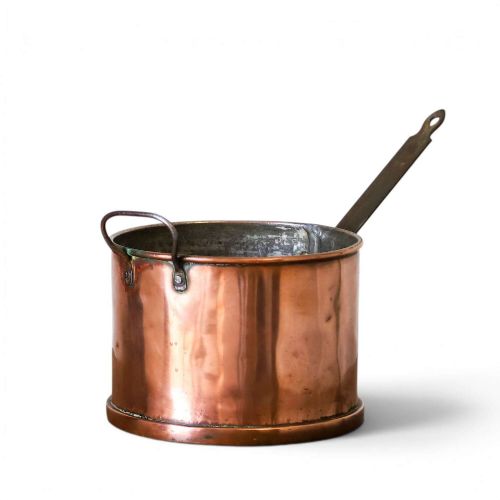
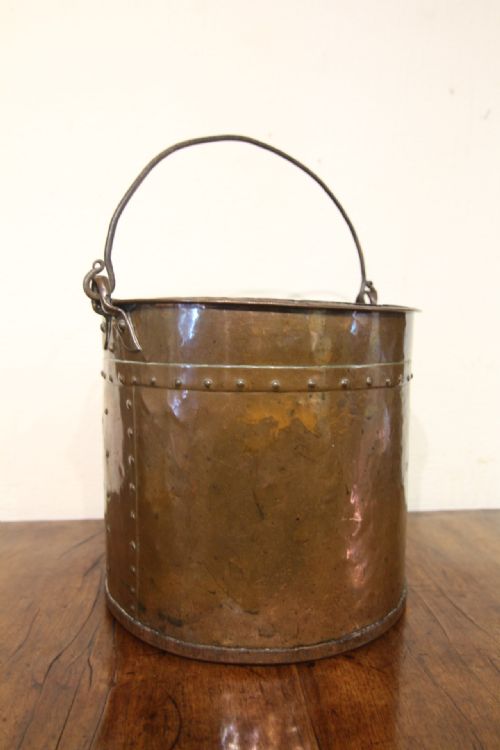
When you search for a heavy gauge copper pot, you are looking at robust metal vessels created for serious kitchen work or hearth use during the Georgian and Victorian eras. These items span functional cookware like preserve pans, jam pans, cream setting pans, and saucepans alongside hearth vessels such as buckets and cauldrons.
The versions you are most likely to meet on this page hail from the nineteenth century or the late eighteenth century, reflecting British and French country domestic traditions. They appear individually or in sets, often incorporating brass, iron, or wrought iron handles and fittings.
Forms vary from deep lidded saucepans to wide double-handled preserve pans designed for boiling down fruit or milk. Each piece bears the physical marks of utilitarian service, shaped by hand in rustic farmhouse and Victorian kitchen environments.
Materials and construction
These vessels are built from thick copper sheets, shaped by hand-beating and secured with durable copper rivets to withstand intense heat. The metal provides rapid, even heat distribution essential for preserving and cooking.
Handles and fittings utilise contrasting materials such as wrought iron, cast iron, and brass, attached firmly to bear the heavy weight of the contents. Some examples feature interior linings of tin, applied to prevent acidic foods from reacting directly with the copper.
Several pans show the honest dents and knuckle-knocks of nineteenth-century cooks who stirred too vigorously on busy mornings.
Assessing quality and substance
Quality rests in the thickness of the metal sheet and the integrity of the hand-beaten construction. A superior vessel maintains its structural rigidity under load, with tightly hammered seams and robustly pinned iron or brass handles.
The presence of maker marks, such as stamps by firms like Liptons, elevates a piece by recording its commercial origin. Better examples show careful attention to the formation of pouring lips, the fit of matching lids, and the balanced placement of dual handles.
Liptons
The Heavy Gauge Copper Pot Glossary
- Heavy gauge
- A term denoting thick metal sheet stock that resists denting and holds heat stably. It ensures the vessel can endure decades of rigorous hearth or stove use.
- Preserve pan
- A wide, open vessel designed for boiling fruit and sugar mixtures down to jams and jellies. The generous surface area encourages rapid evaporation.
- Hand-beaten
- A manufacturing method where artisans shape metal panels using hammer blows. This leaves subtle facets across the surface that distinguish manual work from machine rolling.
- Cream setting pan
- A wide, shallow container utilised in dairies to let cream rise to the top of fresh milk. Their broad profile maximises the surface exposure of the liquid.
- Cauldron
- A large round vessel with a swing handle intended for suspension over an open fire. They served as primary cooking pots in rustic farmhouse kitchens.
Heavy Gauge Copper Pot: Frequently Asked Questions
What were heavy gauge copper pots used for?
These vessels served demanding kitchen tasks requiring steady heat control, such as boiling large quantities of jam, simmering stews, or heating milk.
Their thick walls prevented scorching, making them invaluable for preserving fruit and preparing daily meals over open hearths or early stoves.
How do I date an antique copper pan?
Dating relies on observing construction details like hand-beating marks, the style of the iron or brass handles, and the method of riveting. Georgian and Victorian examples typically display heavier hand-forged elements compared to later factory-produced wares.
Reference to specific periods in the title or stamps from known historic retailers also helps anchor the timeline of manufacture.
Can I still cook with antique copper cookware?
Many of these pieces remain structurally sound for cooking, provided the interior tin lining is intact and clean. Copper reacts with acidic foods, so historic pans intended for culinary use often required a protective metal barrier.
If the lining is worn away, contemporary owners frequently choose to display them as decorative kitchenware or planters.
How do I clean and care for old copper?
Maintenance involves washing with mild soap and warm water, followed by thorough drying to prevent water spots. Traditional metal polishes can restore the bright finish if a shiny appearance is desired.
Many collectors prefer to leave a natural aged patina, which highlights the historic character and hand-beaten texture of the metal.