
Hearth Fire Screen
These hearth fire screen pieces protect rooms from sudden sparks while framing the warmth of the fireplace.
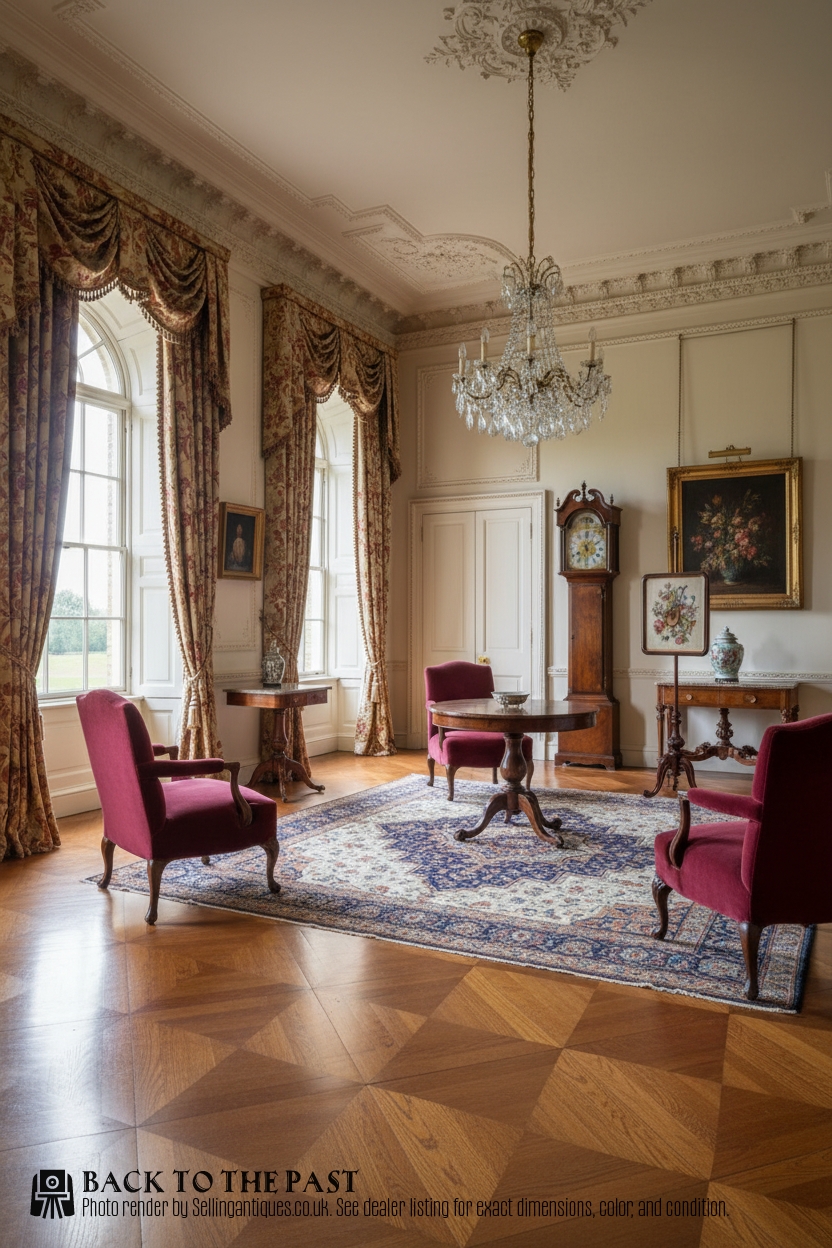
Hearth Fire Screen
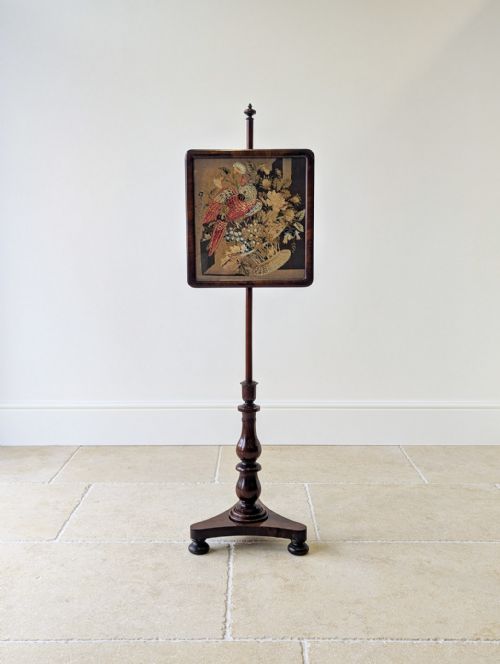
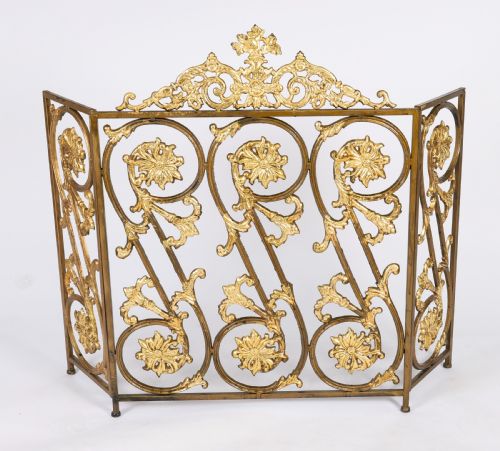
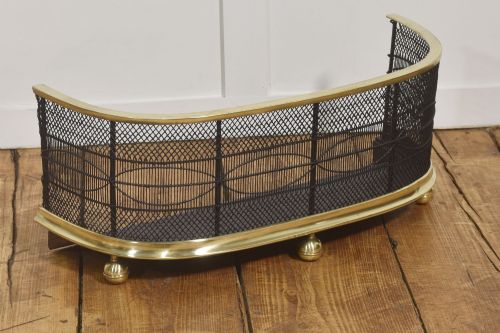
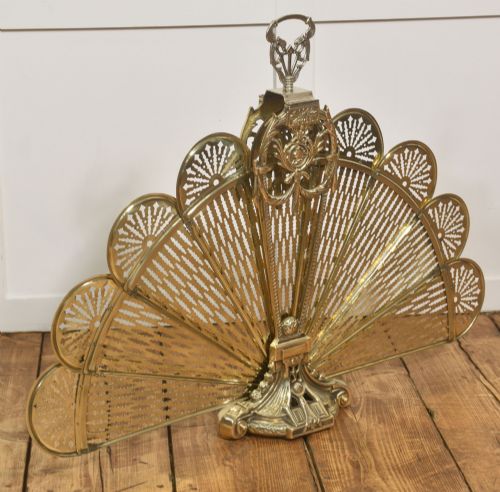
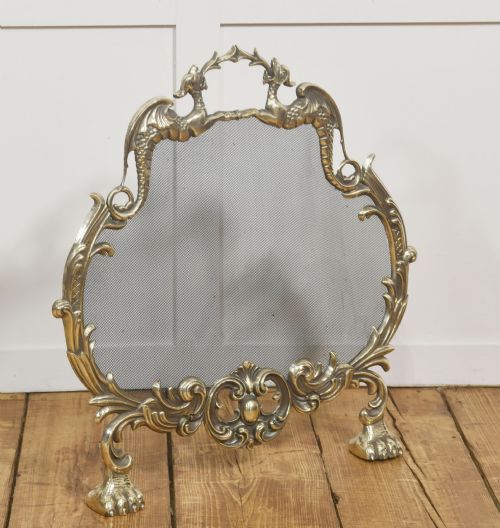
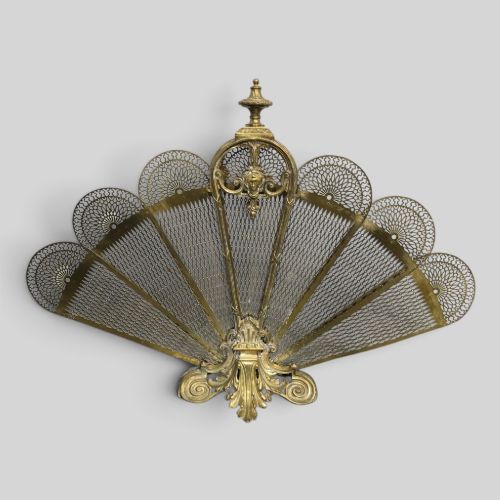
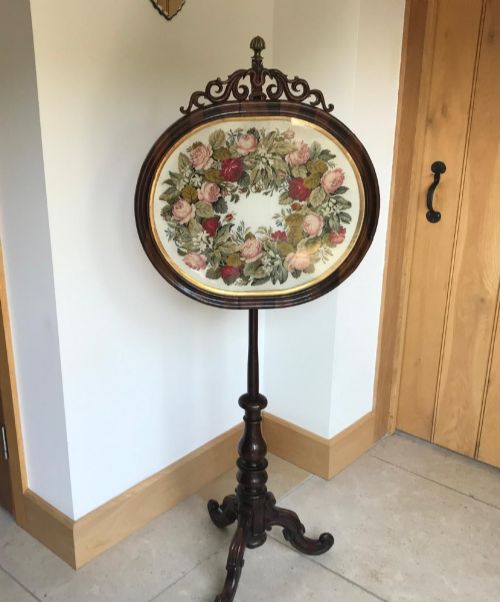
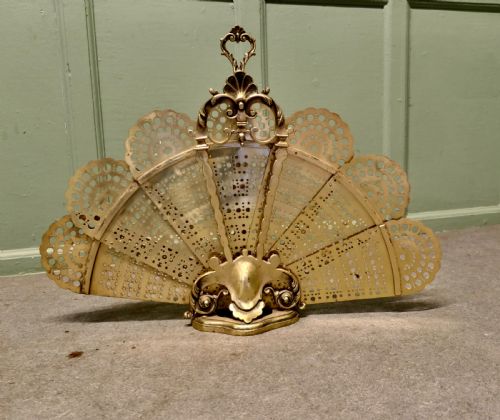
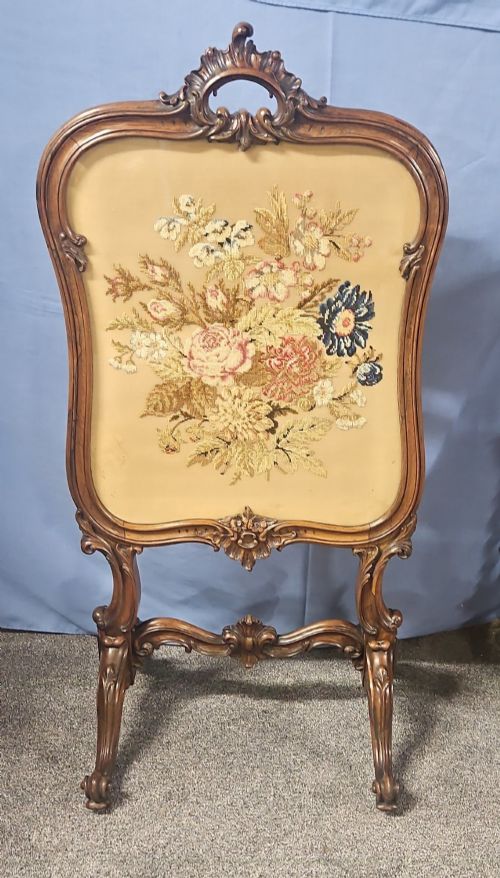
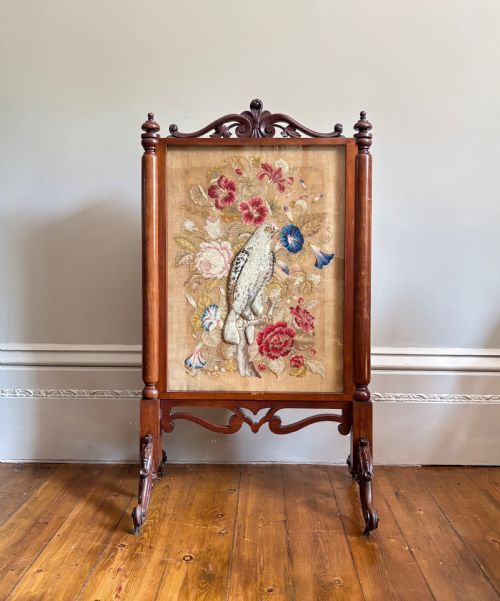
A hearth fire screen stands before an open hearth to catch stray embers and temper radiating heat. The items found here include folding brass fans, upright needlework panels in rosewood or mahogany frames, and sturdy iron guards.
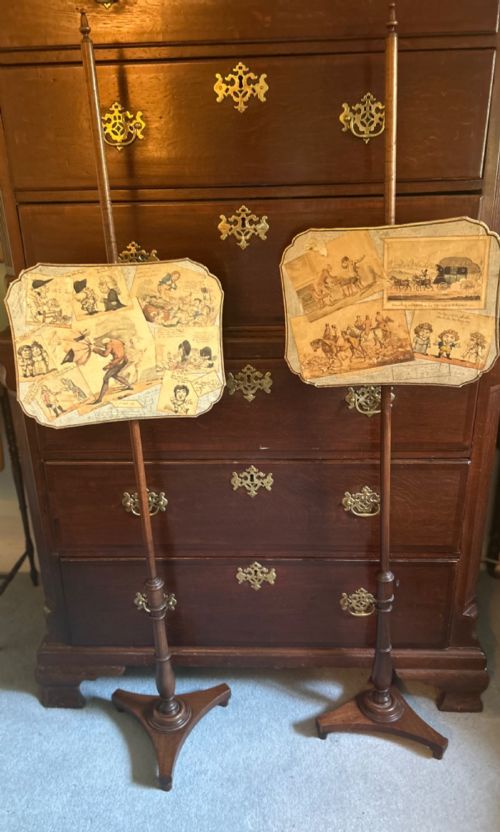
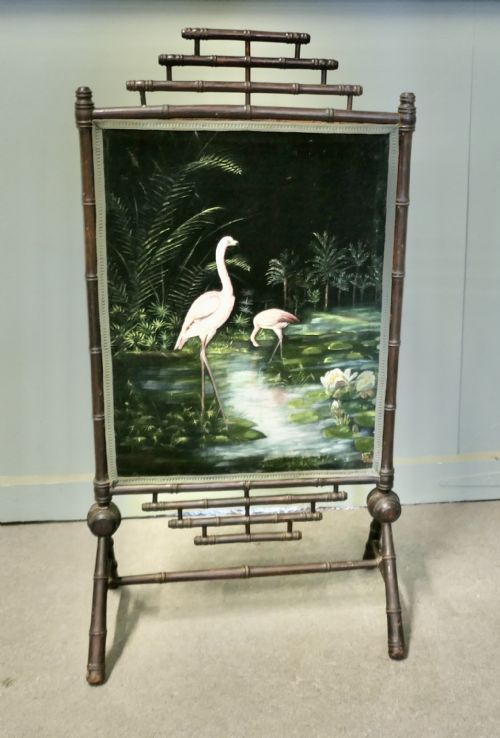
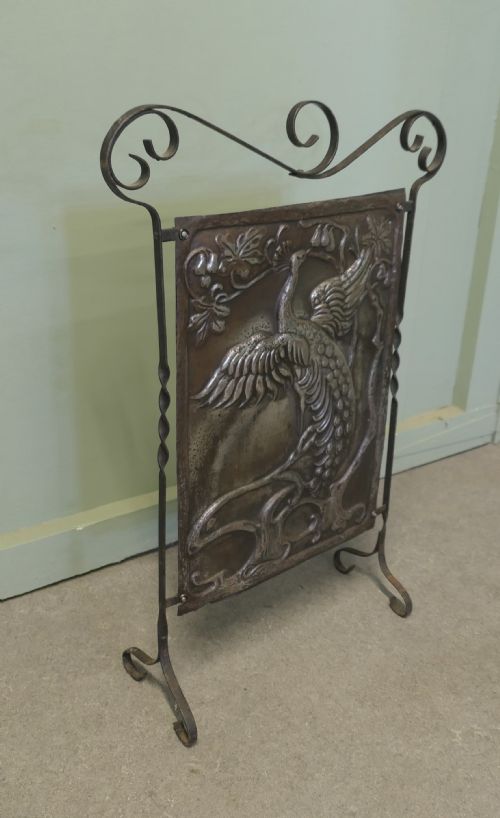
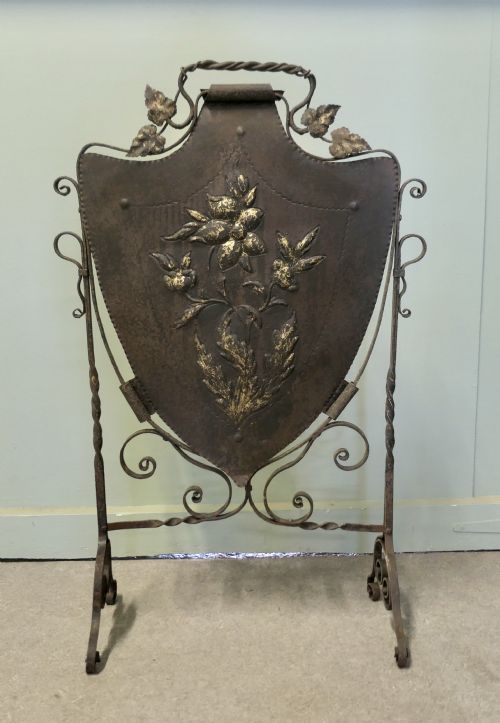
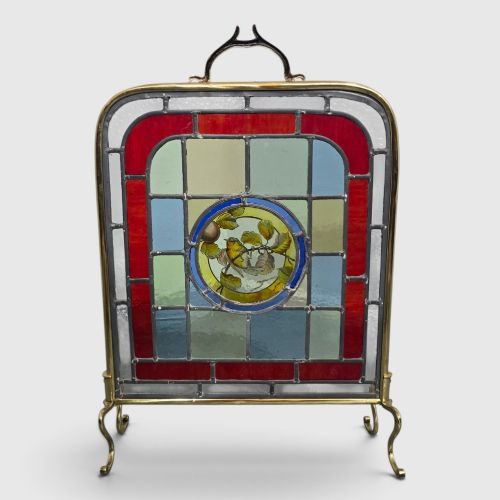
Victorian examples dominate the selection, spanning ornate French revival brass, polished iron Arts and Crafts pieces, and wooden pole screens. Earlier Georgian designs appear alongside later variants featuring wire mesh, stained glass, and painted canvas.
The assortment ranges from simple wirework guards to elaborate gilt bronze frames decorated with musical trophies, classical motifs, and folding sections.
Materials and construction
Makers utilised cast and sheet brass, wrought iron, copper, and gilt bronze alongside timbers such as mahogany, walnut, and rosewood. Metal frames often received pierced, embossed, or chased ornamentation.
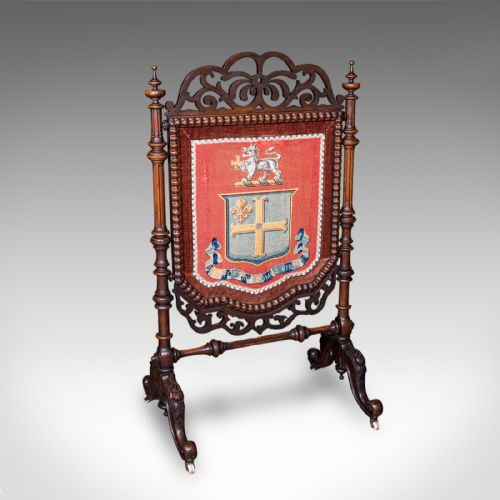
Insets involve diverse textiles including Berlin work, needlepoint, embroidered armorial panels, wool, canvas, and wire mesh. Folding mechanisms utilise hinged brass sections, particularly in the popular peacock fan designs.
Materials recorded across the inventory include wrought iron, mahogany, rosewood, stained glass, wire mesh, and gilt bronze.
Evaluating quality
Quality rests in the crispness of the casting, the weight of the metal, and the precision of the joinery in wooden frames. Hand-chased bronze details and finely worked needlepoint panels separate finer parlour pieces from utilitarian wire guards.
The structural integrity of the folding hinges and the stability of the base determine daily utility. Superior examples maintain balance without wobble, holding intricate mesh or pivoting brass blades securely.
The Hearth Fire Screen Glossary
- Pole screen
- A vertical panel mounted on a slender wooden pole that slides up and down to shield a seated person's face from the direct heat of the fire.
- Berlin work
- A type of needlepoint embroidery popular in the nineteenth century, worked in coloured wools on canvas using printed grid patterns.
- Cheval screen
- A tall screen supported by two stable side feet, allowing the central frame to swing or stand firmly on the hearth.
- Ormolu
- Gilt bronze ornamentation applied to furniture and decorative metalwork, cast and finished by hand to produce a rich metallic lustre.
- Repoussé
- A metalworking technique where the artisan hammers the design from the reverse side to form raised patterns on the front.
Hearth Fire Screen: Frequently Asked Questions
What is a hearth fire screen used for?
These screens serve primarily to block stray sparks and embers from leaping out of an open fireplace onto carpets or floorboards. They also moderate the intense radiant heat of a blazing coal or wood fire.
Beyond safety, period examples act as decorative focal points for the hearth during warmer months when the fireplace sits unlit.
How do I date a brass fire screen?
Dating relies heavily on the prevailing stylistic revival of the period, such as French Rococo, Empire, or Arts and Crafts motifs. Nineteenth-century pieces often feature heavier cast brass components and hand-finished chasing.
Later twentieth-century iterations tend toward lighter gauge wirework and simpler folding mechanisms without the deep relief work found on earlier Victorian examples.
Can I use an antique screen with a modern fire?
Many antique wire mesh, iron, and brass screens remain structurally sound enough for regular use in front of open hearths. One must check that the frame stands steadily and that mesh panels have no weak spots.
Fragile textile panels or delicate gilt surfaces benefit from placement before unlit fireplaces to prevent smoke and soot damage.