

Hardwood Occasional Table
A hardwood occasional table offers a compact surface infused with international craft, bringing versatile function and rich timber grain to any room.
Hardwood Occasional Table
When you examine a hardwood occasional table, you encounter portable accent furniture designed for specific domestic tasks such as holding lamps, displaying plants, or serving tea. The selection spans compact side pieces, tiered nesting sets, and low coffee tables produced across diverse regions.
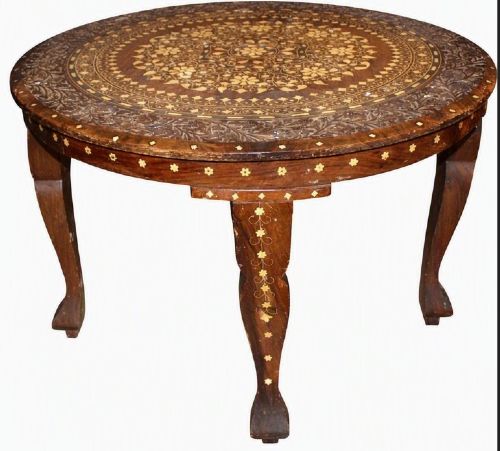
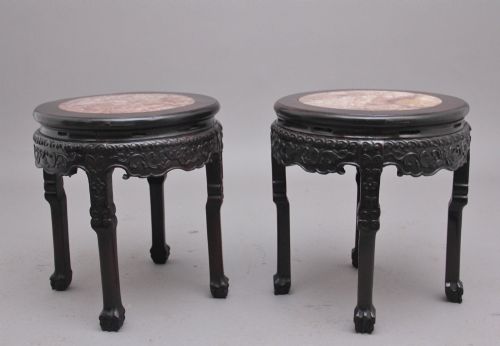
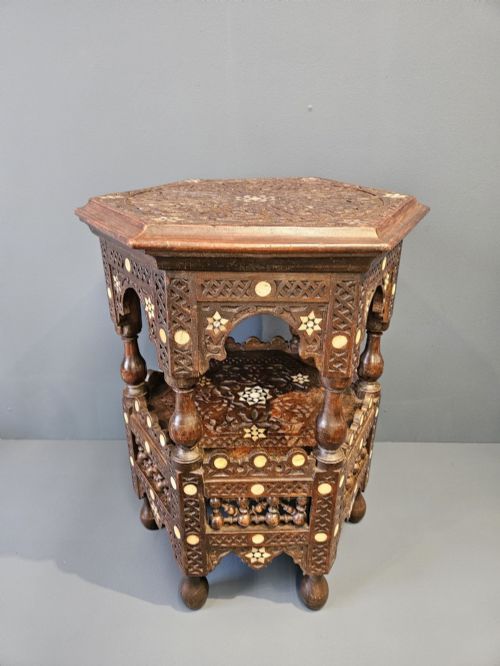
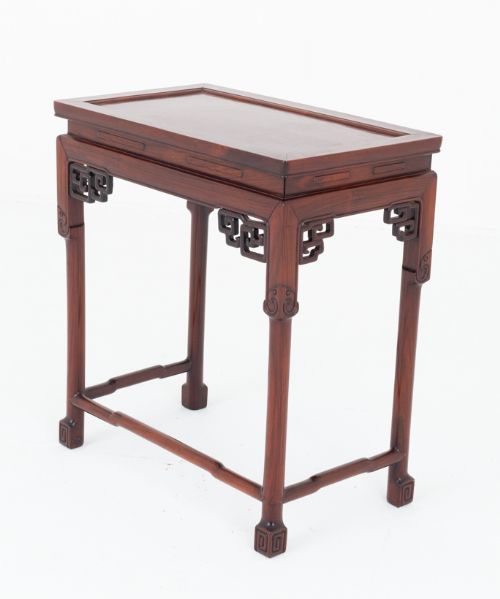
The most common examples on this page hail from nineteenth and early twentieth-century workshops in China, India, and Britain. These pieces encompass intricate regional carving, folding camp stands, and inlaid surfaces that reflect global trade and aesthetic exchanges of the period.
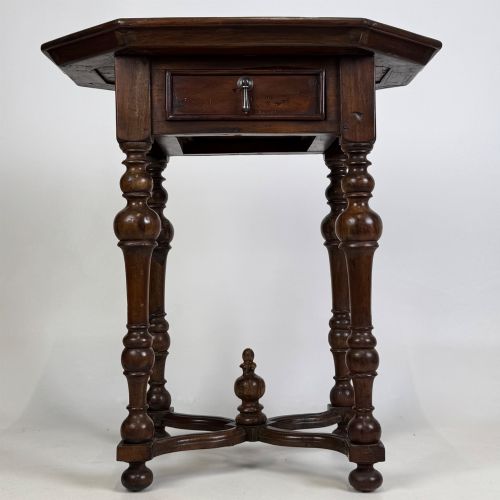
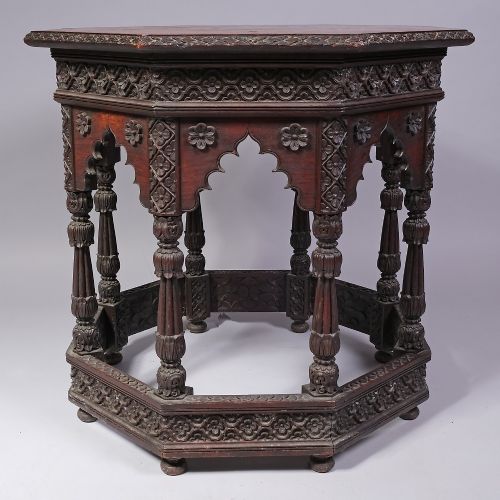
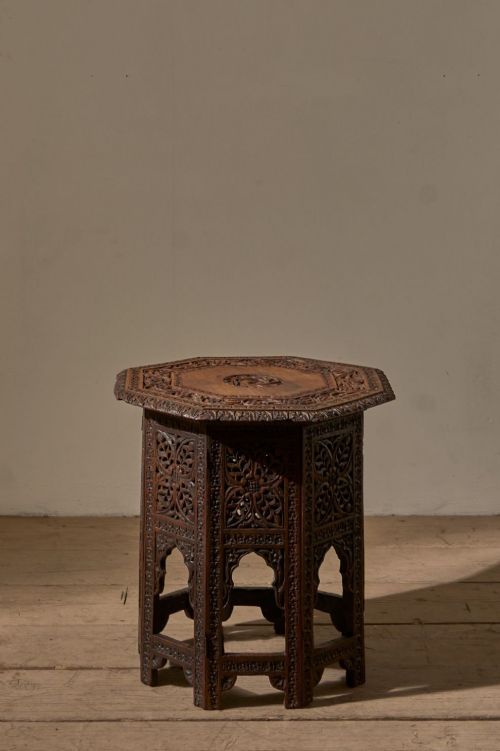
Makers utilised dense timbers to create everything from octagonal lamp stands to nesting groups intended to slide neatly out of sight. Such variety ensures a format exists for almost any spatial requirement without overwhelming a contemporary interior.
Materials and Technique
Craftsmen built these tables using dense tropical and domestic timbers such as rosewood, teak, padauk, amboyna, and huanghuali, which provided the structural stability required for deep relief carving. These foundational woods frequently display varied grain patterns and rich natural tones enhanced by simple polishing.
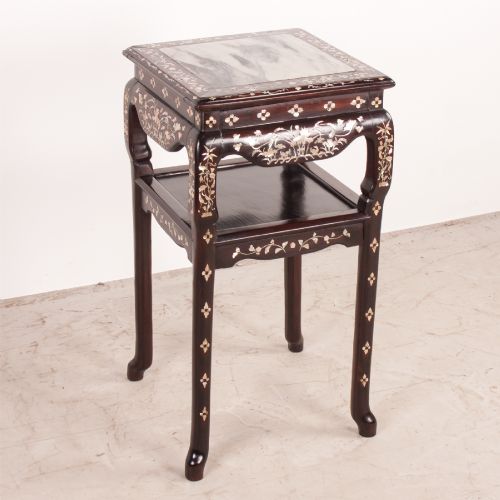
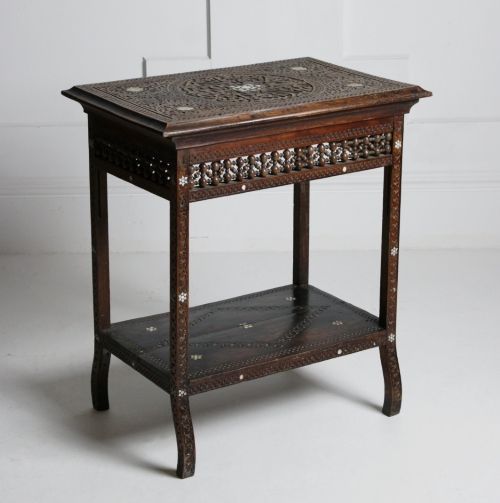
Makers embellished many surfaces by recessing contrasting materials into the timber channels, including bone, mother of pearl, brass, ivory, copper, and boxwood. Such inlay work required precise hand-cutting to create intricate floral, geometric, or figurative motifs flush with the table top.
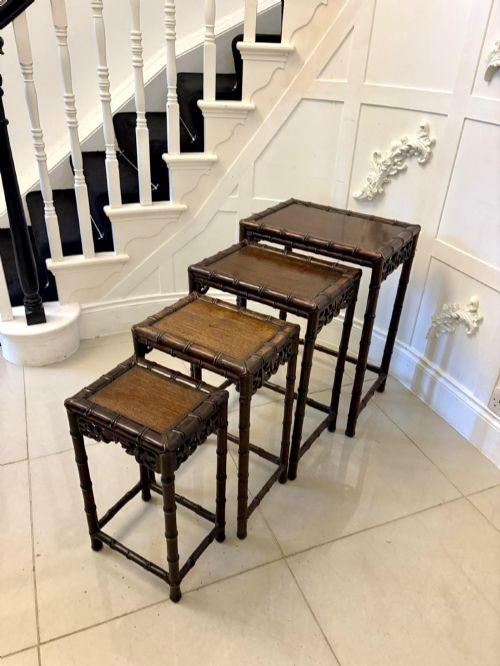
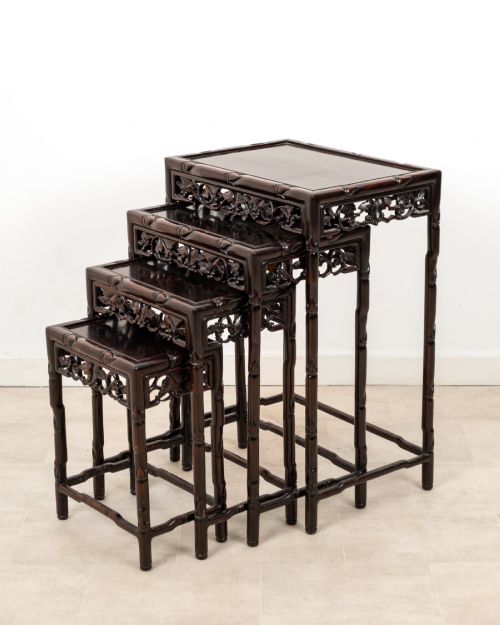
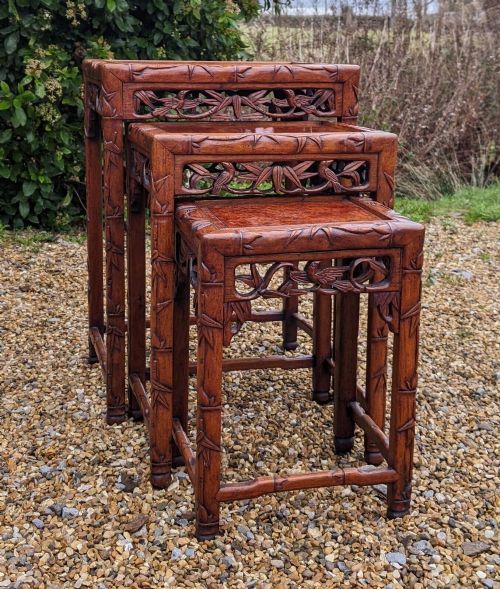
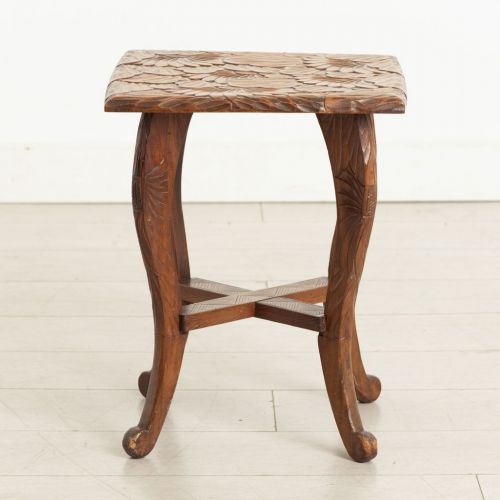
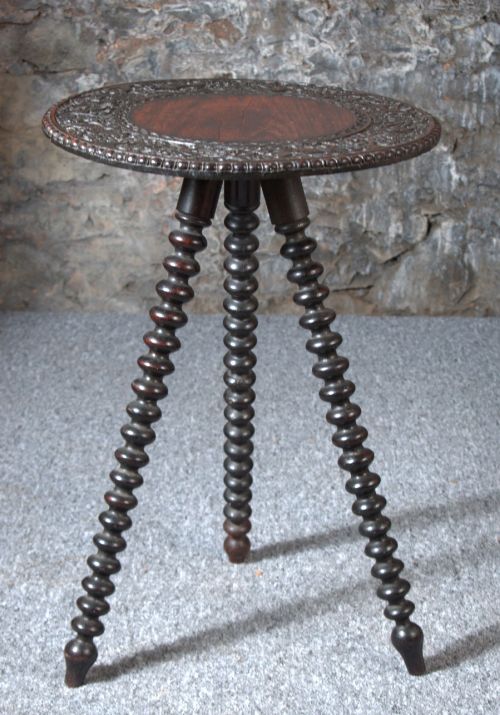
Structural methods balanced portability with durability, employing folding X-frames, interlocking joints for nesting quartetto sets, and multi-tiered framing secured without modern adhesives. Turnings, fretwork aprons, and applied bamboo-effect mouldings further demonstrated joinery skills.
Several tables lean into whimsical domestic tastes by incorporating carved elephant heads and trunks directly into their structural supports.
Evaluating Quality
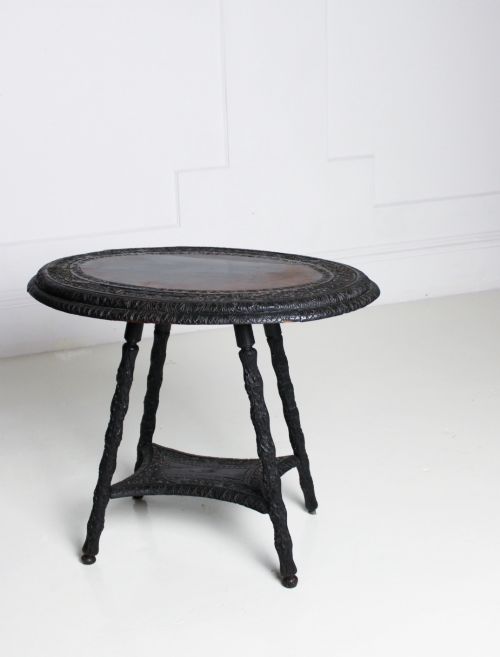
The standard of a hardwood occasional table rests primarily on the depth and crispness of its hand carving, where superior examples exhibit sharp undercutting and clear anatomical or botanical detail. Lesser pieces display shallow, mechanical incision with rounded edges that obscure the design.
Material selection and inlay precision distinguish exceptional pieces from standard workshop output. Finely figured timber grains matched across panels and securely seated, flush bone or mother-of-pearl inlays indicate superior benchwork, whereas gaps and loose elements suggest hurried construction.
Liberty & Co·Liberty of London·Gabriel Viardot
The Hardwood Occasional Table Glossary
- Hongmu
- A traditional Chinese term denoting dense, dark hardwoods used for fine furniture and decorative objects. These heavy timbers take a high natural polish.
- Quartetto
- A matched set of four graduating occasional tables designed to slide beneath one another. This clever nesting arrangement maximises floor space.
- Jardiniere
- A decorative stand or container intended to hold a potted plant or floral display. These elevated surfaces often feature inset marble tops to resist moisture damage.
- Japonisme
- A late nineteenth-century Western artistic movement inspired by Japanese art and design. Makers incorporated asymmetrical motifs and bamboo-turned structures into their pieces.
Hardwood Occasional Table: Frequently Asked Questions
What is an occasional table?
An occasional table is a small, moveable piece of furniture intended for intermittent use rather than a permanent central role. These versatile surfaces typically support lamps, books, or drinks beside seating areas.
Historically, makers produced them in numerous compact forms, including folding stands, plant pedestals, and nesting sets. Their portability allowed Victorian and Edwardian households to reposition them according to daily domestic needs.
Where should I place a nest of tables?
A nest of tables works best beside a sofa or armchair where surface area is needed intermittently. The graduating design allows you to separate the tables to serve guests during gatherings.
When not in use, the smaller pieces slide neatly beneath the largest top to conserve floor space. Their compact footprint makes them ideal for smaller rooms or tight corners.
How do I care for antique hardwood?
Maintain antique hardwood by keeping it away from direct sunlight and strong heat sources that can dry out the timber. Dust the surface regularly with a dry, soft cloth to prevent abrasive particle build-up.
Avoid silicone-based polishes and excessive moisture, applying a quality natural wax sparingly only when the wood appears dull. Gentle handling preserves the original polish and delicate inlay work over time.