



Liberty Carved Side Table
When you handle a liberty carved side table, you touch the exact moment London embraced global craft through daring retail.
Liberty Carved Side Table
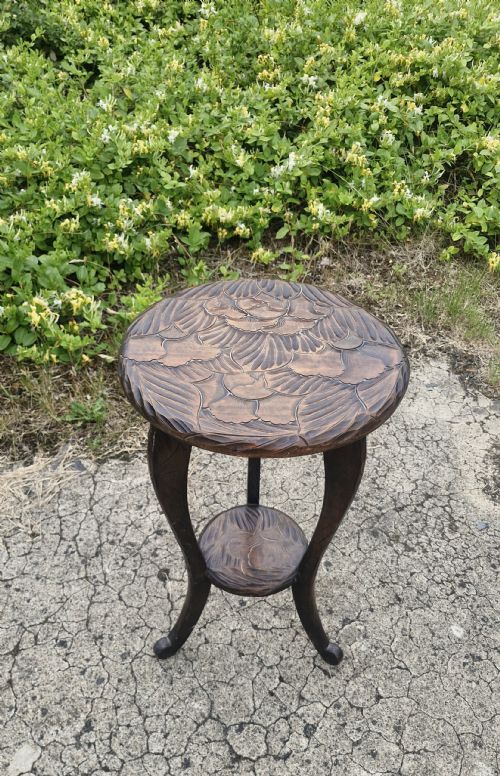
A liberty carved side table bridges domestic utility and adventurous design from the late nineteenth and early twentieth centuries. These pieces function as occasional tables, plant stands, and lamp tables, designed to occupy corners and hallways with distinct visual weight.
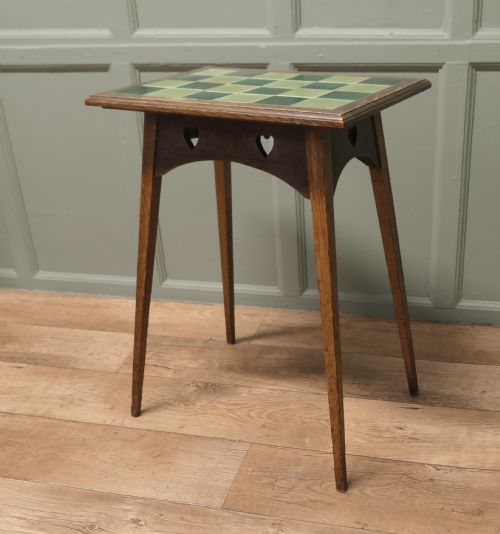
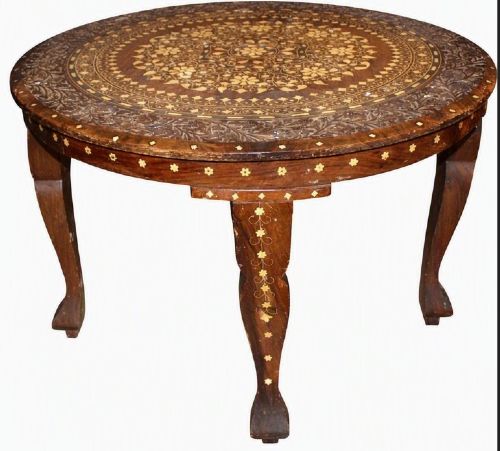
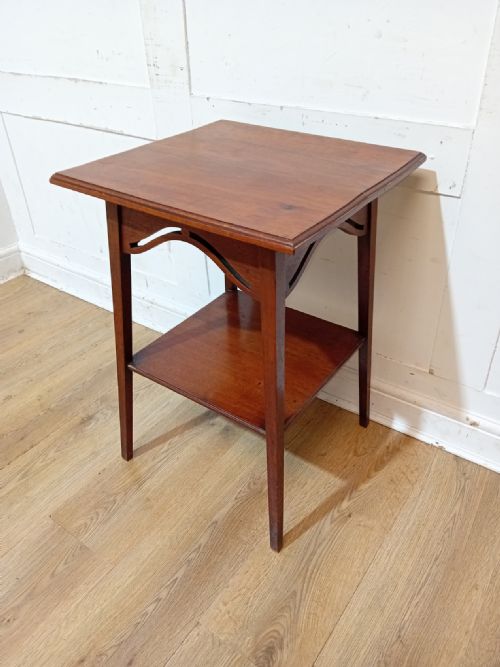
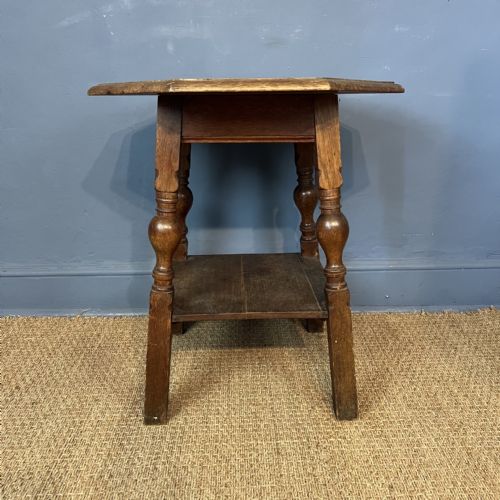
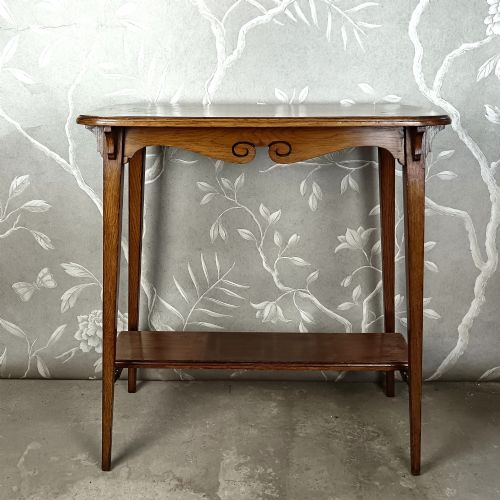
The most common examples on this page reflect the Japanese and Moorish influences championed by the London firm, alongside sturdy Arts and Crafts oak designs. They range from compact two-tier stands to octagonal shapes suited for displaying ceramics or small lamps.
Makers and retailers during this era drew on Anglo-Japanese, Chinoiserie, and Anglo-Indian styles to satisfy a public hungry for foreign motifs translated into British furniture forms. You will find pieces stamped directly by the firm as well as those attributed through stylistic markers and construction.
Evaluating the craftsmanship
Quality rests in the crispness of the hand carving and the precision with which inlay materials sit flush within the surrounding wood. Finer examples show no gaps around bone or mother-of-pearl insertions, and the joints remain tight without excessive glue.
The choice of secondary timbers and the depth of the relief work separate standard production from superior workshop output. Tables featuring stamped maker marks or integrated ceramic tiles often demonstrate a higher grade of design ambition.
Listings feature oak, walnut, and ebonised wood alongside exotic materials like bone and mother-of-pearl.
Liberty and Co
The Liberty Carved Side Table Glossary
- Occasional table
- A small, movable table designed for a specific, transient use in a sitting room or hallway. These pieces can be easily shifted to hold drinks, books, or decorative objects.
- Ebonised wood
- Timber treated with a chemical stain or black finish to imitate expensive ebony. This technique was popular in nineteenth-century Japanese revival furniture.
- Moorish style
- A design aesthetic incorporating geometric lattice patterns, heavily carved surfaces, and intricate mother-of-pearl or bone inlay. It reflects North African and Middle Eastern influences adapted for British interiors.
- Anglo-Japanese
- A hybrid style combining British furniture construction with Japanese decorative motifs and construction methods. It emerged strongly during the Aesthetic Movement.
- Fretwork
- Ornamental design created by cutting intricate patterns through thin boards of wood using a fretsaw. It appears frequently on the aprons and lower tiers of Arts and Crafts tables.
Liberty Carved Side Table: Frequently Asked Questions
How do I spot a genuine Liberty table?
Look for trade stamps, paper labels, or recognizable stylistic traits such as specific Japanese floral carving or Moorish geometric inlays. Many pieces lack a direct stamp but match documented retail catalogues from the period.
Examine the construction methods and wood selection alongside the design vocabulary. Attribution relies on comparing known marked pieces with unmarked examples sharing identical proportions and decorative motifs.
Where were these tables placed originally?
Victorian and Edwardian households positioned these small tables in drawing rooms, smoking rooms, and entrance halls. They held calling card trays, small lamps, or potted ferns.
Because they were lightweight and portable, owners moved them around rooms as needed for entertaining or displaying decorative items. Today they serve similar functions as accent furniture in compact spaces.
How do I care for inlaid wood?
Protect bone and mother-of-pearl inlay by maintaining stable humidity levels in the room and avoiding direct sunlight. Sudden temperature shifts can cause the wood to expand and loosen the small inset pieces.
Apply a gentle microcrystalline wax periodically to nourish the hardwood and clean dust from the carved recesses. Avoid liquid polishes that can seep under loose inlays and damage the adhesive.
What is the difference between Arts and Crafts and Moorish styles?
Arts and Crafts pieces emphasise visible construction, sturdy oak, and honest handcrafting with simple, functional lines. They celebrate the natural grain of the wood and modest geometric forms.
Moorish styles focus on exotic ornamentation, featuring dense geometric carvings, multi-sided tops, and contrasting bone or mother-of-pearl inlay. They prioritize visual richness over structural simplicity.