
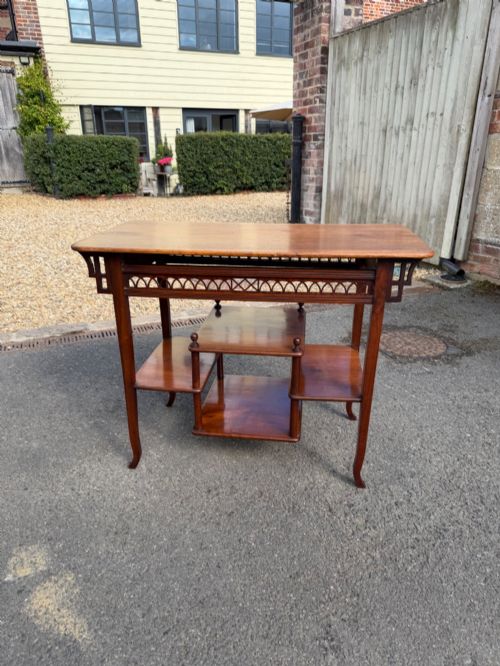
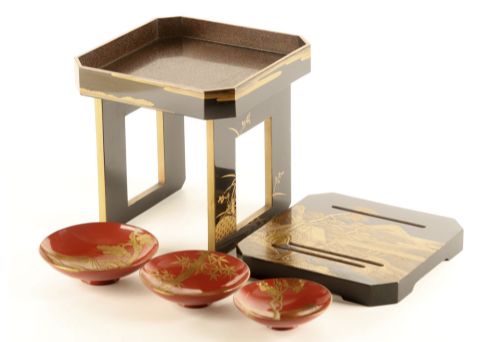
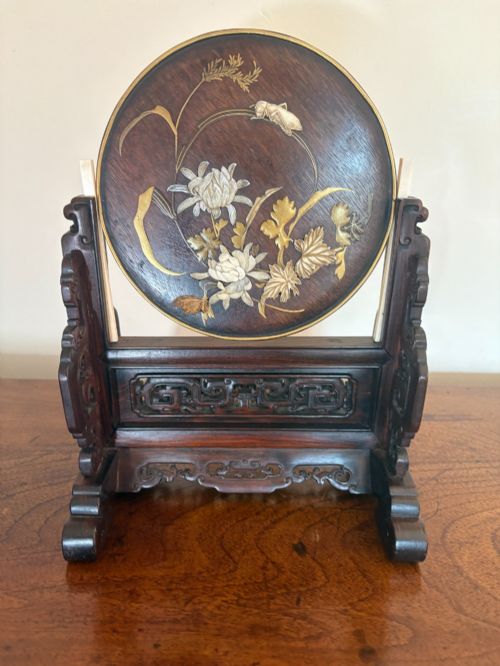
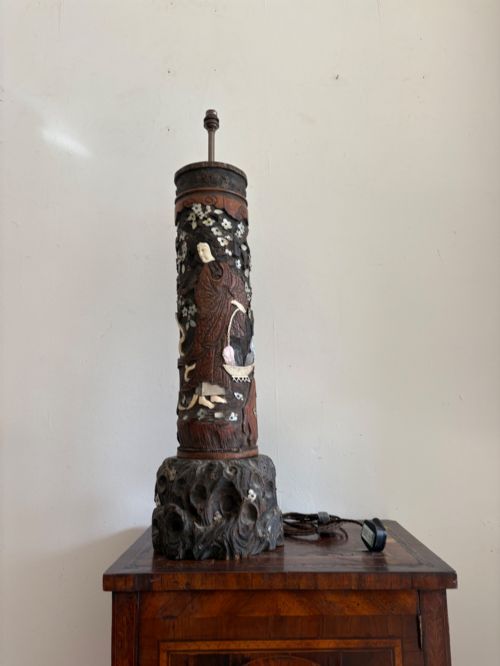

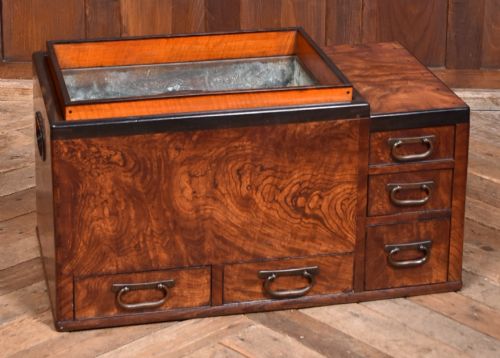


Japanese Carved Table
A Japanese carved table brings dense floral relief and solid hardwood into a room, rooted in Meiji period craftsmanship and European retail taste.
Japanese Carved Table
When you search for a japanese carved table, you encounter compact side tables, plant stands, and occasional tables produced during the late nineteenth and early twentieth centuries. Many examples show direct connections to English retailers like Liberty of London, blending traditional Eastern carving motifs with Western domestic furniture forms.
The selection ranges from tripod lamp tables and folding occasional pieces to multi-tiered stands featuring deep relief work. Hardwood and ebonised timber dominate the forms, often accompanied by marble tops or detailed root wood elements.
How they were made
Maker workshops utilised dense hardwoods, root wood, and ebonised timber as the structural foundation for deep chisel work. Artisans carved complex floral patterns, dragons, and lily pads directly into the solid material, frequently combining the wood with bronze fittings, mother of pearl inlay, or lacquered surfaces.
Construction techniques balanced traditional Japanese joinery with the demands of European interior decoration. Frames were built to support functional domestic use, such as holding heavy porcelain jardinières or bronze lamps, while maintaining intricate surface decoration.
The listings show a strong presence of Liberty and Co retail pieces alongside nineteenth-century hardwood plant stands and bronze-mounted items.
What varies in quality
The depth and definition of the wood carving separate standard production items from superior examples. Sharp, undercut relief work demonstrates greater artisan skill than shallow, machine-smoothed stamping.
Material selection also dictates the tier of the piece, with dense native hardwoods and uncompromised root wood construction holding higher status than softer substitute timbers. The integration of specialty details like bone inlay, marble inserts, or original bronze elements elevates the overall execution.
Liberty of London·Blyth and Son·Gabriel Viardot
The Japanese Carved Table Glossary
- Meiji Period
- The era in Japanese history running from 1868 to 1912, characterised by the opening of trade with the West and a surge in decorative arts exported to Europe.
- Japonisme
- A late nineteenth-century European artistic movement that embraced Japanese aesthetic principles, subject matter, and design motifs in decorative items.
- Ebonised Wood
- Timber treated with a dark chemical stain or finish to simulate the heavy, black appearance of genuine ebony wood.
- Root Wood
- Natural tree root material selected for its twisted, gnarled growth patterns and fashioned into rustic furniture supports or lamp bases.
- Chinoiserie
- A European decorative style reflecting Chinese and broader East Asian artistic influences, often applied through lacquer work and raised relief.
Japanese Carved Table: Frequently Asked Questions
Where did these carved tables originate?
The pieces stem from late nineteenth and early twentieth-century workshops in Japan, created specifically for export to Western markets. Many were imported directly by London retailers who catered to the growing European appetite for Eastern design.
Design influences crossed between traditional Japanese iconography and the aesthetic preferences of Victorian and Edwardian British homes.
How do I style a Japanese carved table at home?
These compact pieces function well as side tables beside low seating, or as dedicated stands for table lamps and ceramic plant pots. Their dark hardwoods and detailed relief work contrast effectively against neutral walls and modern interiors.
Paring down surrounding objects allows the dense wood carving and natural grain to remain the focal point of the room.
What wood types were used?
Carpenters primarily selected dense hardwoods, ebonised timber, and native root wood to withstand intricate chisel work. These heavy materials provided the necessary structural integrity for deeply recessed floral and animal motifs.
Additional substances like bronze, marble, and lacquer frequently complemented the primary wooden frames.
Are these tables sturdy enough for daily use?
Solid hardwood construction and traditional joinery make these pieces durable for holding lamps, books, or small decorative objects. Tripod and folding variants offer practical stability while maintaining a compact footprint.
Careful placement away from direct heat sources helps preserve the stability of the timber and any applied lacquer finishes.