




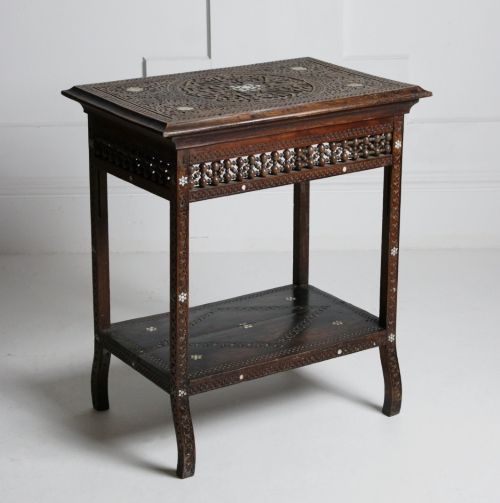
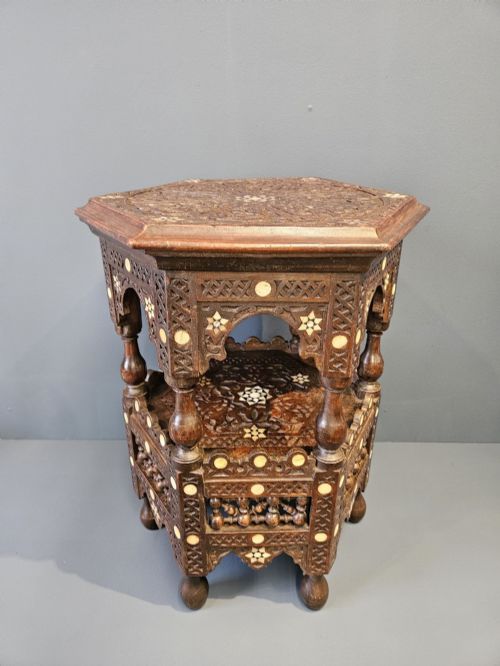


Hardwood Inlaid Side Table
A hardwood inlaid side table brings global craft into a room, offering surface space inlaid with bone, mother-of-pearl, or brass.
Hardwood Inlaid Side Table
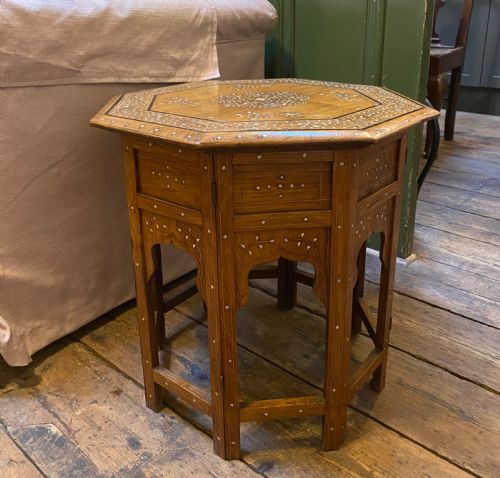
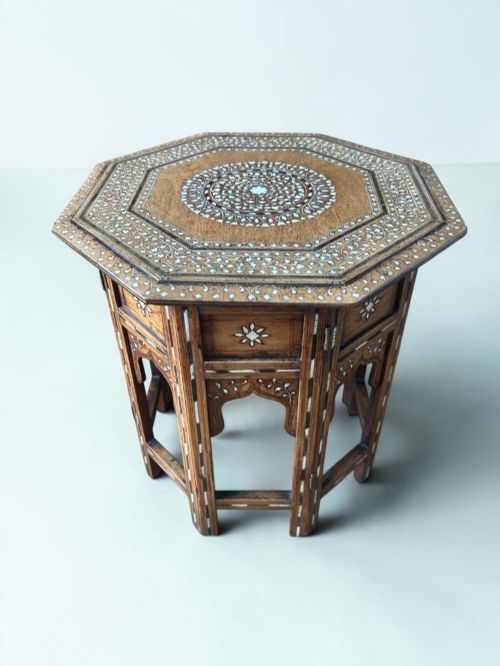
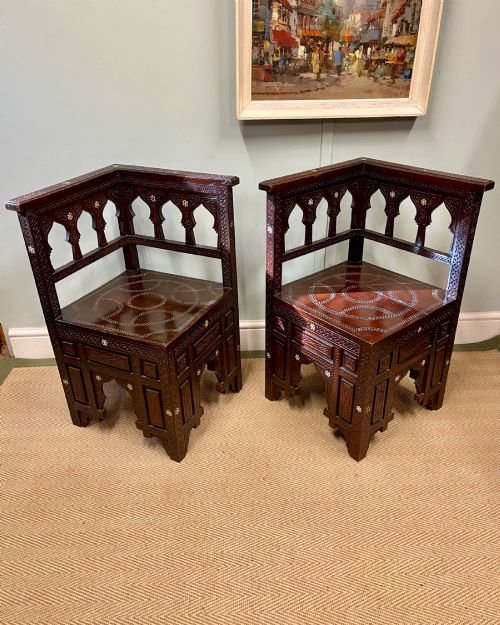
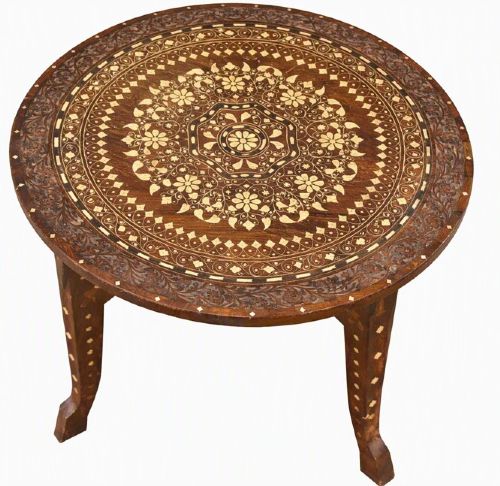
A hardwood inlaid side table brings global craft into a room, taking forms such as octagonal occasional tables, square occasional tables, corner tables, lamp tables, plant stands, and drum-shaped barrel tables. These pieces arrive from diverse origins including Anglo-Indian workshops, Chinese export production, Moorish revival studios, Syrian makers, and North African workshops.
The materials span dense hardwoods paired with contrasting inlay work in bone, mother-of-pearl, brass, and marble. Dating stretches from the early 19th century through the Victorian era into the early 20th century, encompassing Sheraton revival interpretations and Qing Dynasty pieces.
Buyers meet varied configurations on this page, from folding octagonal tables and multi-tiered occasional stands to carved elephant forms and sturdy centre tables. Each piece serves as a functional surface while displaying distinct regional ornamentation and timber selection.
Materials and construction methods
Makers utilised dense Asian and African hardwoods as the primary structural body, often selecting rosewood or hongmu for their weight and deep colour. Surfaces were then hand-carved with intricate motifs before receiving detailed recess work.
Artisans set contrasting materials into the timber channels by hand, securing delicate pieces of bone, mother-of-pearl, brass wire, and sheet brass into the carved grooves. Some regional workshops also incorporated marble inserts or utilised multi-tiered joinery for stability.
Hardwood Inlaid Side Table Retail Price Guide 2026
Typical asking prices for hardwood inlaid side table among the pieces listed under this phrase on Sellingantiques today, from the lower quarter to the upper quarter. They describe what is for sale here now, not the wider market.
Listings feature 19th-century, Victorian, and early 20th-century periods, utilising hardwood, bone, mother-of-pearl, brass, and marble across diverse global styles.
Distinctions in quality
The mastery of the carving and the precision of the inlay determine the standing of each piece, distinguishing simple export wares from exceptional studio output. Dense, even timber and deep, crisp relief carving indicate higher grade workmanship.
The completeness and tight fit of the bone, brass, or mother-of-pearl elements separate finer examples from those with losses or loose sections. Proportion, structural integrity, and the complexity of the geometric or floral patterns further elevate the status of an individual table.
Liberty & Co
The Hardwood Inlaid Side Table Glossary
- Hongmu
- A dense, dark Chinese hardwood frequently utilised for traditional furniture and fine decorative objects. It provides a heavy, durable substrate for intricate carving.
- Anglo-Indian
- A style describing furniture made in India during the British period, often combining local carving traditions with European furniture forms.
- Moorish Revival
- An architectural and decorative style popular in the nineteenth century that incorporated Islamic and North African design motifs into Western interiors.
- Occasional table
- A small, movable table designed for specific, intermittent use rather than permanent placement in a room scheme.
- Inlay
- A decorative technique where materials such as bone, brass, or shell are embedded into the surface of a contrasting base material to create patterns.
Hardwood Inlaid Side Table: Frequently Asked Questions
What is an octagonal table used for?
An octagonal table functions as a versatile surface for lamps, books, or decorative items within a living space or hallway. Their distinct shape makes them particularly useful beside seating where square corners might interrupt flow.
Many examples feature folding bases or multi-tiered designs, allowing them to adapt easily to different room layouts and spatial requirements.
How do I care for bone inlay?
Bone inlay requires gentle dusting with a soft, dry cloth to prevent debris settling into the recessed channels. Avoid harsh chemical cleaners and excessive moisture, which can weaken the adhesive holding the inlay.
Maintaining stable room humidity protects the dense hardwood from expanding or contracting, which helps keep the delicate bone and brass segments secure within their grooves.
Where were Syrian tables made?
Syrian tables originate from workshops in the Levant, known for intricate geometric woodwork and multi-material ornamentation. These pieces frequently incorporate detailed bone and metal inlay across surfaces.
They reached Western markets through nineteenth-century trade routes and international exhibitions, appealing to collectors seeking exotic furnishings for domestic interiors.