


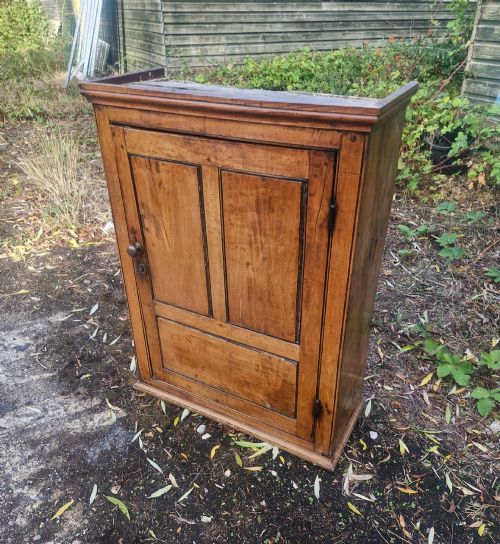
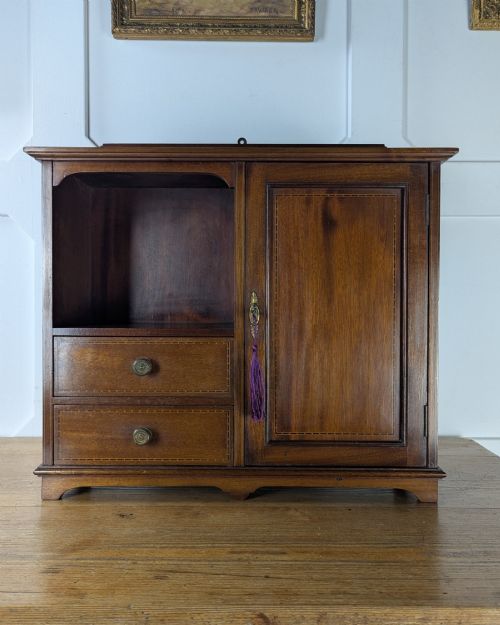
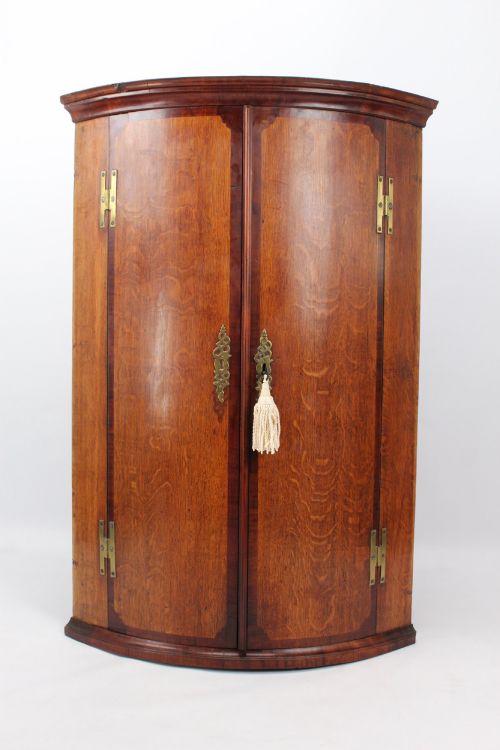
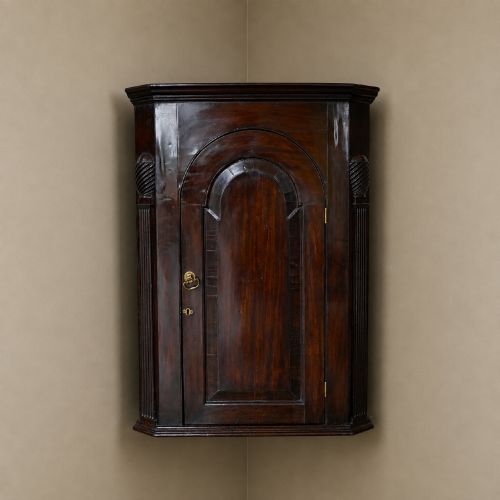
Hanging Wooden Cabinet
A hanging wooden cabinet brings practical storage off the floor, offering compact Georgian and Victorian wall-mounted cupboards that suit smaller rooms.
Hanging Wooden Cabinet
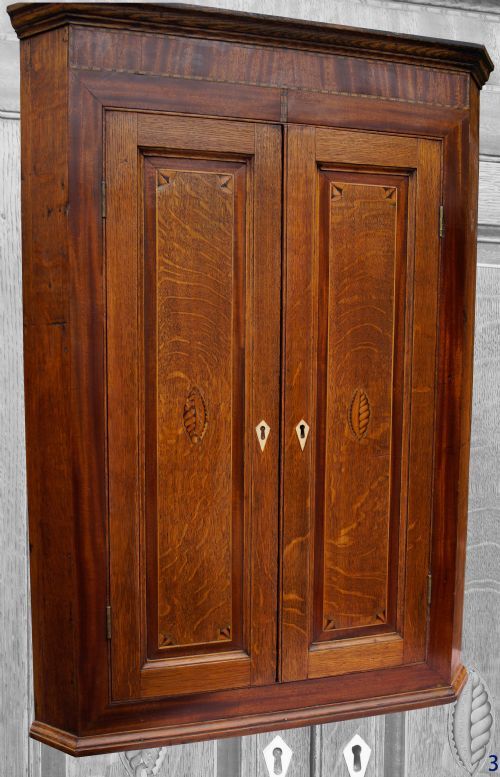
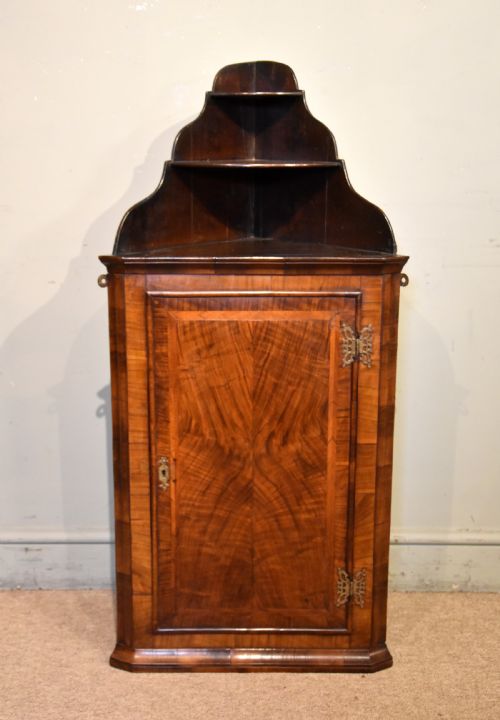
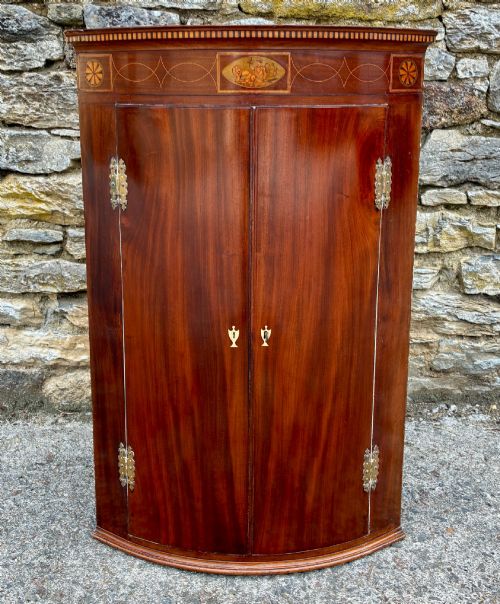
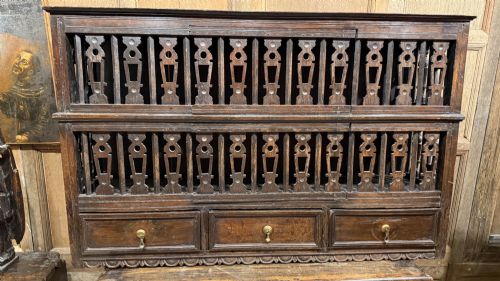
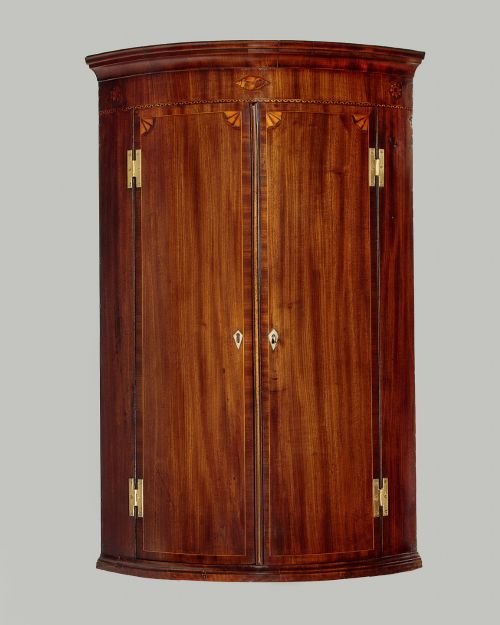
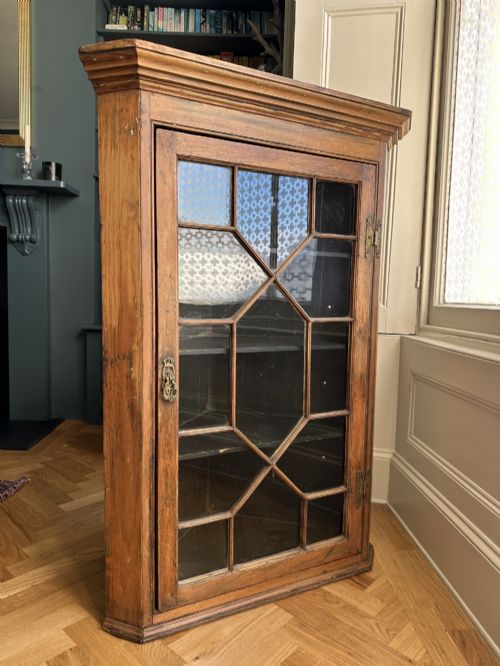
When searching for a hanging wooden cabinet, you encounter a variety of wall-mounted storage forms designed to save floor space while displaying or concealing contents. The selection on this page leans heavily towards corner cupboards and wall cabinets dating from the eighteenth and nineteenth centuries.
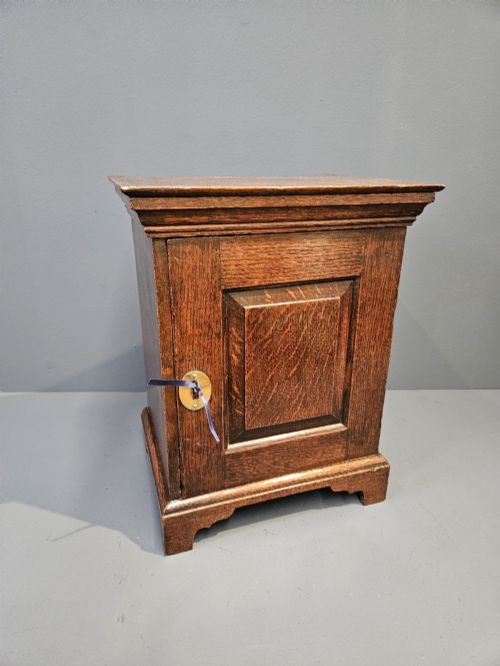
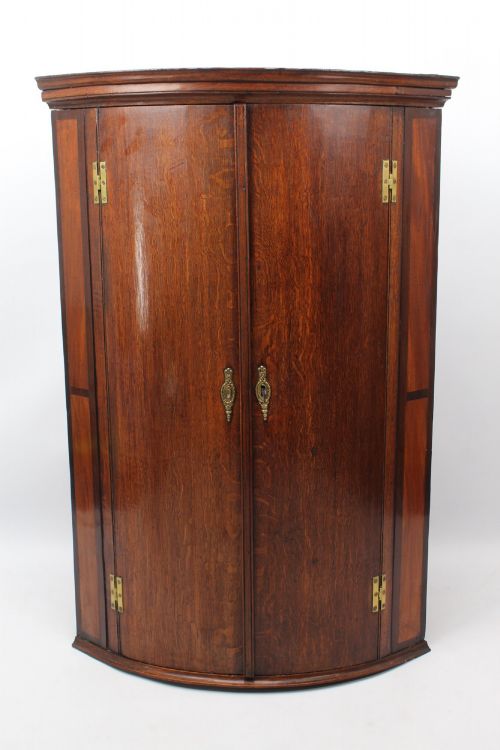
The most frequent variations include oak and mahogany corner cupboards, alongside spice cupboards and flat-wall display cabinets. These pieces range from simple country pine examples to formal Georgian pieces featuring bow fronts and inlaid details.
Materials and Construction
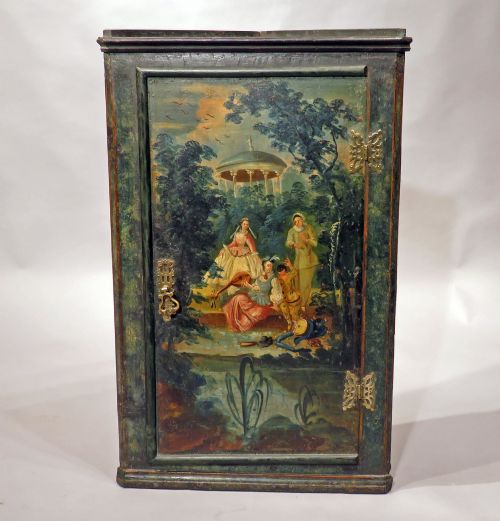
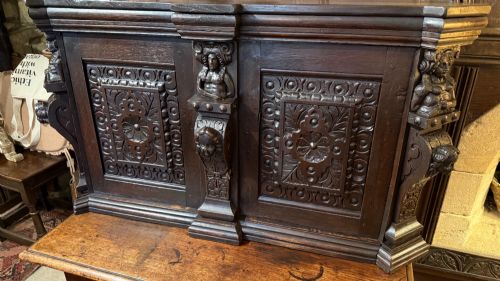
Cabinet makers relied primarily on native timbers such as oak, mahogany, and walnut, often pairing them with secondary woods like pine for internal shelving and backs. Surface decoration involved carving, inlay in satinwood or lighter veneers, and painted finishes.
Joinery techniques matched the period, using dovetailed joints for box construction and pegged frames for doors. Brass hinges and latches provided durable operational hardware that frequently remains original to the piece.
Smokers' cupboards kept tobacco and pipes locked away from domestic servants.
Assessing Quality
Quality in these wall cabinets rests on the choice of timber and the crispness of any carved or inlaid decoration. Superior examples display carefully selected grain patterns and well-proportioned architectural details such as broken arch pediments or bow fronts.
Construction integrity also separates finer pieces from utilitarian ones, seen in tight joints and the preservation of original backboards and glass. Alterations to paint or replaced hardware diminish the integrity of an antique cabinet.
Arthur Simpson
The Hanging Wooden Cabinet Glossary
- Bow front
- A convex, curved front on a cabinet or cupboard that projects outward. This shape gained popularity during the Georgian period.
- Corner cupboard
- A triangular cabinet designed specifically to fit into the corner of a room. These make efficient use of otherwise neglected space.
- Pediment
- The decorative crowning feature situated above the door of a cabinet. Elaborate examples include broken arch designs.
- Spice cupboard
- A small wall-mounted box with a door enclosing multiple tiny internal drawers. They were traditionally used to store valuable culinary spices and herbs.
Hanging Wooden Cabinet: Frequently Asked Questions
How do I hang a heavy antique cabinet safely?
Wall-mounted cabinets require secure fixings into structural studs or solid masonry walls rather than plain plasterboard. Professional installers use heavy-duty internal brackets or mirror plates capable of supporting the combined weight of the timber and its contents.
Older cabinets often feature original hanging brackets screwed directly into the rear stiles. Inspect these mounting points carefully before installation to ensure the wood remains sound and strong enough to bear the load.
What rooms suit a corner cupboard best?
Dining rooms and hallways provide traditional settings for corner cupboards, utilising empty angles to add architectural interest. Their compact projection prevents them from cluttering narrow circulation spaces.
Living rooms and kitchens also accommodate these wall-mounted pieces effectively. They offer display space for ceramics or concealed storage for everyday items without encroaching on floor area.
How can I tell a Georgian cabinet from a Victorian copy?
Georgian pieces generally exhibit timber selection and construction methods characteristic of the eighteenth century, such as hand-cut dovetails and pegged frame joints. Secondary woods like pine or oak internal linings offer further clues to the period.
Victorian revival pieces often employ machine-sawn elements or different interior configurations while imitating earlier styles like Chippendale. Examining the timber shrinkage and backboards helps determine the true age of the cabinet.
Can I use a spice cupboard in a modern kitchen?
A spice cupboard suits modern kitchens well, providing compact shelving for small jars, dry goods, or kitchenalia. Their shallow depth allows them to fit easily above worktops or prep areas.
Ensure the wall surface is stable and keep the antique wood away from direct moisture or excessive heat sources. Regular dusting and occasional wax polishing help maintain the finish in active kitchen environments.