



Vintage Cigar Humidor
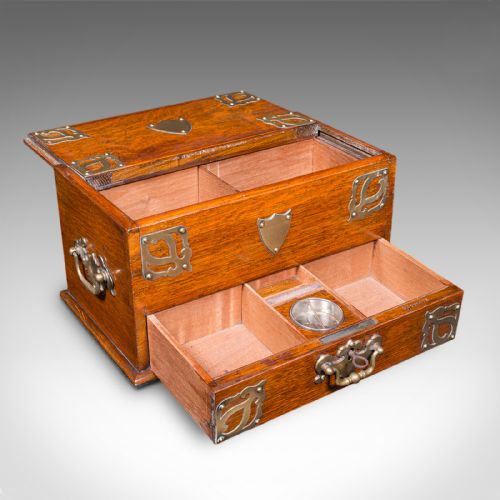
A vintage cigar humidor brings solid nineteenth-century weight and tailored cedar storage to a desktop.
Vintage Cigar Humidor
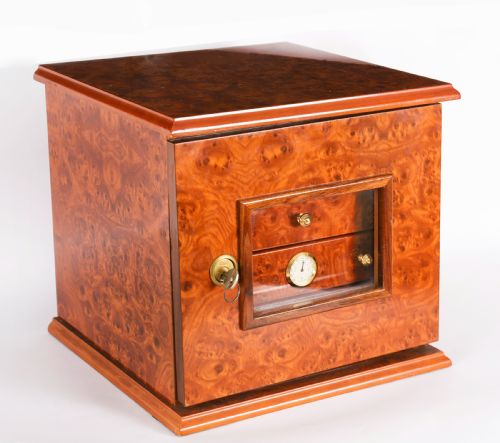
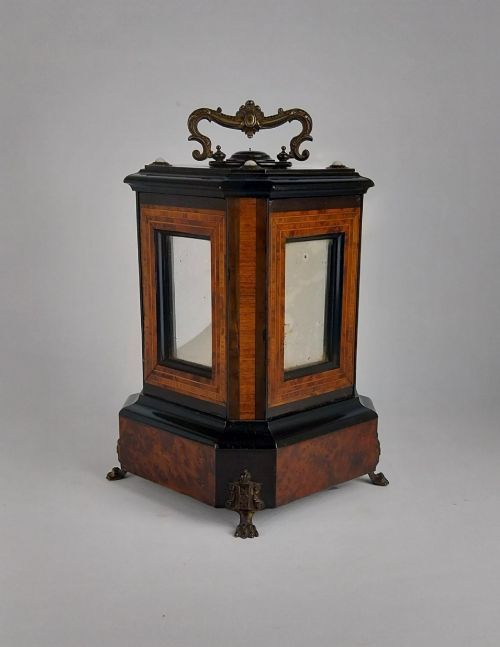
A vintage cigar humidor takes the shape of desktop boxes, four-drawer cabinets, and novelty forms like carved linden wood bears or railway coal wagons. Oak, walnut, and burr elm dominate the domestic and club lounge smoke rooms they served.
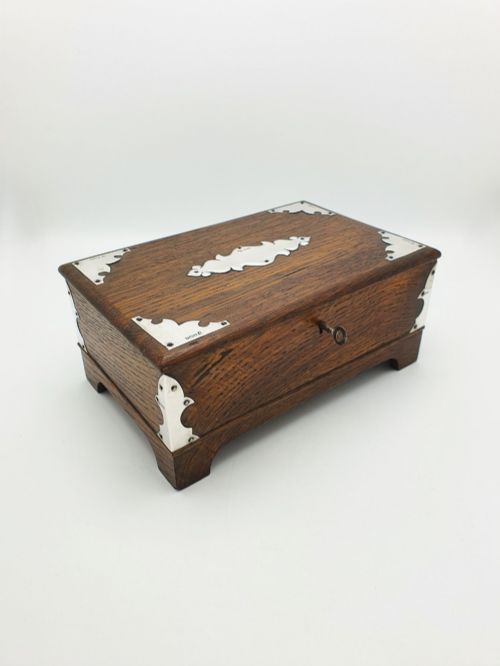
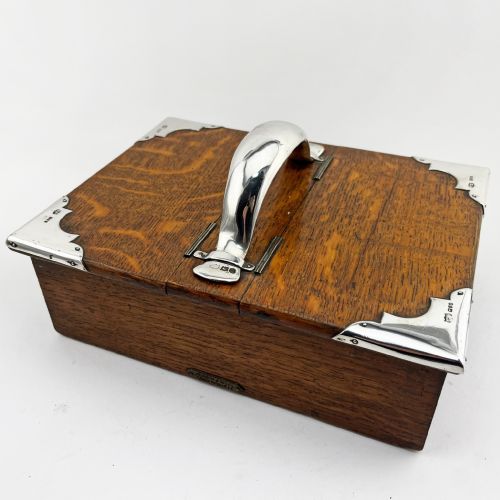
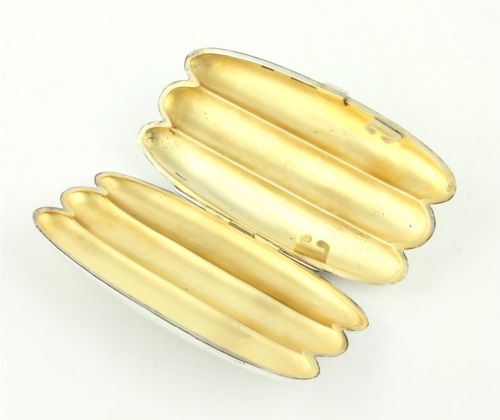
Edwardian and Victorian iterations provide the core of the selection, running from brass-bound oak boxes to larger silver-mounted table pieces. These smoking accessories range from single-pocket tubes to multi-drawer gentlemen's cabinets.
Art Deco and modernist designs later introduce streamlined walnut and silver-plated configurations. Buyers encounter everything from utilitarian campaign brass mounts to elaborate carved Black Forest animal figures.
Materials and construction methods
Makers utilised dense timbers such as oak, walnut, burr elm, and cedar, often pairing them with structural brass, copper, or sterling silver mounts. Wood selection prioritized interior moisture retention and exterior grain pattern.
Surface treatment combined hand-carving in styles like Black Forest linden wood with fine silver-plating and sterling mounts from silversmiths. Tambour doors, internal multi-drawer banks, and precision locking mechanisms required specialist joinery.
A brown bear carved from linden wood stands ready to hold your afternoon cigars.
Differences in build and execution
Quality rests on the integrity of the cabinetmaker's joinery, the thickness of the timber, and the presence of original internal cedar linings. Heavy brass hardware, working locks, and structural stability separate standard boxes from custom retailer pieces.
Execution of decorative elements - such as deep relief carving on animal figures or the weight of sterling silver mounts - distinguishes standard workshop production from signed maker output.
Mappin and Webb·Zimmerman·Alfred Dunhill·Crevillen·H. Upmann
The Vintage Cigar Humidor Glossary
- Humidor
- A specialised box or cabinet designed to store cigars at a controlled humidity level. They typically feature tight-fitting lids and cedar linings.
- Burr Elm
- A figured wood grain prized for its swirling pattern and knot formations. Furniture makers used it on luxury cabinet fronts.
- Black Forest
- A nineteenth-century carving style originating in Switzerland and Germany. It is known for realistic animal sculptures and rustic forest motifs.
- Tambour
- A flexible sliding door made of narrow strips of wood glued to fabric backing. It allows access to narrow cabinets and desks.
- Compendium
- A multi-purpose smoking or writing box containing various fitted compartments. These accessories gathered multiple gentleman's tools in one place.
Vintage Cigar Humidor: Frequently Asked Questions
How do I maintain moisture in an antique humidor?
Most antique pieces require modern humidification elements placed inside, as original internal mechanisms often degraded over decades of non-use.
Check the inner cedar lining for cracks that might let air escape before storing cigars inside.
What woods were commonly used for these boxes?
Oak and walnut provide the structural shell for the majority of English and continental tabletop storage boxes.
Burr elm and satinwood appear on decorative cabinet facades, while Spanish cedar lines the interiors to preserve tobacco.
How do I date a nineteenth-century model?
Look to the construction joints, brass hardware styles, and any accompanying silver hallmarks to establish a manufacturing decade.
Stylistic shifts from heavy Victorian brass binding to lighter Edwardian silver mounts offer clear chronological markers.
Can I use novelty smoking boxes for daily storage?
Novelty forms like railway wagons and carved bears function well for storage if the internal cedar lining remains intact and airtight.
Verify that the locking mechanisms and hinges operate smoothly to protect your collection from drying out.