
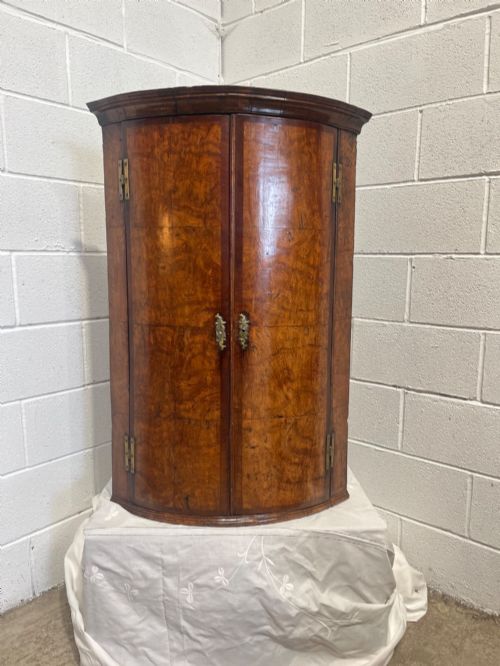
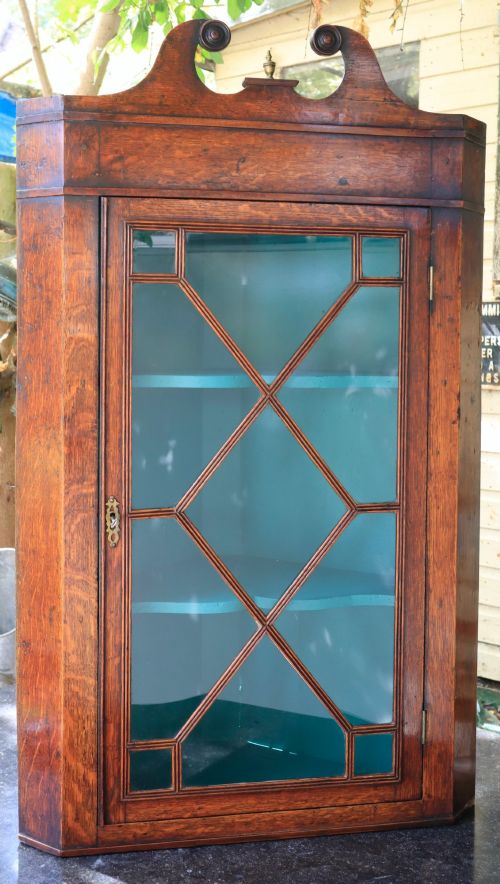
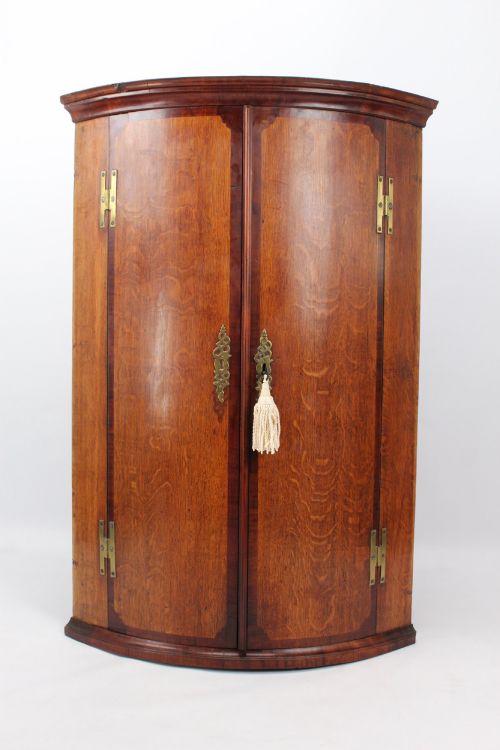
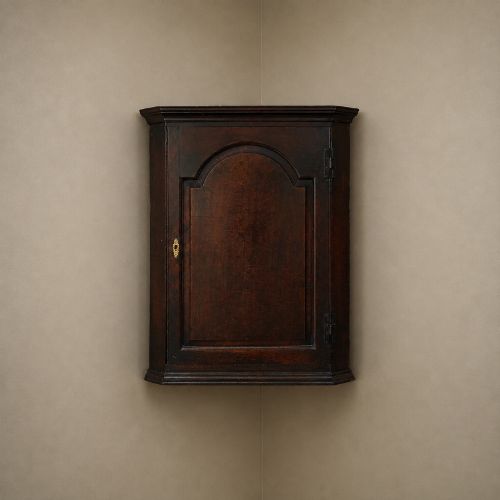
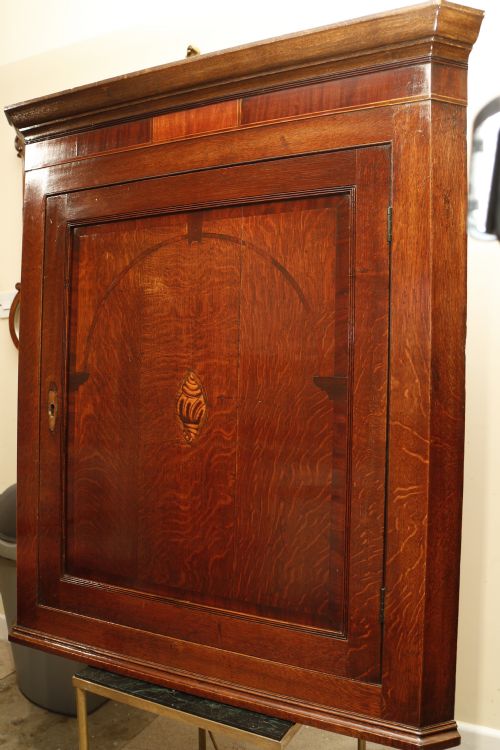


Hanging Oak Corner Cupboard
A hanging oak corner cupboard solves the perennial problem of dead space while bringing rich Georgian and Victorian character to an empty wall.
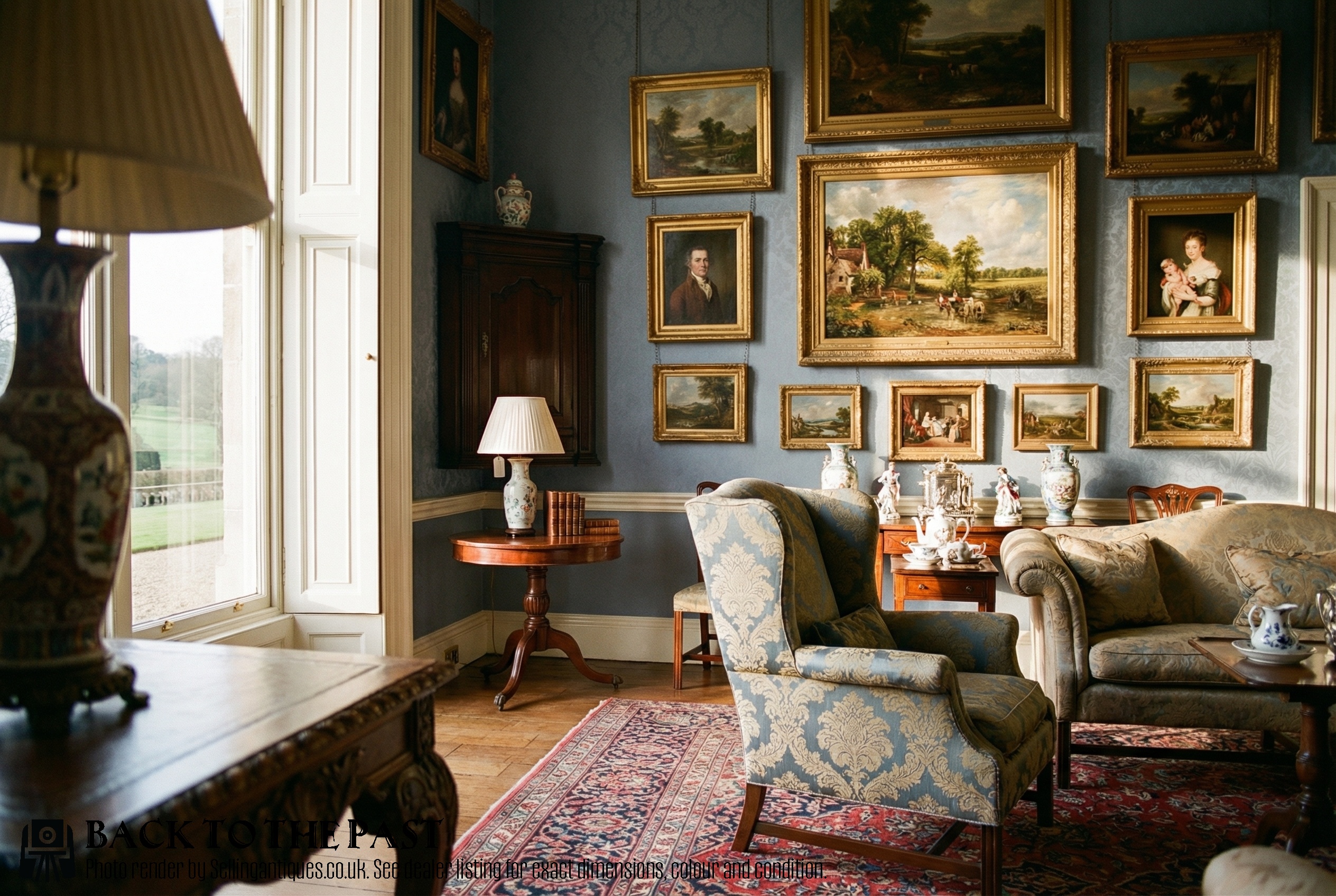
Hanging Oak Corner Cupboard
A hanging oak corner cupboard is a wall-mounted storage piece designed to fit neatly into the junction of two walls, making practical use of otherwise neglected room angles.
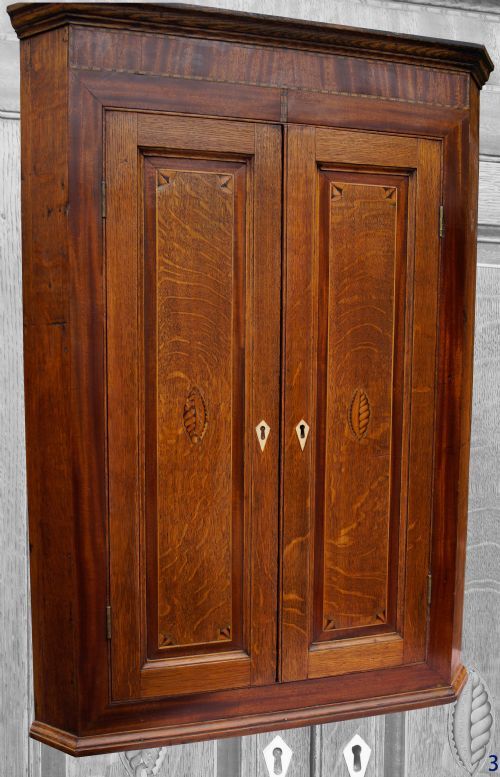
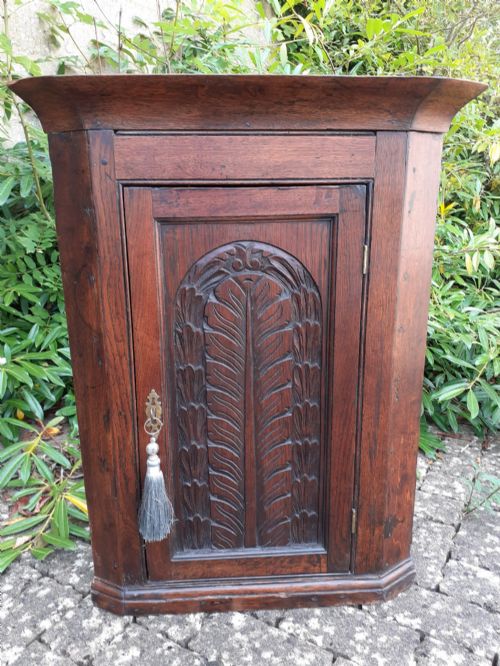
The versions met most frequently on this page belong to the Georgian period and the eighteenth century, constructed with single panelled doors and fitted interior shelving.
Examples also appear from later eras including the Victorian and Edwardian periods, alongside Arts and Crafts and Cotswold School interpretations from the early twentieth century.
Materials and Technique
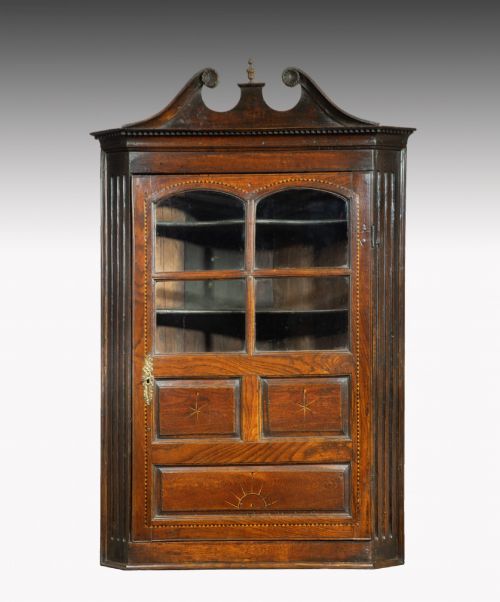
Cabinet makers relied primarily on solid oak, occasionally selecting burr oak or incorporating secondary woods like fruitwood and mahogany for contrasting crossbanding and decorative inlays.
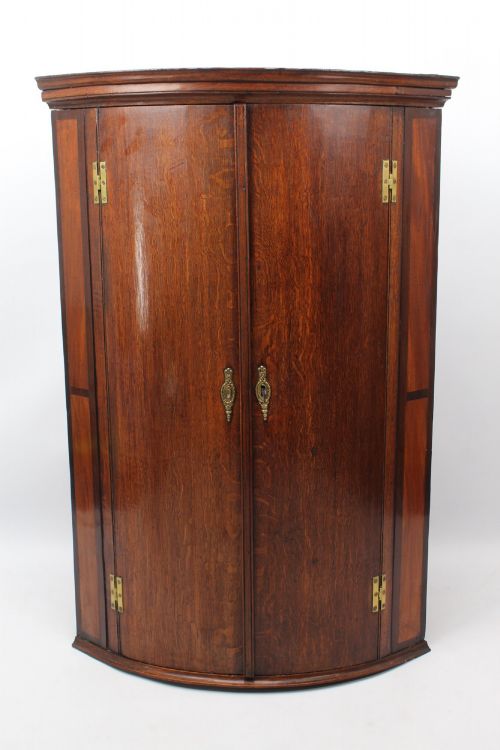
Structural integrity relied on pegged mortise and tenon joints for the frame, while brass H-hinges and iron hardware secured the doors and allowed the cabinets to hang safely from walls.
Several eighteenth-century examples served double duty as private drinks cabinets, keeping spirits safe behind locked oak panel doors.
Distinctions in Standard
The standard of a hanging oak corner cupboard rests on the selection of timber, visible in the grain pattern of the primary oak and the precision of any mahogany crossbanding or fruitwood inlay.
Construction details differentiate standard provincial workshop output from finer pieces, such as the thickness of the backboards, the subtlety of moulded cornices, and the original state of the brass hinges and locks.
The Hanging Oak Corner Cupboard Glossary
- Crossbanding
- A decorative border technique where thin strips of veneer, often mahogany, are applied to the edges of a panel so the grain runs perpendicular to the main surface.
- Bow front
- A convex, outwardly curved front profile seen on specific Georgian and later cabinets, replacing the flat door design.
- Cornice
- The moulded projection that crowns the top of the cabinet, adding architectural definition and visual weight to the piece.
- Panel door
- A door construction featuring a central wooden floating panel set within a grooved frame to allow for natural wood movement.
Hanging Oak Corner Cupboard: Frequently Asked Questions
How do I hang an antique corner cupboard safely?
These pieces were built to be secured directly to wall studs using robust internal fixing points located through the backboards.
Professional installation is recommended due to the combined weight of solid oak timber and its contents.
What rooms suit a corner cupboard best?
Dining rooms and kitchens provide traditional settings for displaying tableware, glassware, and bottled items behind panelled or glazed doors.
Bedrooms and hallways also benefit from the compact footprint, utilising awkward angles without encroaching on floor space.
How do I tell an 18th century cupboard from a later revival piece?
Examination of the internal construction, timber shrinkage, and hand-cut joinery helps reveal the age of the piece.
Georgian and 18th century examples display irregular hand-planed board surfaces and forged iron or brass hardware consistent with period workshop practices.
Did these cupboards always have glazed doors?
Solid panelled wooden doors represent the most common format, designed to keep stored contents hidden from view.
Glazed display doors appear more frequently on later Edwardian and Arts and Crafts examples intended for showing ceramics and glassware.