



Hand Woven Tribal Bag
When you select a hand woven tribal bag, you acquire a nomadic textile carrying centuries of traditional utility and visual language.
Hand Woven Tribal Bag
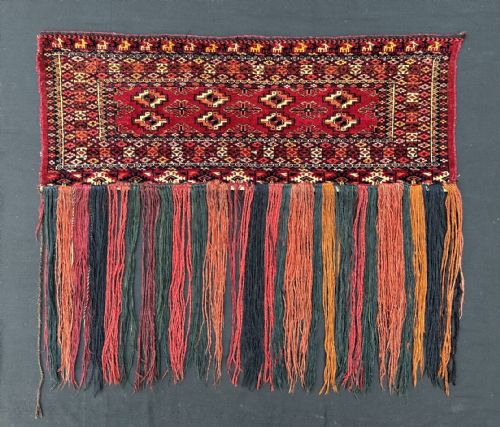
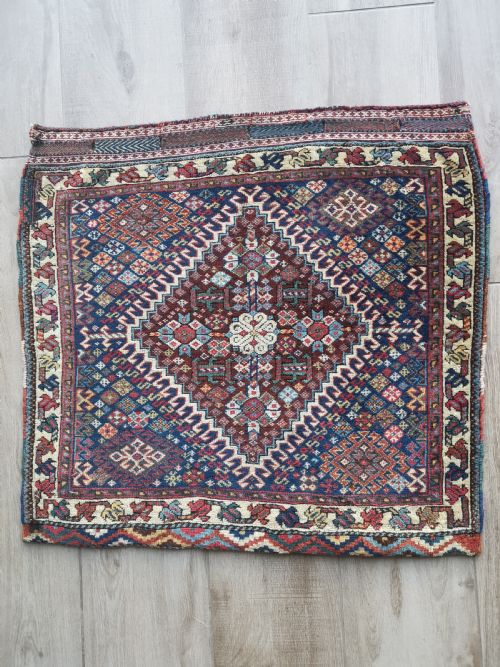
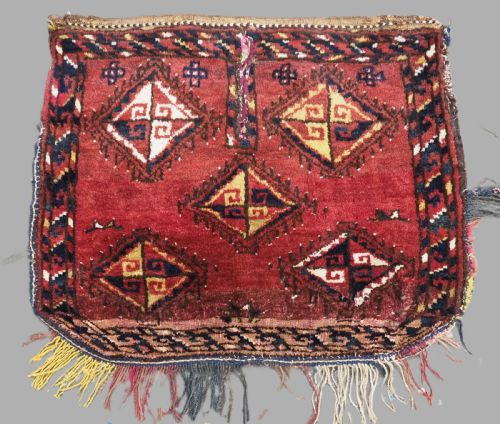
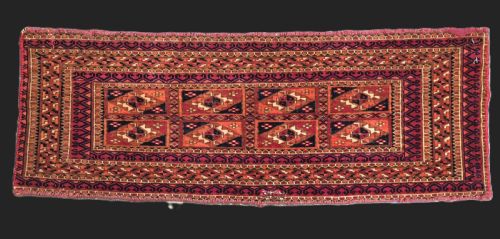
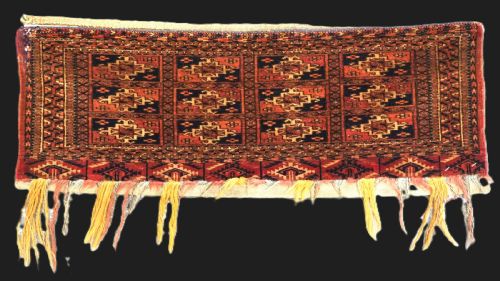
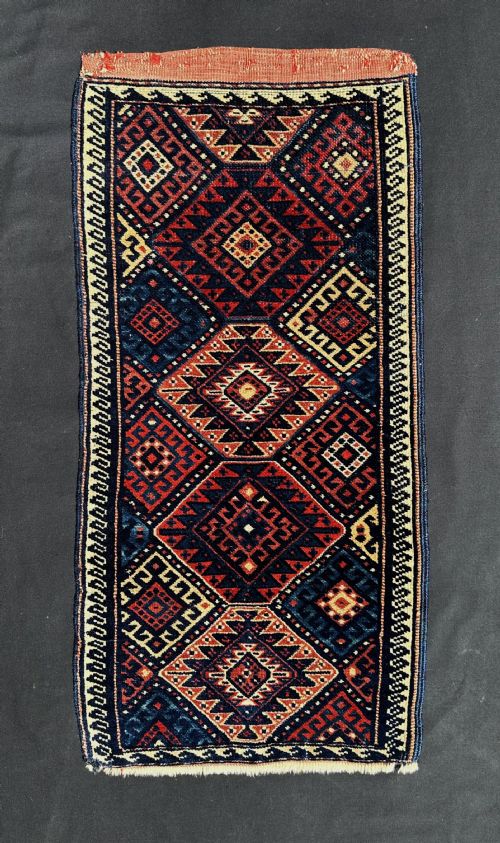
A hand woven tribal bag encompasses utilitarian storage containers, saddlebags, and smaller bag faces created by nomadic and village groups across Central Asia and Persia. When exploring this selection, collectors most frequently encounter Turkmen torbas, chuvals, and various Persian tribal bag faces originating from regions such as Fars, Khorassan, and Luristan.
Materials and Construction
Makers utilised hand-spun wool for the pile and foundation, occasionally incorporating cotton, linen, and dyed yarn to add structural contrast and fine detail. Natural dyes provided the rich palette of reds, oranges, and deep indigos that characterise these nomadic weavings.
The construction relies on dense knotting combined with flatweave techniques, particularly on the reverses and side panels where utility demanded durability. Weavers employed precise structural framing to support complex repeat patterns like guls, medallions, and boteh motifs.
Nomads occasionally wove vanity bags specifically to hold small personal mirrors and kohl pots.
Assessing Quality and Execution
Superior examples distinguish themselves through exceptionally fine knot density, crisp graphic execution of traditional tribal guls, and vibrant, saturated natural dyes. The handling of secondary elements, such as the precision of the plain weave back and the integrity of the selvedges, demonstrates the weaver's skill.
The visual depth of the wool and the harmonious ageing of the palette separate standard functional items from masterworks of nomadic textile art. Pieces showing tight, regular structural work and well-balanced proportions command greater appreciation from collectors.
The Hand Woven Tribal Bag Glossary
- Chuval
- A large Turkmen storage bag utilised for bedding and bulky items. These pieces frequently display multiple primary guls across the field.
- Gul
- A medallion motif repeated across Turkmen and Central Asian carpets and bags. Each design often identifies the specific tribe or clan of the weaver.
- Mafrash
- A rectangular storage container or travel chest panel produced in nomadic communities. They often feature intricate end panels and supplementary weft-float patterns.
- Balisht
- A traditional pillow or pillow-bag face originating from Persian and Central Asian nomads. They are characterised by smaller dimensions adapted for domestic comfort.
- Khorjin
- A traditional pair of saddlebags linked by a central web, designed to be thrown over a pack animal. Surviving examples often appear separated into individual bag faces.
Hand Woven Tribal Bag: Frequently Asked Questions
How were tribal bags used?
Nomadic groups utilised these bags for storing household goods, provisions, bedding, and personal items during seasonal migrations. Saddlebags served to transport belongings across horses and camels.
Many examples eventually entered domestic spaces inside tents, functioning as storage containers or decorative wall hangings.
How do I identify tribal origins?
Tribal attribution relies on the specific structural motifs, colour palettes, and knotting techniques characteristic of groups like the Tekke, Yomut, Ersari, or Qashqai. Particular gul designs and border patterns immediately signal the weaving traditions of specific regions.
Consulting structural details such as selvedge finishes and foundation materials further clarifies the geographic source.
Are bag faces complete pieces?
Many surviving examples are solitary bag faces rather than complete containers because the front panel absorbed the decorative effort while the plain weave back endured heavier wear. Over time, the backing often deteriorated or was removed, leaving just the ornate face.
Some pieces do retain their original plain weave backs and closure flaps, offering a more complete survival of the original object.