


Central Asian Wool Pouch
A central asian wool pouch is a nomadic textile treasure, prized for its intricate tribal patterns and rich natural dyes.
Central Asian Wool Pouch
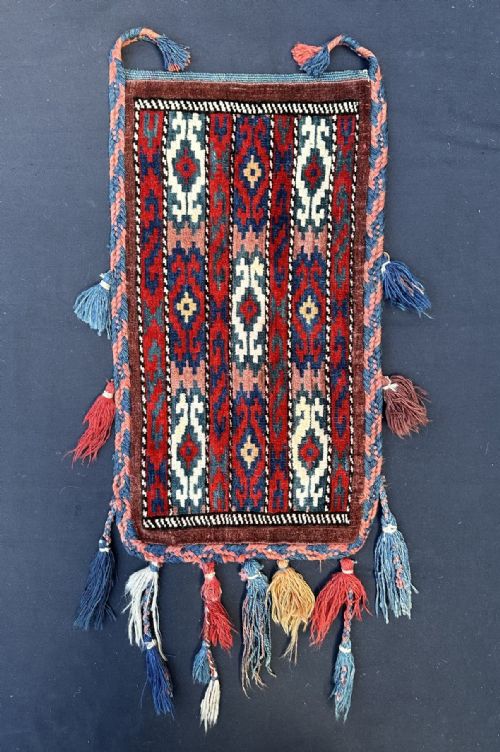
A central asian wool pouch encompasses functional tribal bags, torbas, chuvals, and spindle bags created by nomadic groups across the steppes and oases. These pieces served practical domestic purposes within tribal life while displaying distinctive cultural motifs.
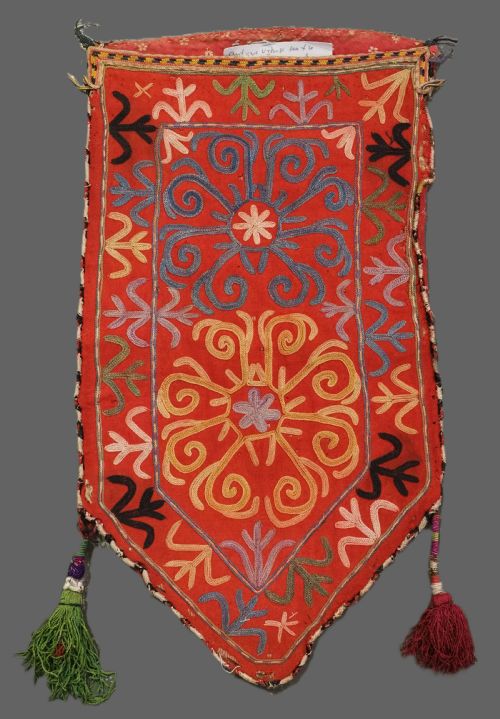
Forms include complete bags with plain weave backs, double-faced pieces, and hanging bags known as ilgich or at torba. Buyers encounter portable forms designed for storage or horse furniture rather than large floor coverings.
Materials and Construction
Construction relies upon hand-spun wool and cotton foundations, worked into durable pile or flatweave structures. Natural dyes provide the enduring palette observed across these tribal textiles.
Weavers utilised techniques suited to nomadic life, combining detailed surface patterning with sturdy plain weave backs. Silk accents occasionally appear alongside dyed yarn to enrich specific design elements.
Nomads made spindle bags specifically to keep spinning tools from escaping during bumpy camel rides across the steppes.
Assessing Quality and Execution
Quality rests in the fineness of the weave, the clarity of the tribal gull or motif, and the depth of the natural dyes. Superior examples demonstrate tight knotting and harmonious colour saturation.
The preservation of original plain weave backs and complete structural integrity elevates an individual piece. Greater precision in tribal attribution and design complexity further distinguishes finer specimens.
The Central Asian Wool Pouch Glossary
- Torba
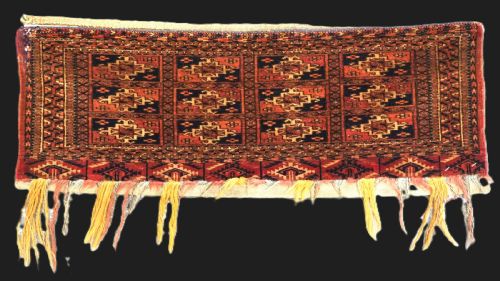
- A small Turkmen tent-bag used for domestic storage inside the yurt. These rectangular pieces frequently feature primary gul medallions along the face.
- Chuval
- A large Turkmen storage bag employed for household goods during nomadic migrations. They display bold tribal patterning across the main face.
- Igsalyk
- A specific Yomut Turkmen spindle bag designed to hold wool-spinning tools. These narrow items often retain original plain weave backs.
- Gul
- A primary octagonal medallion motif repeated across Turkmen carpets and bags. Each tribal group utilises distinct variations of this geometric emblem.
- Ilgich
- A Central Asian hanging bag or trapping associated with horse furniture and tent decoration. They are often worked by Lakai Uzbek makers.
Central Asian Wool Pouch: Frequently Asked Questions
What were these bags used for?
Nomadic families utilised these wool pouches for storing household items, clothing, or spinning tools inside traditional tents. Many designs also served as decorative trappings or horse furniture during travel.
Their sturdy construction ensured practical daily service while simultaneously displaying the wealth and tribal identity of the owner through traditional motifs.
How do I care for a wool pouch?
Protect antique textiles from direct sunlight to prevent natural dye fading, and keep them in environments with stable humidity. Gentle vacuuming through a mesh screen removes surface dust safely.
Avoid hanging heavy items by a single point to distribute weight evenly across the structure of the textile.
How can I tell Yomut and Tekke work apart?
Yomut weavings often incorporate hooked diamond motifs and distinctive minor guls within the field. Their palette frequently emphasises deep red grounds with contrasting ivory and blue accents.
Tekke pieces generally display formal gul arrangements with precise geometric symmetry. The handling of secondary ornaments helps assign pieces to specific regional oases.
Are these pieces complete with backs?
Many listed examples retain their original plain weave cotton or wool backs, which were essential for their function as storage containers. Complete construction adds significant interest for textile collectors.
Some smaller hanging pieces are double-faced or designed specifically to be viewed from both sides when suspended.