
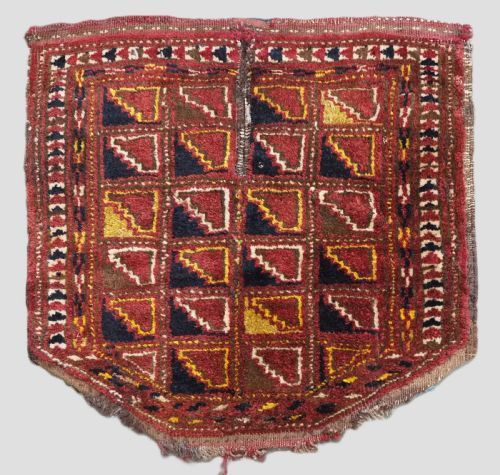


Hand Woven Saddle Rug
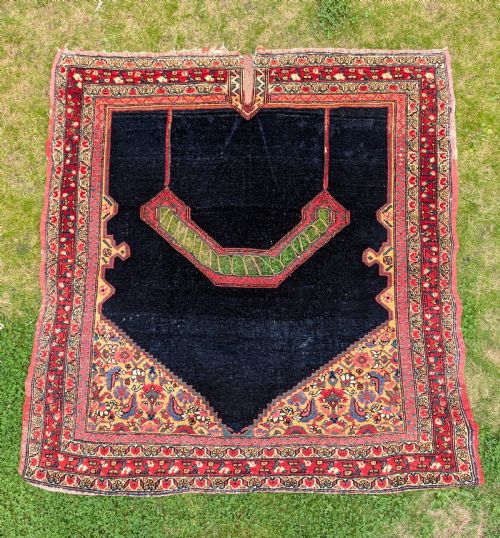
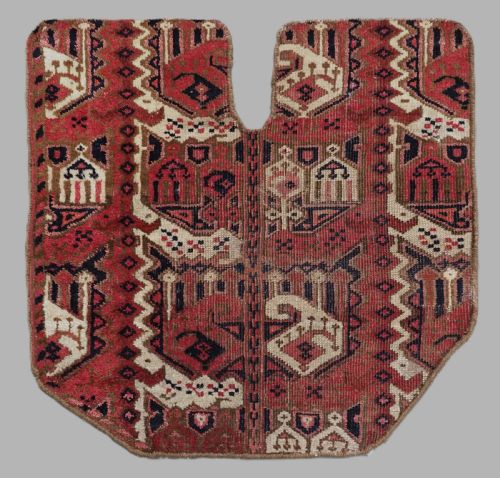
These hand woven saddle rug pieces are dense, nomadic textiles designed for practical use on horseback.
Hand Woven Saddle Rug
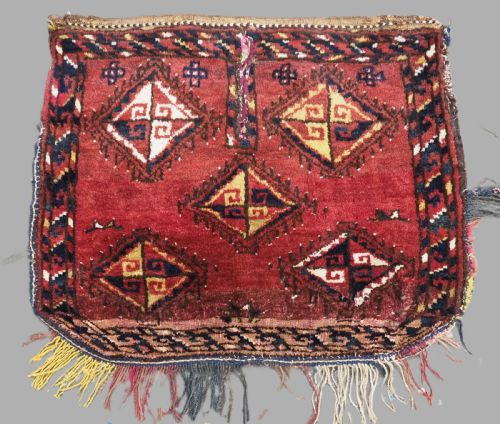
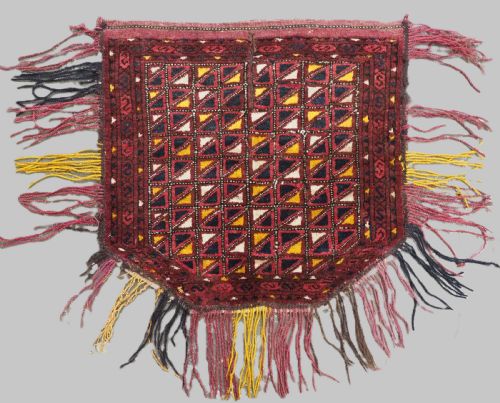
A hand woven saddle rug represents nomadic textile production from Persia, Central Asia, and surrounding tribal regions, created for utility on pack animals and mounts. Buyers searching for a hand woven saddle rug encounter formats ranging from complete saddle covers with original tassels to individual bag faces and paired saddlebags.
The materials and geographic origins span distinct tribal groups including the Ersari Turkmen, Qashqa'i, Luri, Kurdish, and Baluch. Dating typically centres on the late nineteenth century and the turn of the twentieth century.
Materials and construction
The construction relies heavily on wool, frequently hand-spun and combined with cotton elements depending on the specific tribal tradition. Natural dyes provide the palette, yielding stable, deep tones across the surface.
Weaving techniques prioritise durability to withstand daily use, resulting in dense pile or flatweave structures that maintain structural integrity over generations.
Some surviving saddle covers retain their original bouncing tassels, which once warded off the evil eye while trotting across the steppe.
Assessing quality in nomadic textiles
Quality rests primarily in the handling of the wool, where lustrous, high-grade fleece elevates the visual depth of the design. The integrity of the tribal motifs and the preservation of original elements, such as tassels or complete bag formats, distinguish superior examples.
Clarity of the natural dye palette and precision within the tribal geometry separate standard utility pieces from exceptional tribal weaving.
The Hand Woven Saddle Rug Glossary
- Khorgeen
- The Persian term for a traditional saddlebag. These were woven as a paired set designed to be slung over a pack animal.
- Saddle cover
- A textile piece shaped or sized to fit directly beneath a saddle. They protect the animal and provide decorative utility.
- Bag face
- The decorative front portion of a saddlebag. Collectors often preserve these independently when the reverse side has deteriorated.
- Natural dyes
- Colourants derived from plant, insect, or mineral sources rather than synthetic chemistry. They produce harmonious fading and rich patination over time.
- Hand-spun wool
- Fleece processed by hand into yarn using a drop spindle or simple wheel. This method preserves natural lanolin and creates irregular texture in the finished weave.
Hand Woven Saddle Rug: Frequently Asked Questions
What is a saddle rug?
A saddle rug is a compact textile woven by nomadic and tribal groups for practical use on horses or pack animals. These pieces functioned as functional horse gear or storage.
Over time, many survived through domestic use and entered collections as portable examples of tribal weaving traditions.
How were saddlebags used?
Saddlebags served as portable storage for nomadic families on the move. They carried personal possessions, household goods, or provisions across long distances.
Placed across the back of a pack animal, the paired bags balanced weight while displaying distinct tribal patterns.
How do I display a saddle rug?
These smaller textiles suit wall display or placement on flat surfaces where the weave can be appreciated up close. Proper mounting distributes weight evenly across the fabric.
Keep them away from direct sunlight to protect natural dye colours from fading.
How do I identify tribal origins?
Tribal attribution relies on specific structural traits, colour palettes, and motif repertoires associated with regions like Fars, Luristan, or Turkmenistan. Different groups utilised characteristic geometric arrangements and border designs.
Comparing knotting style and wool texture helps isolate the specific nomadic source.