
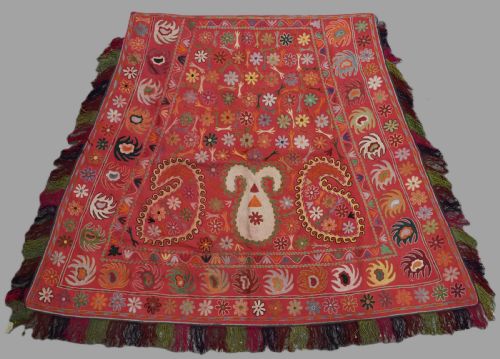


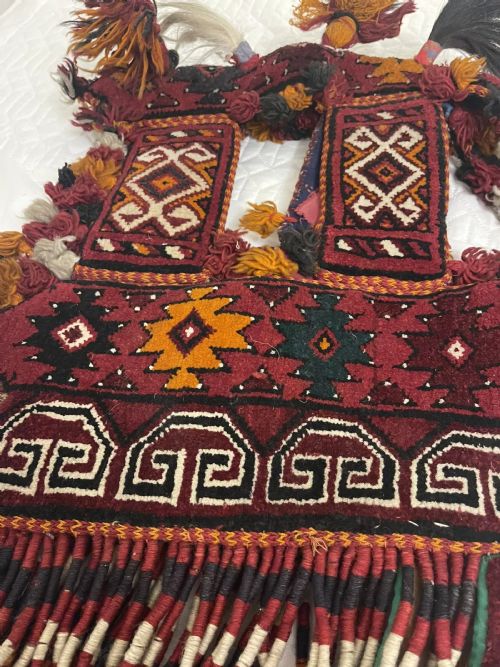

Red Wool Horse Trapping
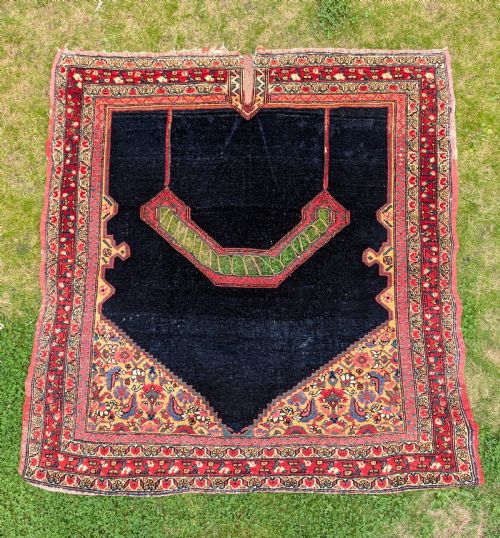
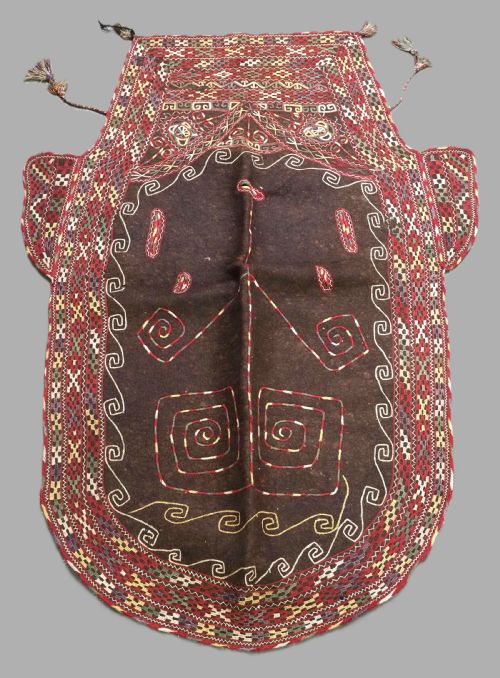
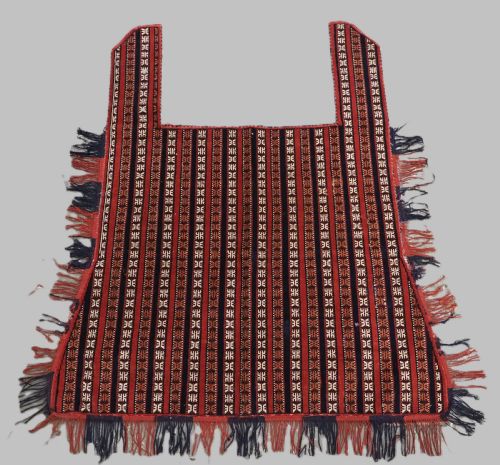
A red wool horse trapping is a woven tribal textile designed for animal decoration and ceremonial use.
Red Wool Horse Trapping
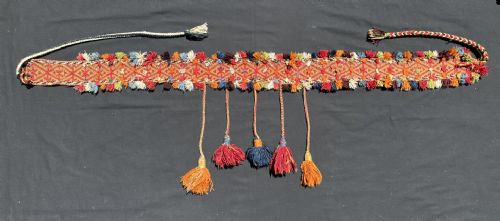
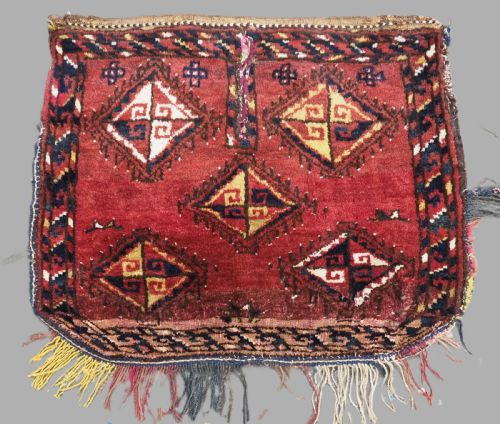
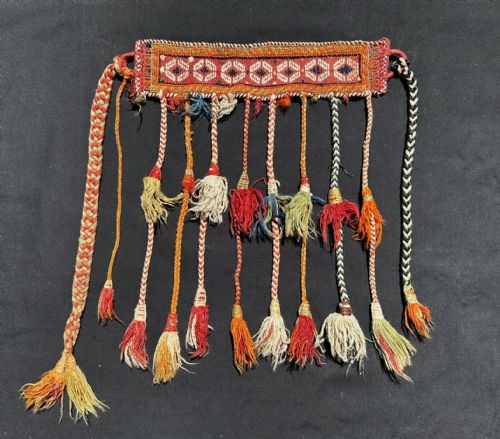
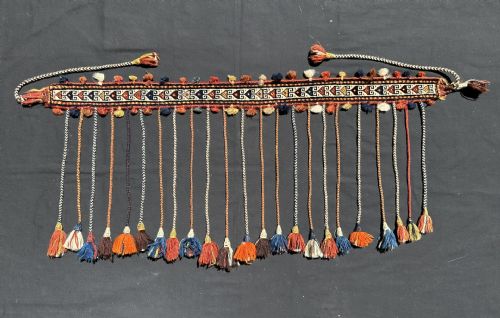
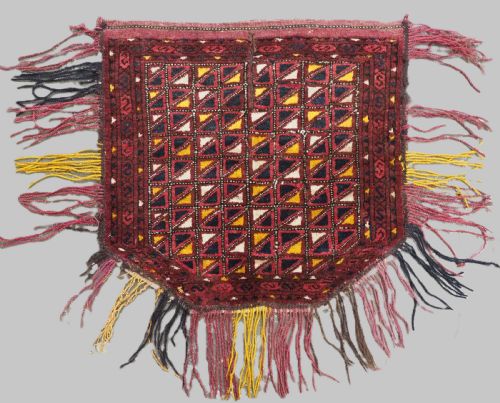
A red wool horse trapping encompasses tribal textiles, saddle covers, horse blankets, and ceremonial headdresses originating from Central Asia, Persia, and Afghanistan. These items served both practical equestrian functions and ornamental roles during tribal weddings and gatherings.
Buyers will encounter pieces spanning the nineteenth century through the early twentieth century, including Yomut Turkmen, Qashqa'i, Ersari, and Uzbek Lakai examples. These objects range from heavy felt blankets to finely woven saddle rugs and neck dress garments.
The selections on this page showcase nomadic craftsmanship through animal decorations and wedding trappings created by distinct tribal groups. Each piece reflects the specific regional heritage and textile traditions of its makers.
How they were made
Makers utilised felted wool and woven wool foundations, often enriched with cotton thread and silk thread for decorative surface work. Natural dyes provided the distinctive red palette seen across these nomadic textiles.
Nomadic artisans combined structural weaving with intricate embroidery techniques to create durable saddle covers and ceremonial horse blankets. Original tassels and supplementary thread work frequently finished the edges of these trappings.
What varies in quality
Quality in a red wool horse trapping rests on the density of the wool foundation and the integrity of the natural dyes. Superior examples retain their original surface embellishments and structural form without extensive modern intervention.
The refinement of the embroidery and the preservation of original tassels distinguish finer tribal pieces from standard utilitarian gear. Depth of colour and complexity of design reflect the skill of the individual nomadic weaver.
The Red Wool Horse Trapping Glossary
- Trapping
- An ornamental covering or piece of equipment for an animal. In nomadic contexts, these textiles adorned horses and camels during ceremonial processions and weddings.
- Felt
- A non-woven textile produced by matting, condensing, and pressing fibres together. Yomut Turkmen makers utilised this thick material for ceremonial horse blankets.
- Saddle rug
- A small woven carpet placed beneath or over a saddle. These functional items often double as decorative tribal art.
- Nomadic
- Pertaining to communities that move seasonally with their livestock. Their textiles incorporate portable designs suited to pastoral life.
- Natural dye
- Colouring matter derived from plants, minerals, or insects rather than synthetic compounds. These substances created the rich hues found in antique tribal wool.
Red Wool Horse Trapping: Frequently Asked Questions
How were horse trappings used?
Nomadic communities utilised these textiles to adorn horses and camels during important ceremonies, weddings, and communal gatherings. They functioned both as practical equestrian gear and as status displays.
Many pieces served specific roles, such as saddle covers, neck dress garments, and ceremonial blankets. Their designs often reflected the cultural identity of the tribe.
How do I date these textiles?
Dating relies on examining the wool consistency, the composition of the natural dyes, and the style of the tribal motifs. Most surviving examples originate from the nineteenth and early twentieth centuries.
Construction methods and the presence of original elements like silk thread or tassels provide further clues to the period of manufacture.
Where did these pieces originate?
These textiles originate from Central Asia, Persia, and Afghanistan, created by groups such as the Yomut Turkmen, Qashqa'i nomads, and Uzbek Lakai.
Each region developed distinct weaving and embroidery traditions, allowing collectors to trace specific pieces to particular tribal groups and geographic areas.
How should I display a horse trapping?
These textiles adapt well to wall display as decorative tribal art, provided they are mounted with care to avoid putting stress on the wool foundation.
Keep them away from direct sunlight to protect the natural dyes and silk thread details from fading over time.