


Woven Turkmen Trappings
Woven turkmen trappings are historic Central Asian nomadic textiles created by tribal weavers for practical use and ceremonial display.
Woven Turkmen Trappings
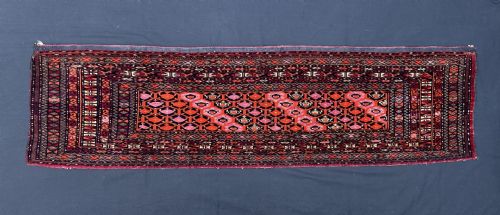
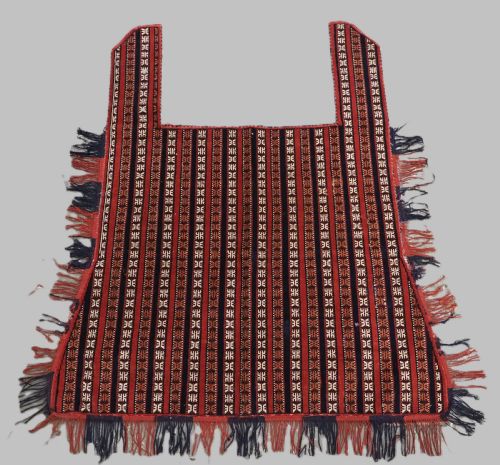
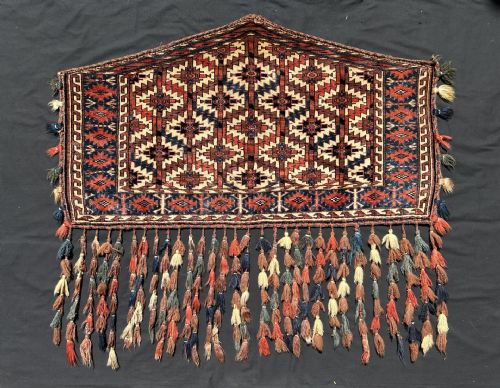
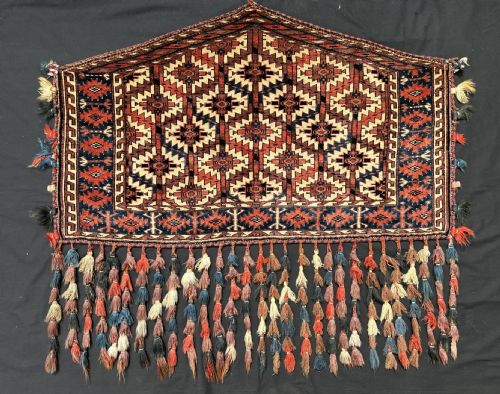
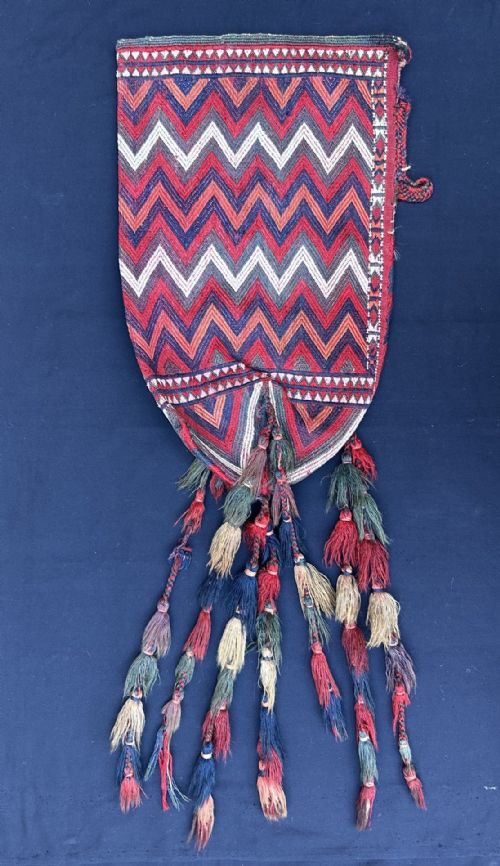
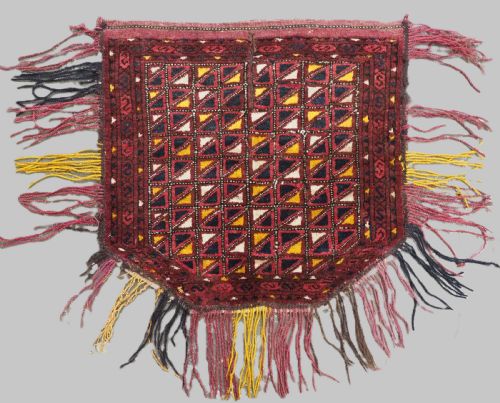
Woven turkmen trappings include functional objects such as torbas, asmalyks, chuvals, and horse covers produced across the nineteenth century by nomadic groups in Central Asia. These items served specific domestic and ceremonial roles within tribal life, including camel and horse adornment for weddings.
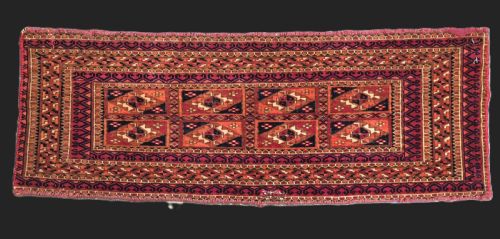
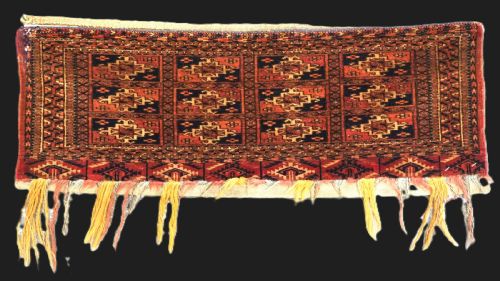
The pieces seen here most frequently take the form of torba faces or complete small bags woven by Tekke, Yomut, and Ersari makers. Such works reflect the distinct visual traditions of the Trans-Caspian steppes and the Amu Darya region.
Collectors encounter diverse tribal formats ranging from saddle covers to wedding headdress garments. Each regional sub-group employed specific structural layouts and medallion types that identify the origin of the weaving.
Materials and construction
These textiles rely primarily on hand-spun wool foundations and pile, often augmented with cotton and occasional silk highlights. Weavers sourced natural dyes to achieve deep red grounds and contrasting secondary tones.
Many surviving examples incorporate original tassels, backs, and intricate geometric knotting. The density of the weave varies depending on whether the object was produced for daily utility or as fine dowry pieces.
Listings span the nineteenth and early twentieth centuries, featuring wool, cotton, silk, and natural dyes across nomadic tribal forms.
Assessing quality in tribal weavings
Quality rests upon the fineness of the knotting and the precision of the tribal guls executed across the surface. Tighter structures and more intricate secondary motifs distinguish master dowry weaving from standard utilitarian output.
The depth and clarity of the natural dyes greatly influence the visual impact of each piece. Intact original elements such as tassels and textile backs preserve the integrity of the object.
The Woven Turkmen Trappings Glossary
- Torba
- A small utility bag used for storage within a nomadic tent. These items typically feature horizontal formats and prominent tribal medallions.
- Asmalyk
- A pentagonal trapping mounted on wedding camels during ceremonial processions. They represent some of the most elaborate textile formats produced by Yomut weavers.
- Gul
- A primary repeating medallion motif used by Central Asian tribes. Different tribal groups utilised distinct gul variations to signal lineage.
- Chuval
- A large storage bag utilised for bedding and household goods inside the dwelling. These pieces display extensive patterning across the main face.
- Mafrash
- A rectangular storage container or face associated with nomadic transport and organisation. They share structural similarities with standard torbas.
Woven Turkmen Trappings: Frequently Asked Questions
What were woven turkmen trappings used for?
Nomadic families utilised these textiles for storing household goods inside tents and for transporting belongings during seasonal migrations.
Specialist items also functioned as ceremonial decorations for horses and camels during weddings and communal celebrations.
How do I identify different tribal groups?
Tribal attribution relies on the specific structural guls, border arrangements, and colour palettes employed in the weaving.
Tekke, Yomut, and Ersari pieces each display characteristic medallion designs and wool preparation methods unique to their respective regions.
Are these textiles suitable for wall display?
Many collectors mount torbas and smaller trappings on walls to protect the pile from foot traffic and heavy wear.
Their balanced geometric compositions and rich natural dye colours suit vertical presentation in domestic interiors.
What indicates a dowry piece?
Dowry items generally feature exceptionally fine weaves, smaller dimensions, and meticulous attention to secondary detailing.
Weavers invested extra care into items intended for matrimonial ceremonies and family retention.