
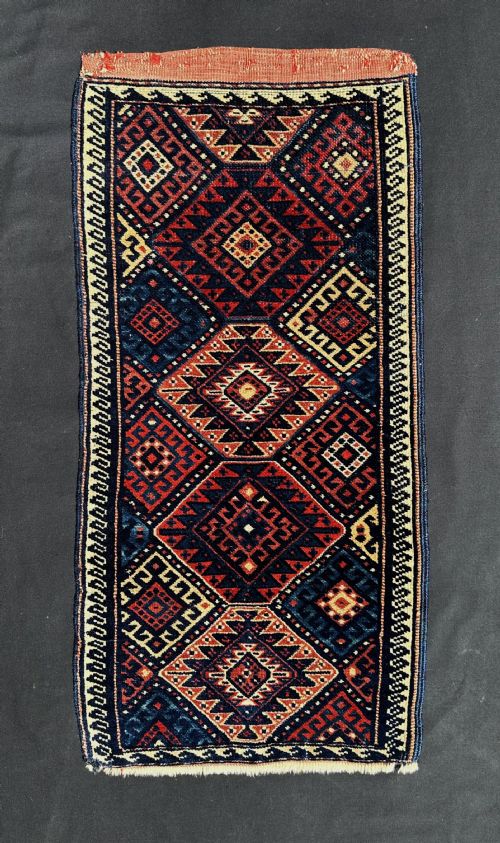


Hand Woven Rug Cushion
These hand woven rug cushion pieces bring historic nomadic textiles into modern rooms as tactile floor and sofa seating.
Hand Woven Rug Cushion
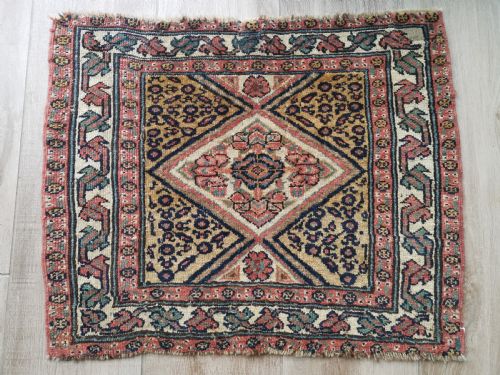
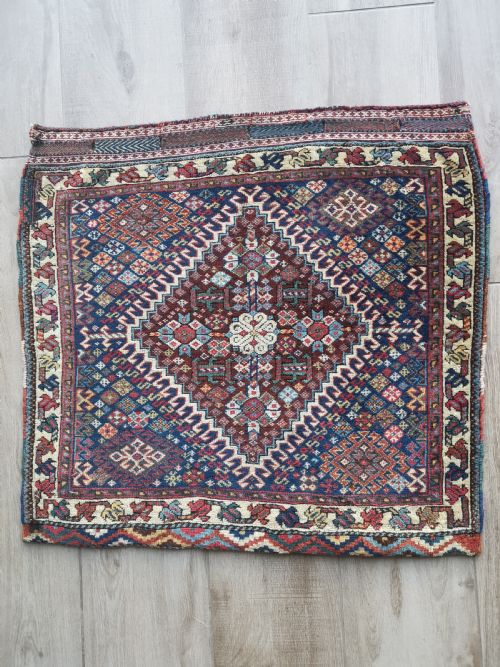
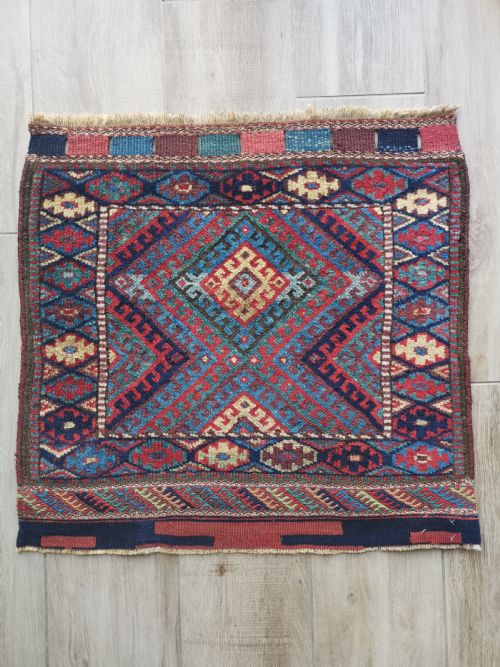
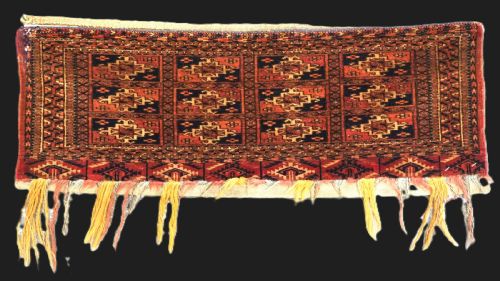
A hand woven rug cushion repurposes authentic tribal bagfaces, saddlebags, and storage torbas into comfortable home furnishings. These textiles originated among nomadic and village groups across Persia and Central Asia.
The pieces on this page span from the nineteenth century into the early twentieth century, reflecting traditional weaving practices. Common formats include single bagfaces, halved saddlebags, and complete torba fronts.
Makers shaped these panels using wool and cotton for utility within tribal camps before later conversion into decorative cushions. Each object preserves part of a larger utilitarian weaving adapted for interior display.
Assessing quality in tribal cushions
Quality rests in the handling of the wool and the clarity of the natural dyes. Lustrous, luminous wool retains its depth and character over generations of use.
The precision of the tribal design and the integrity of the original bagface or saddlebag structure dictate the upper tier of these textiles. Completeness, such as retaining an original back or intact borders, elevates the piece.
Nomadic weavers frequently tucked small symbolic talismans directly into their utility bags to ward off the evil eye.
The Hand Woven Rug Cushion Glossary
- Bagface
- The decorative front panel of a nomadic storage bag, typically removed and converted into a cushion or small rug. These panels display the primary tribal patterns intended for display inside a tent.
- Torba
- A wide, horizontal storage bag produced by Turkmen and other Central Asian groups. They were traditionally hung against the interior lattice walls of a yurt.
- Gul
- A repeating octagonal medallion motif characteristic of Turkmen and related tribal weaving traditions. Each regional group utilised distinct variations of these primary guls.
- Pushti
- A small nomadic mat or rug, often serving as a cushion or small seating rug in tribal dwellings. They share construction methods with larger floor rugs but on a compact scale.
- Flatweave
- A textile constructed without a pile by interlacing warp and weft threads directly. Many bagfaces combine pile-woven sections with flatweave borders.
Hand Woven Rug Cushion: Frequently Asked Questions
What is a hand woven rug cushion made from?
These cushions utilise historic wool, hand-spun wool, and cotton foundations sourced from antique nomadic bags. Natural dyes provide the rich colour palette seen across the pieces.
Nomadic weavers constructed these textiles for durability within tribal environments, selecting materials that would endure heavy daily handling.
How do I care for an antique rug cushion?
Gentle surface cleaning and occasional light vacuuming without a beater bar protect the historic wool pile and natural dyes. Keeping the cushion away from direct sunlight preserves the original coloration.
Professional textile cleaners experienced in antique rugs should handle any deeper maintenance required over time.
Where did these tribal textiles originate?
The pieces originate from nomadic and village communities across Persia and Central Asia, including regions such as Fars, Khorassan, and Luristan. Tribal groups like the Qashqai, Afshar, and Tekke Turkmen produced the original bags.
Each region developed distinct geometric and stylistic vocabularies reflecting local weaving traditions.
How can I tell the age of a bagface cushion?
Dating relies on examining the characteristics of the wool, the maturity of the natural dyes, and the specific tribal design conventions. Pieces on this page date from the nineteenth century up to the early twentieth century.
Structural details, such as the spin of the wool and knotting density, offer further clues to their period of production.