


Hand Painted Staffordshire
Hand painted Staffordshire pottery brings character and colour to a room through figures, animals and useful wares made across the eighteenth and nineteenth centuries.
Hand Painted Staffordshire
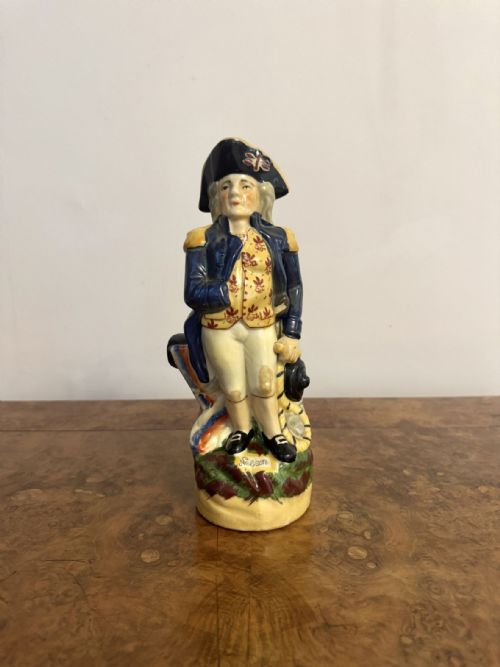
Hand painted Staffordshire encompasses a varied group of figures, animals, vases and tableware produced in the Midlands potteries during the Georgian and Victorian eras. These items range from domestic jugs and teapots to decorative figures of dogs, gardeners and historical portraits.
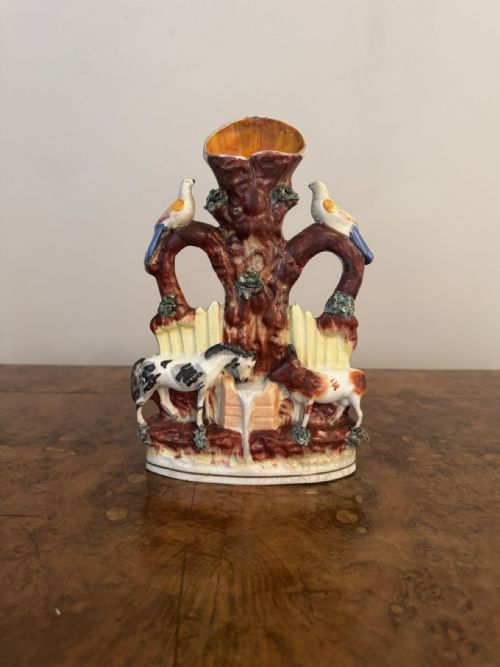
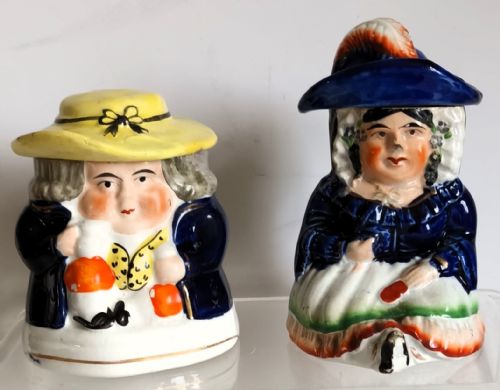
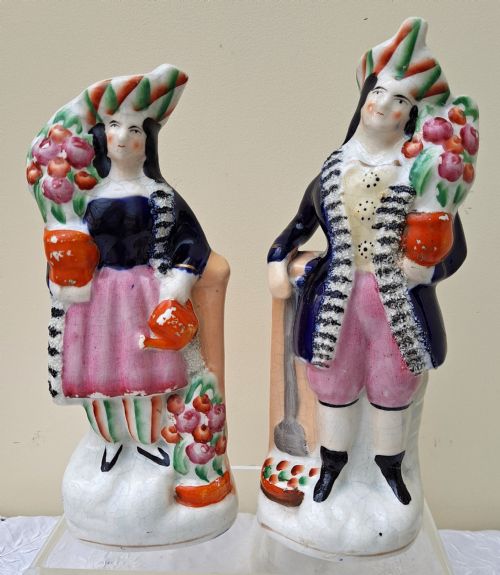
The pieces appearing most frequently span the nineteenth century, including Victorian earthenware flatbacks and early Staffordshire pearlware mugs. Buyers encounter both utilitarian wares intended for daily use and purely decorative mantel ornaments.
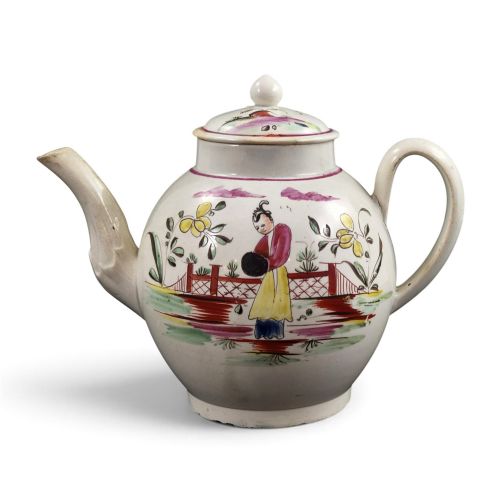
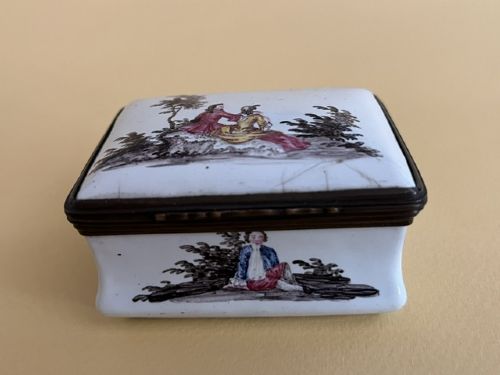
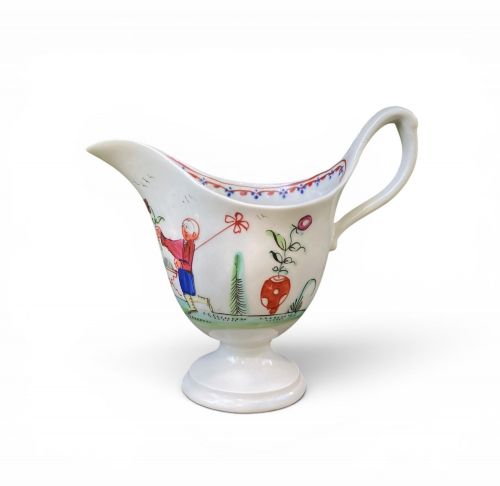
Stylistic shifts trace the journey from eighteenth-century chinoiserie patterns and enamel patch boxes to robust Victorian portrait groups and symmetrical pairs of animals. Each piece reflects the prevailing taste of its decade, executed in regional ceramic bodies.
Materials and Manufacture
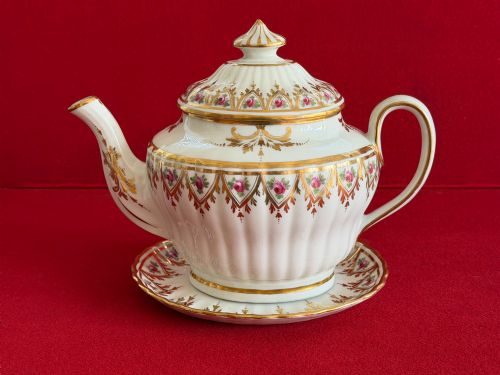
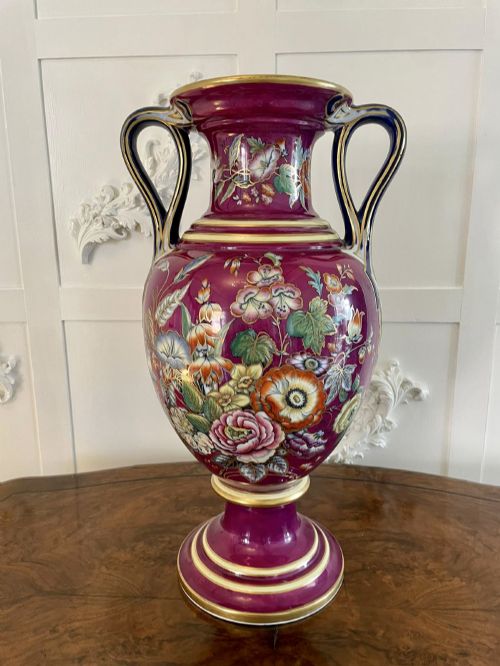
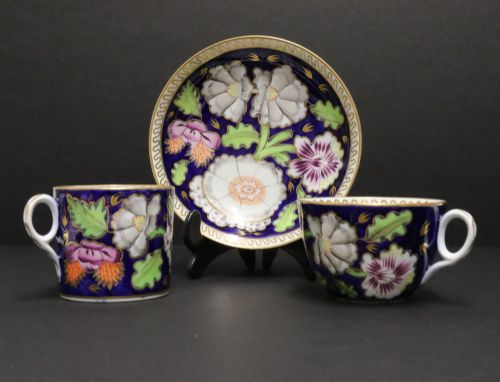
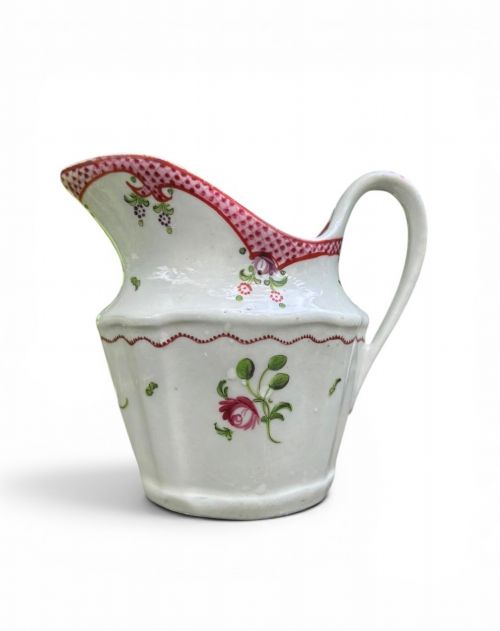
Potters utilised local earthenware, creamware and pearlware bodies, often finished with glossy glazes and decorated with enamel colours applied by hand. Finer cabinet pieces and dessert services employed porcelain or porcelaneous bodies capable of holding intricate floral motifs and gilding.
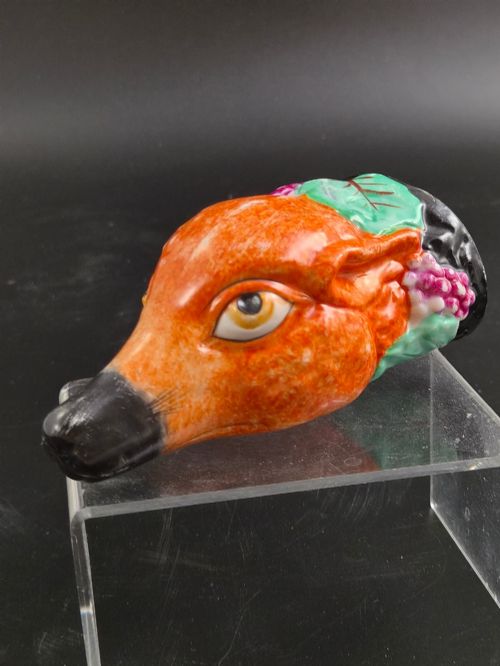
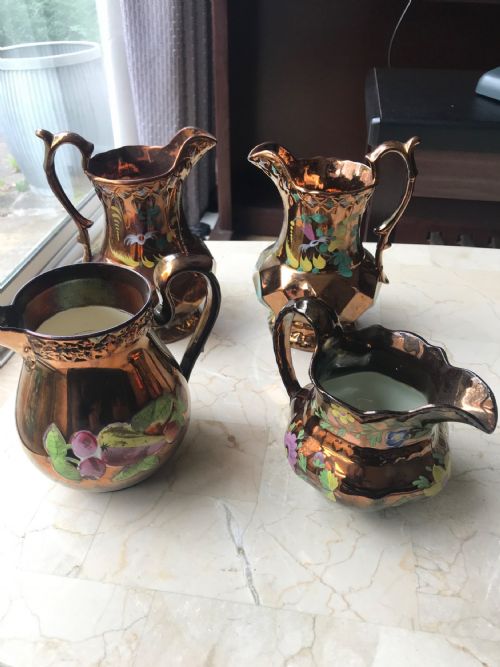
Decoration relied on brushwork for painted scenes, sometimes enhanced with copper lustre or gold leaf highlights. Moulding techniques created relief details such as cabbage leaf patterns, floral sprays and sculptural figures before the final glazing and firing.
Hand Painted Staffordshire Retail Price Guide 2026
Typical asking prices for hand painted staffordshire among the pieces listed under this phrase on Sellingantiques today, from the lower quarter to the upper quarter. They describe what is for sale here now, not the wider market.
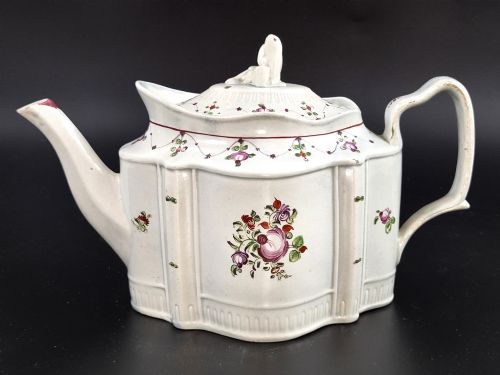
Listings feature items spanning the eighteenth and nineteenth centuries, including Georgian creamware teapots, Regency porcelain jugs and Victorian earthenware flatback figures.
Assessing Quality
Quality rests on the crispness of the moulding and the skill of the brushwork applied to the surface. Stronger examples display confident hand-painted details, steady enamel work and careful application of gold leaf or lustre rather than hurried, formulaic decoration.
The weight and finish of the ceramic body also distinguish the tier of production. Refined porcelain bodies and well-balanced creamware or pearlware forms demonstrate superior kiln management and potting control compared to heavy, coarse earthenware.
John Bevington·John Ridgway·H and R Daniel·Hicks Meigh and Johnson·Samuel Alcock
The Hand Painted Staffordshire Glossary
- Flatback
- A Staffordshire figure modelled with a finished front and a plain, unglazed or flat back designed to sit flush against a wall on a mantelpiece.
- Pearlware
- A refined earthenware developed by Josiah Wedgwood in the late eighteenth century, featuring a pale bluish glaze that pooled slightly in recesses to mimic Chinese porcelain.
- Creamware
- A fine earthenware body with a warm, cream-coloured lead glaze, widely used for domestic tea and dinner wares during the Georgian period.
- Enamel box
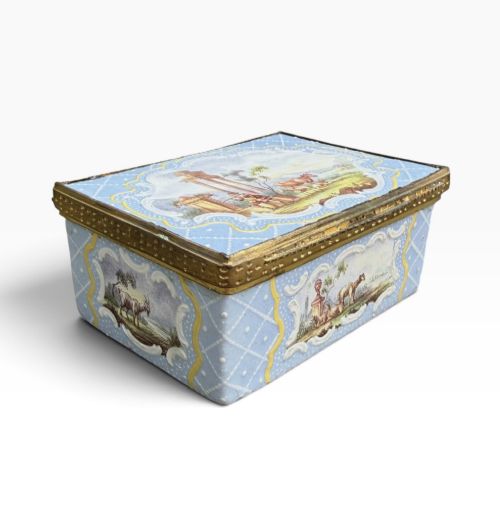
- A small, hinged container made of copper and coated in white enamel, painted with miniature scenes and popular in eighteenth-century South Staffordshire workshops.
- Toby jug
- A pottery jug shaped as a stout, jovial man wearing a tricorn hat, holding a mug of beer or a pipe.
Hand Painted Staffordshire: Frequently Asked Questions
How do I date an antique Staffordshire figure?
Dating relies on stylistic clues, clothing fashions, ceramic bodies and potting techniques. Earlier pieces often employ pearlware or creamware with underglaze colours, whereas Victorian figures frequently use earthenware with bright overglaze enamels and flat backs.
Examining the base and interior provides further context. Unmarked pieces require comparison with known factory models, while registration marks or specific ceramic bodies narrow the period of manufacture down to a particular decade.
Were Staffordshire dogs meant for display?
Staffordshire spaniels and other animal figures served primarily as decorative mantel ornaments in Victorian homes. Pairs were typically placed facing inwards on either side of a fireplace.
Beyond domestic decoration, some folklore suggests these figures held coded meanings in maritime communities, such as being placed in windows to signal whether a sailor husband was away at sea.
How should I clean hand painted ceramics?
Maintenance requires gentle handling and simple cleaning methods to protect the historic enamel decoration and gilding. Dusting with a soft brush keeps the surface clean without risking abrasion.
When washing is necessary, use lukewarm water and mild soap, avoiding harsh detergents or soaking. Fragile pieces with old repairs or delicate gold leaf should remain strictly dry.
What is the difference between earthenware and porcelain?
Earthenware is a porous, opaque pottery body fired at lower temperatures, commonly found in traditional Staffordshire figures and functional jugs. It requires a glaze to become waterproof.
Porcelain is a denser, vitrified material that is white and often translucent even when unglazed, used for finer cabinet items, dessert sets and delicate vases.