



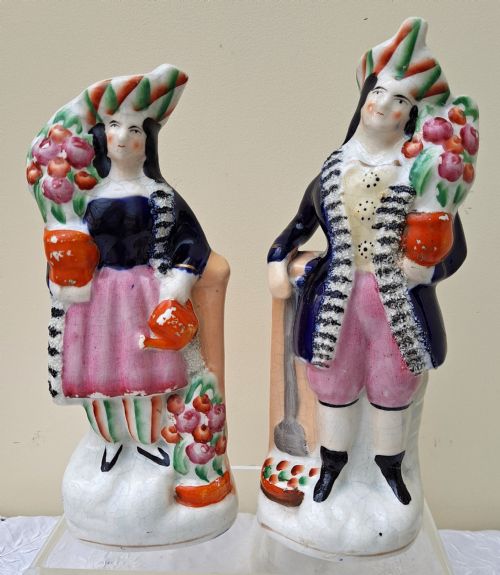
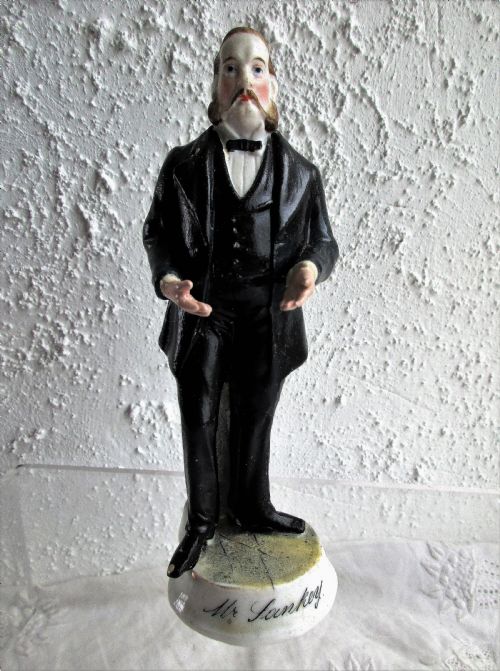


Polychrome Staffordshire Flatback
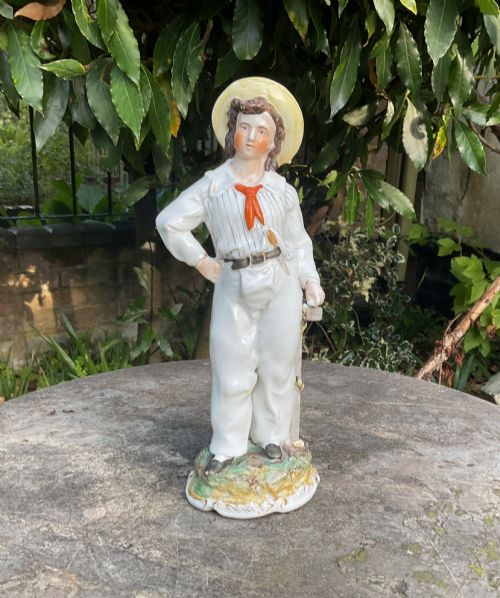
A polychrome staffordshire flatback is a moulded ceramic figure designed to be seen from the front, bringing Victorian portraiture and storytelling into the home.
Polychrome Staffordshire Flatback
When you search for a polychrome staffordshire flatback, you encounter earthenware figures shaped in the Victorian era, spanning specific decades from the mid to late nineteenth century. These pieces depict royal portraits, military heroes, literary characters, and rustic pairings meant for mantelpieces rather than central table displays.
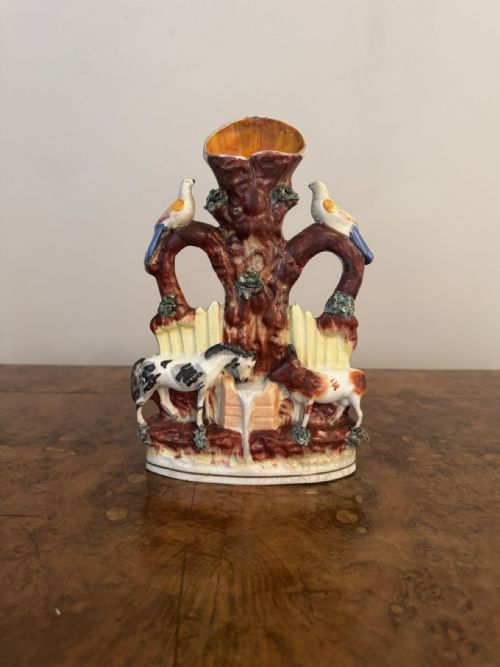
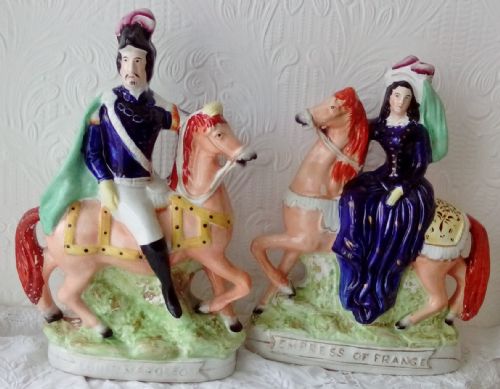
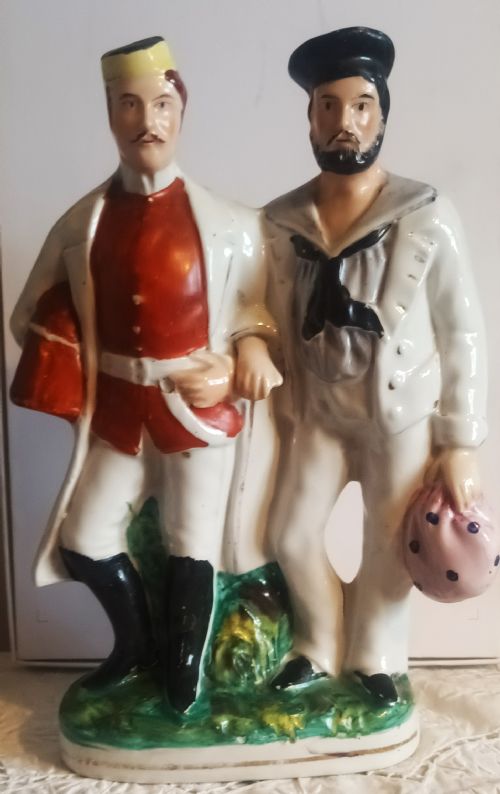
The common versions on this page take the form of spill vases, watch holders, and portrait groups. Subjects range from political figures like Napoleon III and Garibaldi to theatrical personalities and everyday rural workers.
Makers produced these ceramics in series, leading to matched pairs and larger groupings depicting companions, hunters, and historical events. Their unglazed backs distinguish them from earlier Staffordshire figures that were finished in the round.
How They Were Made
Potters formed these figures using earthenware clay pressed into press moulds, joining the front and back sections before firing. The flat or minimally finished reverse allowed the pieces to sit flush against a wall.
Polychrome Staffordshire Flatback Retail Price Guide 2026
Typical asking prices for polychrome staffordshire flatback among the pieces listed under this phrase on Sellingantiques today, from the lower quarter to the upper quarter. They describe what is for sale here now, not the wider market.
Current listings span the Victorian period from 1850 to 1880, utilising earthenware, enamel paint, and lead glaze.
What Varies in Quality
The definition of the modelling separates standard factory output from superior examples, as sharper mould lines retain the crisp details of facial expressions and costume textures. Softer casts often lose these nuances during production.
Brushwork precision in the enamel painting dictates visual success, with finer pieces showing careful application to eyes, lips, and patterned garments rather than hurried splashes of colour. The retention of original gold leaf also marks a better-preserved survivor.
The Polychrome Staffordshire Flatback Glossary
- Flatback
- A ceramic figure modelled primarily for the front and sides with a flat, unglazed reverse meant to face a wall.
- Spill vase
- A hollow cylindrical holder integrated into the figure group, designed to hold wooden spills for lighting fires.
- Polychrome
- Decoration employing multiple distinct enamel colours painted over the glaze.
- Earthenware
- A porous pottery body fired at lower temperatures, standard for nineteenth-century Staffordshire production.
- Watch holder
- A variant incorporating a small hook and frame intended to display a pocket watch on a mantelpiece.
Polychrome Staffordshire Flatback: Frequently Asked Questions
What is a flatback figure?
A flatback figure is a moulded ceramic ornament produced in the nineteenth century with a finished front and a plain, unglazed back.
These pieces were made specifically to stand on narrow mantelpieces or shelves against a wall, saving space while providing a decorative focal point.
How were these figures used?
Victorian households placed them on mantelpieces, chiffoniers, and parlour tables to display political loyalties, literary interests, or theatrical tastes.
Some variants served practical functions, incorporating holders for wooden fire spills or frames to hang pocket watches.
How do I date these ceramics?
Dating relies on identifying the subject matter, such as specific historical events, royal marriages, or Crimean War personalities tied to the mid-nineteenth century.
Stylistic markers, clay density, and the character of the enamel paints and lead glazes also help narrow the period of production.
Are these figures glazed on the back?
Most pieces leave the reverse unglazed and flat, as they were intended to be viewed solely from the front.
This construction method reduced manufacturing costs and allowed the figures to sit flush against interior walls.