




Victorian Staffordshire Group
These Victorian staffordshire group pieces bring cheerful 19th-century folk character to a mantelpiece through hand-painted earthenware figures.
Victorian Staffordshire Group
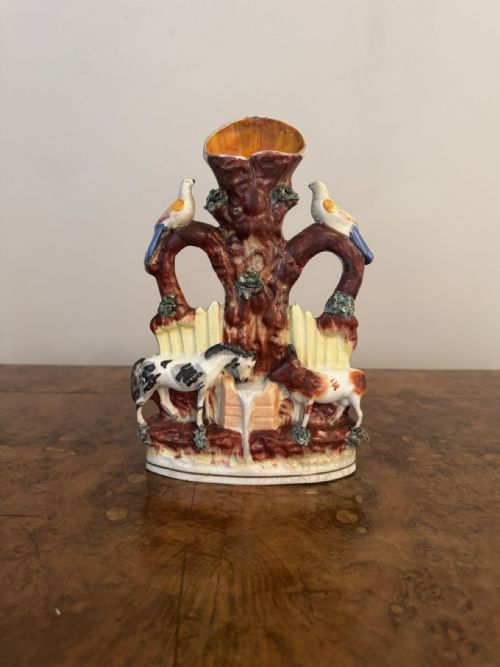
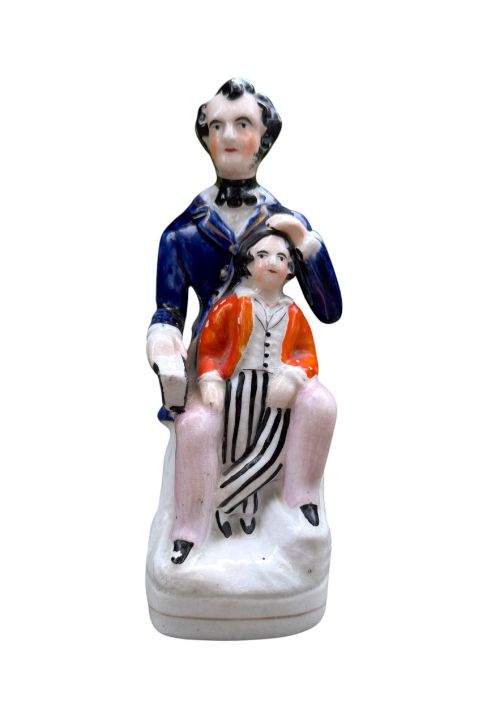
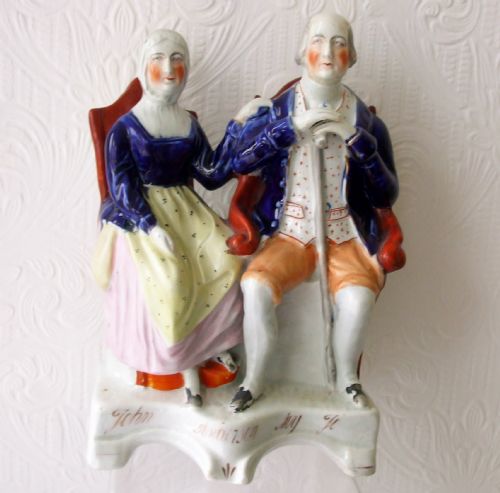
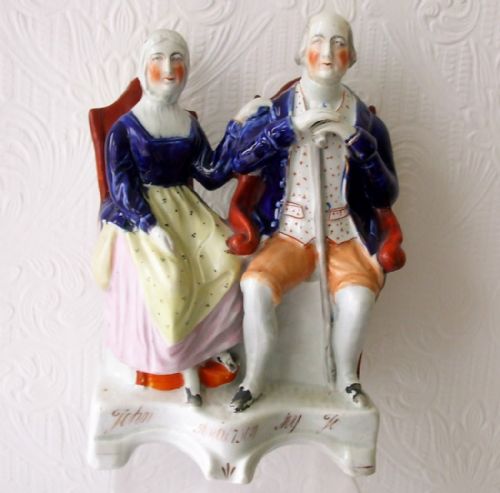
A victorian staffordshire group comprises earthenware figures and pottery groups made during the nineteenth century, often taking the form of flatback figures designed to stand against a wall. The selection includes portrait figures, pairs of cows, clock groups, and spill vases depicting literary characters, royals, and animals.
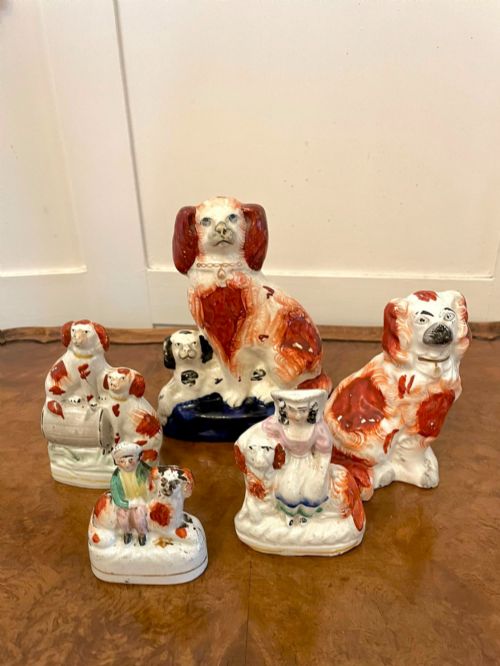
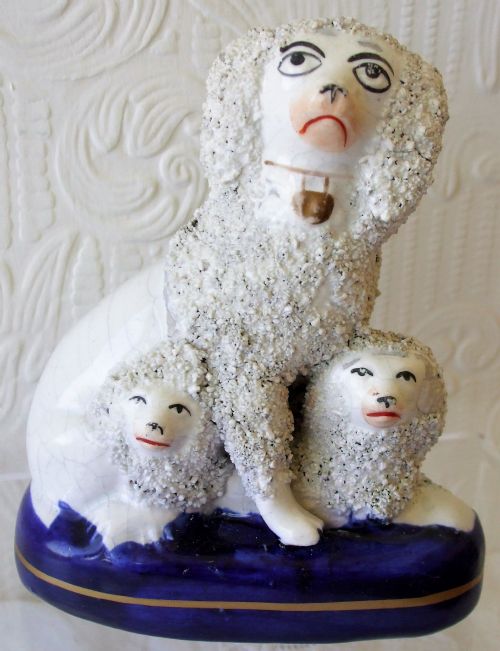
Buyers will frequently encounter domestic animals such as poodles, dogs, lions, stags, and swans alongside allegorical scenes like Peace and Plenty or the Band of Hope. Scottish subjects, military alliances, and literary pairs like Tam O'Shanter and Souter Johnny also appear regularly across the collection.
How they were made
Potters shaped these earthenware ceramic pieces using moulds before applying a clear lead glaze to the surface. The flatback construction meant makers saved material and time by leaving the reverse unadorned for placement on a shelf.
Painters applied enamel paint by hand over the glaze, sometimes adding touches of gold leaf to highlight details. Kiln firing fixed the colours, resulting in the bright, glossy finish characteristic of the period.
Victorian Staffordshire Group Retail Price Guide 2026
Typical asking prices for victorian staffordshire group among the pieces listed under this phrase on Sellingantiques today, from the lower quarter to the upper quarter. They describe what is for sale here now, not the wider market.
Spotted poodles sit proudly alongside Scottish lairds, cows with milkmaids, and Crimean War generals.
What varies in quality
Modelling sharpness also dictates the character of the object, as crisp mouldings preserve facial expressions and textures like wool or fur more clearly than worn or softer strikes.
The Victorian Staffordshire Group Glossary
- Earthenware
- A porous type of pottery fired at lower temperatures, commonly used for nineteenth-century decorative figures. It forms the ceramic body beneath the lead glaze.
- Flatback
- A style of figure moulded with a finished front and a flat, unpainted rear side. This design allowed the pottery to sit flush against a wall or mantelpiece.
- Spill Vase
- A hollow ceramic tube incorporated into a figure group, designed to hold taper spills for lighting pipes or candles. These objects combine practical utility with decorative modelling.
- Enamel Paint
- Coloured vitreous paint applied over the glaze and fired at a lower heat to fix the pigments. It gives these nineteenth-century ceramics their characteristic bright palette.
- Clock Group
- A pottery figurine modelled around a clock face opening, whether functional or decorative. These mantel ornaments often feature animals or figures flanking the central dial.
Victorian Staffordshire Group: Frequently Asked Questions
What is a flatback figure?
A flatback figure has a fully modelled and painted front with a flat, plain reverse side. This allowed makers to save on clay and kiln space while ensuring the piece sat neatly against a wall.
These objects were specifically designed for display on high mantelpieces where only the front view mattered to the viewer.
How were spill vases used?
Spill vases incorporated a hollow cylindrical holder alongside the main ceramic group to store thin paper or wooden spill lights. Households used these tapers to transfer flames from the hearth to candles or lamps.
They combine the decorative appeal of a portrait or animal group with a practical household accessory.
What subjects do these figures show?
The subjects range from domestic animals like poodles, cows, and stags to historical royalty, literary characters, and military alliances. Makers drew inspiration from current events, Scottish folklore, and popular stories of the day.
Pairs of animals and allegorical groups such as the Band of Hope formed staples of nineteenth-century home decoration.
Are these pieces made of porcelain?
These items consist of earthenware rather than porcelain or bone china, utilising a heavier and more porous ceramic body. Potters coated this clay body in a glossy lead glaze before applying enamel colours.
This material choice suited the utilitarian folk art methods of nineteenth-century Staffordshire potteries.