






English Pottery Figure Group
These english pottery figure group pieces are spirited ceramic portrayals of domestic scenes, animals, and historical subjects that bring character to a room.
English Pottery Figure Group
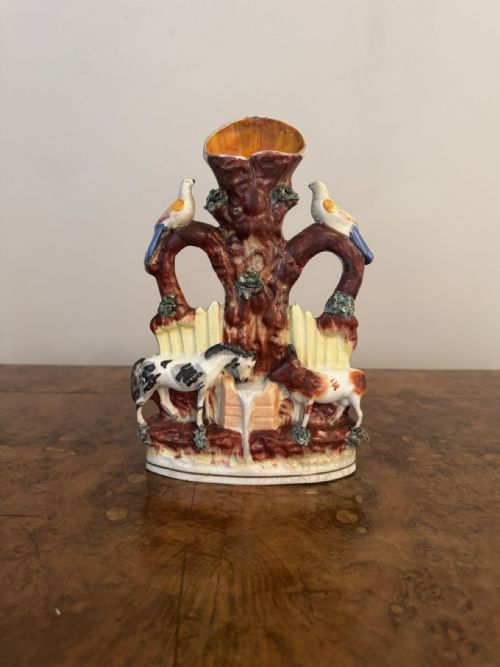
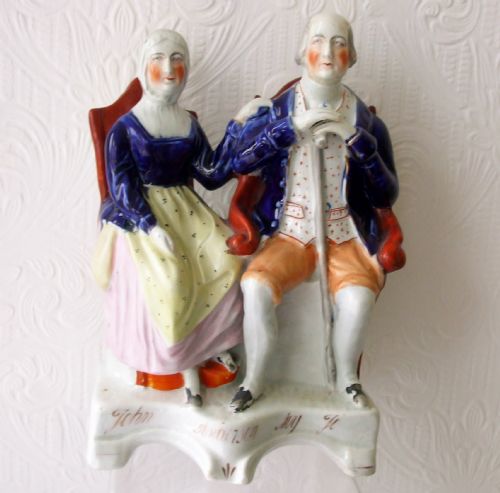
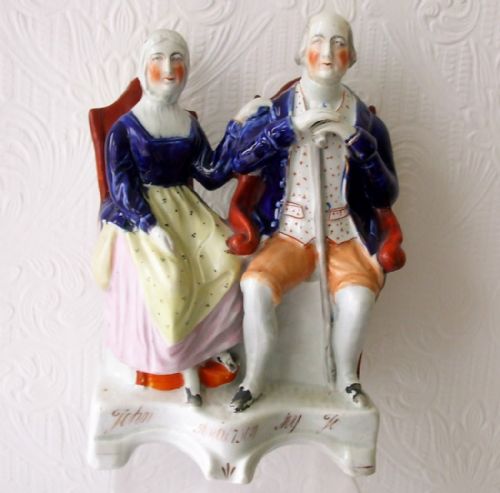
When you search for an english pottery figure group, you encounter charming earthenware models that capture Victorian life, literature, and pastoral subjects. The examples most frequently met on this page span the nineteenth century, taking the form of flatback portrait figures, spill vases, and multi-figure pastoral displays.
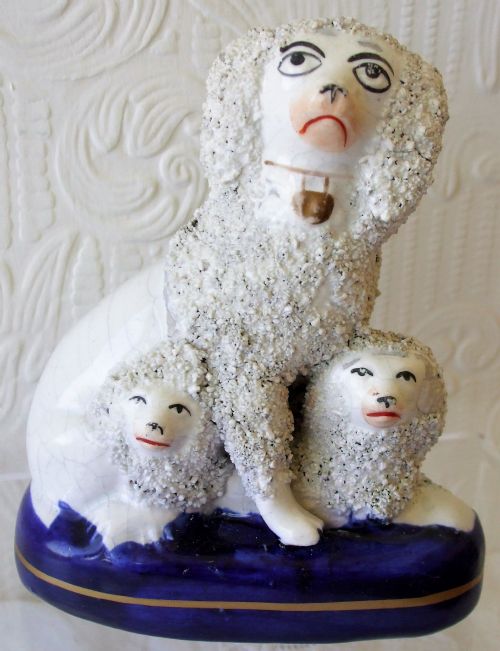
The subjects range from domestic animals like poodles and deer to theatrical groupings, literary references, and geopolitical allies from the Crimean War era. Makers produced these decorative pieces to sit on mantelpieces, designed primarily to be viewed from the front rather than in the round.
How they were made
Potters built these figures using earthenware and pearlware bodies, shaped with moulds to achieve consistent forms across popular subjects. Once shaped, the pieces received hand-painted enamel colours and translucent glazes before firing.
Lead glaze finishes provided a glossy sheen over the enamel paint, sealing the porous ceramic body underneath.
English Pottery Figure Group Retail Price Guide 2026
Typical asking prices for english pottery figure group among the pieces listed under this phrase on Sellingantiques today, from the lower quarter to the upper quarter. They describe what is for sale here now, not the wider market.
Poodles appear frequently with woolly coats formed from tiny clay granules stuck on by hand.
What varies in quality
The complexity of the composition also separates standard production from superior output, particularly in multi-figure groups where posture and spatial arrangement demand greater skill.
Walton
The English Pottery Figure Group Glossary
- Flatback
- A figure moulded with a finished front and a plain, unglazed or lightly glazed flat reverse designed to sit flush against a wall.
- Pearlware
- A refined earthenware body developed with a bluish-white glaze that created a paler surface than traditional creamware.
- Spill vase
- A hollow figural group incorporating an integrated cylindrical holder intended to contain wooden taper splints for lighting fires.
- Enamel paint
- Vitreous pigments applied over the fired glaze and fixed by a lower-temperature second firing to add colour.
- Earthenware
- A porous ceramic body fired at lower temperatures, forming the structural base for the majority of these figures.
English Pottery Figure Group: Frequently Asked Questions
What is a flatback figure?
Flatback figures are ceramic models designed specifically to stand on mantelpieces or narrow shelves against a wall. The back is typically flat and minimally decorated.
Potters adopted this construction method to save materials and reduce weight, focusing all the decorative detail on the front view.
How old are these figures?
The pieces seen here date primarily from the nineteenth century, spanning the Victorian period and earlier decades like the eighteen-thirties. Stylistic cues and material types help place them in this era.
Earthenware bodies and hand-applied enamel colours are characteristic of nineteenth-century Staffordshire production methods.
What subjects do they show?
The subjects cover a wide range of Victorian life, including literary characters, royal portraits, military alliances, and pastoral scenes with animals. Poodles, deers, and milkmaids are common motifs.
Many groups also illustrate moral tales or temperance themes, such as the Band of Hope figures popular in the period.
What is a spill vase group?
A spill vase group combines a figural ceramic sculpture with an integrated vertical tube meant to hold wooden matches or tapers. These items served a practical domestic function beside the fireplace.
The sculptural elements often wrap around or stand beside the central vase cylinder, blending utility with decoration.