

Hand Painted Serving Platter
A hand painted serving platter brings centuries of brushwork and pigment straight to the table.
Hand Painted Serving Platter
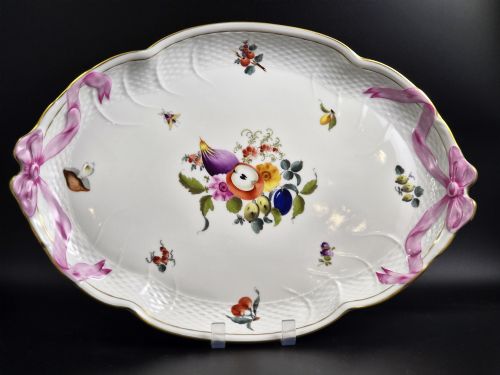
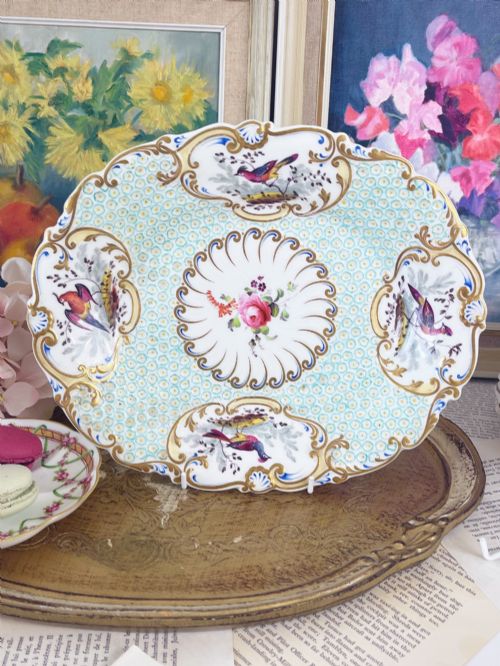
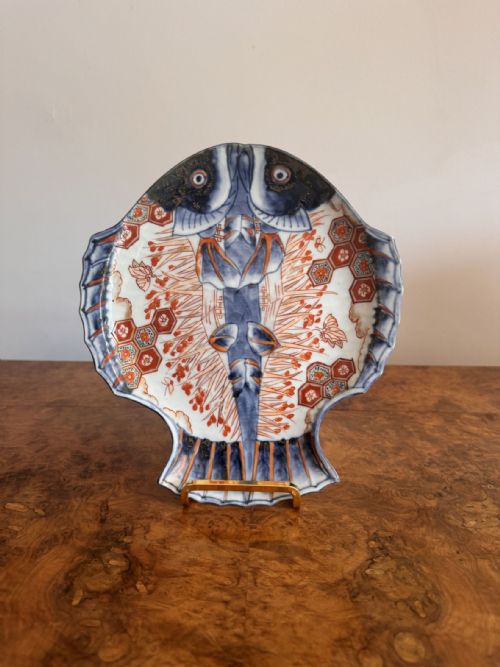
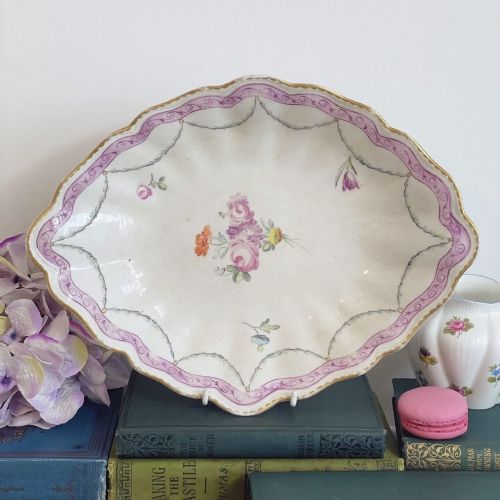
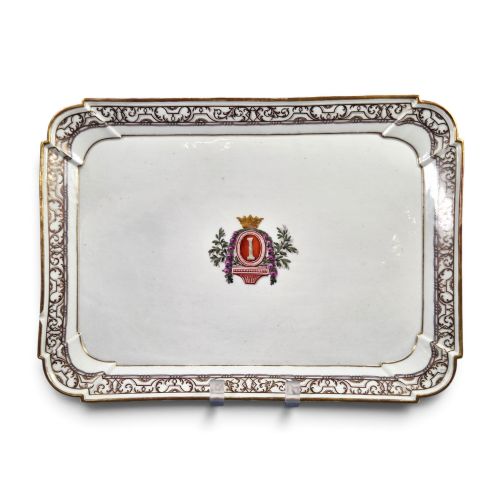
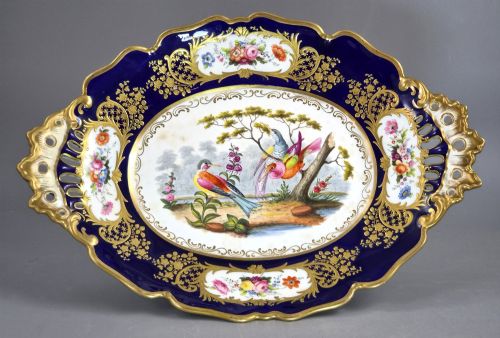
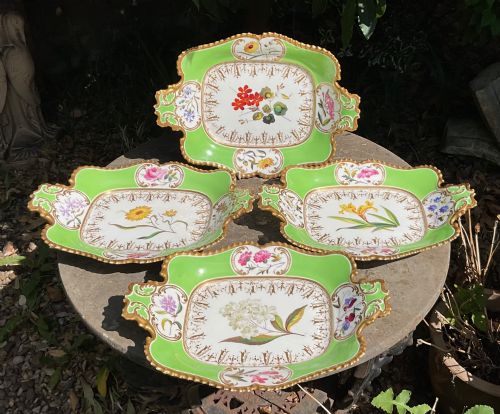
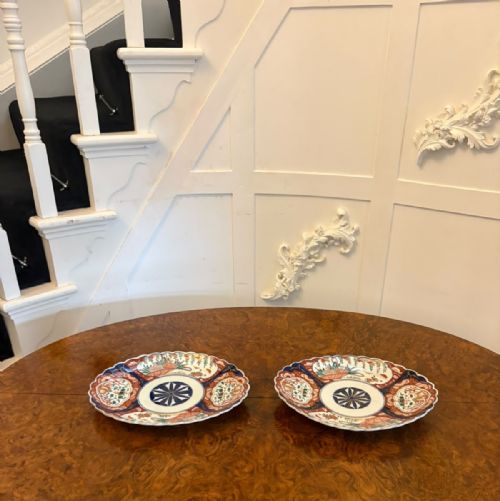
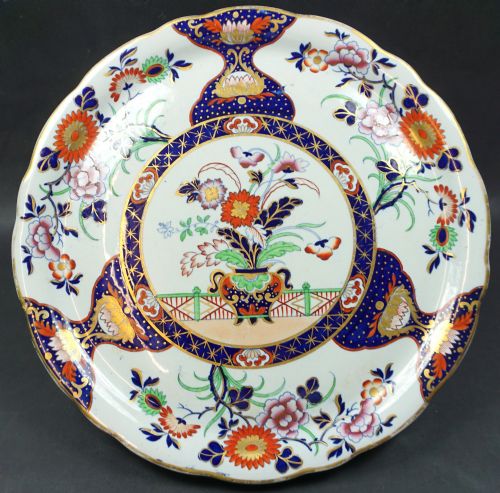
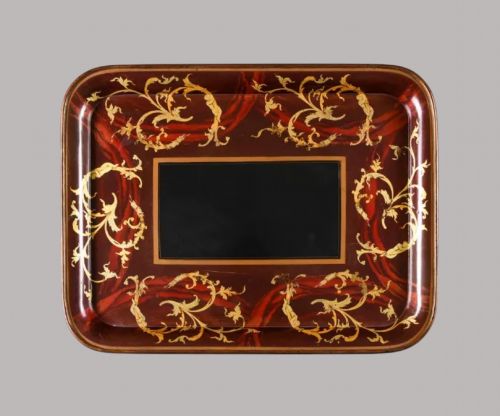
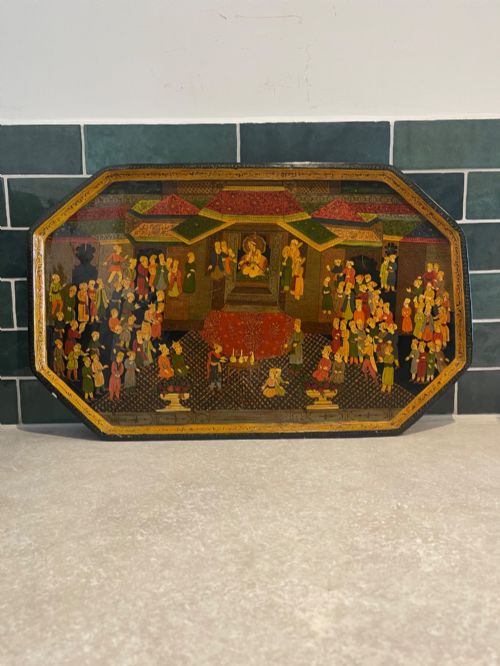
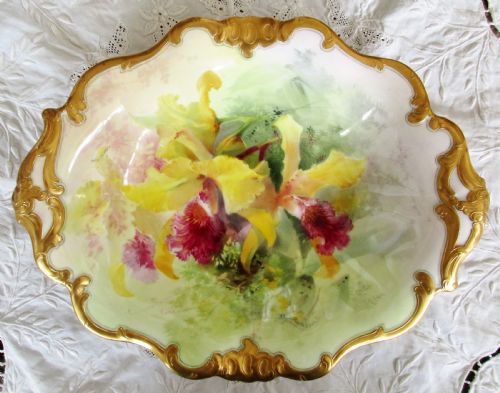
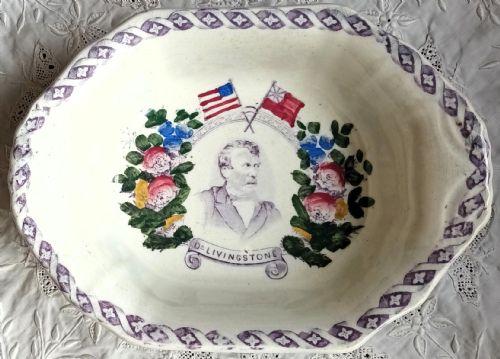
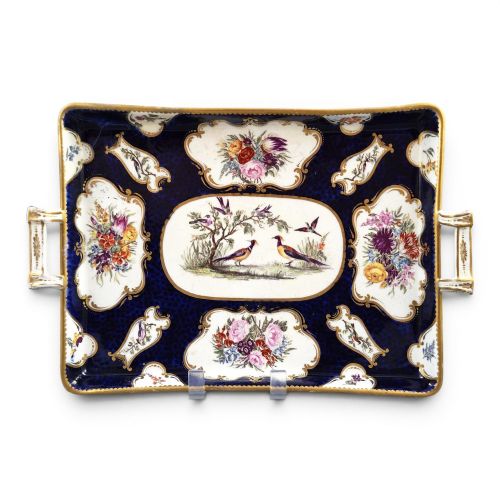
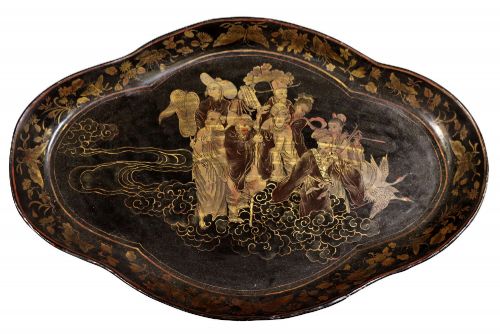
When looking for a hand painted serving platter, a buyer encounters a diverse group of ceramics, papier-mâché, and metal toleware intended for presentation and service. The selections range from eighteenth-century Delft chargers and Derby dishes to nineteenth-century Japanese Imari porcelain and English floral trays.
The versions met most frequently on this page originate from English factories like Coalport and Chamberlains Worcester, alongside continental porcelain and imported Japanese wares. These objects combine utilitarian service with pictorial brushwork, spanning periods from the Georgian era through to the early twentieth century.
How they were made
The physical construction relies on porcelain, earthenware, or compressed papier-mâché finished with durable surface coatings. Ceramic examples employ fired clay bodies glazed and decorated with polychrome pigments or cobalt blue, sometimes accented with gold leaf and gilding.
Papier-mâché and toleware trays utilise layered paper pulp or metal bases built up with japanned varnishes and lacquers. Artisans apply detailed brushwork by hand, often fixing the pigments through high-temperature kiln firings for ceramics or protective varnishes for organic substrates.
Listings feature porcelain, enamel, lacquer, and papier-mâché across periods from the eighteenth century to the twentieth century.
What varies in quality
Quality rests upon the precision and ambition of the hand-painted decoration rather than the mere presence of colour. Skilled artists achieve depth and nuance in floral, avian, or figurative subjects, whereas lesser examples display rigid lines and hurried washes.
The integrity of the physical substrate and the preservation of the original glaze or lacquer surface dictate the overall standard. Pieces retaining crisp gilding, clear maker marks, and undisturbed structural bodies sit at the upper end of the range.
H & R Daniel·Derby·Coalport·Chamberlains Worcester·Hicks & Meigh·Royal Doulton·Copeland & Garrett·Joseph-Gaspard Robert·Spode·Müller Volkstedt·Sevres
The Hand Painted Serving Platter Glossary
- Imari
- A style of Japanese porcelain featuring vibrant underglaze blue and iron-red designs, often enriched with gold leaf. This aesthetic was heavily emulated by European potteries during the eighteenth and nineteenth centuries.
- Charger
- A large ornamental or serving plate, typically measuring over thirty centimetres across. These pieces often display elaborate pictorial scenes and hang on walls or serve at large tables.
- Papier-mâché
- A composite material made from paper pulp or sheets mixed with glue and pressed into moulds. Once dried, it provides a sturdy, lightweight base for decorative japanning and lacquer work.
- Toleware
- Painted or lacquered tinplate metalware produced in Europe and Britain. These utilitarian items receive decorative finishes mimicking Asian lacquer techniques.
- Polychrome
- Decoration employing multiple distinct colours applied by hand. This technique allows for complex botanical, avian, and heraldic compositions across ceramic surfaces.
Hand Painted Serving Platter: Frequently Asked Questions
Can I use these platters for serving food today?
Many of these pieces were originally created for domestic service and dining. However, historical porcelain and fragile papier-mâché require careful handling.
Modern dishwashers and harsh detergents should be avoided to protect antique glazes, hand-painted pigments, and delicate gilding from permanent damage.
How do I clean an antique papier-mâché tray?
Papier-mâché and japanned surfaces are sensitive to moisture and excessive water immersion. Maintenance requires only a very gentle dusting with a dry, soft cloth.
Moisture can lift the underlying paper layers or cloud the historic lacquer and varnish finishes.
How can I identify the date of a porcelain dish?
Dating relies heavily on recorded factory marks, painted pattern numbers, and specific stylistic traits associated with periods like the Georgian era or the Regency.
Comparing the potting weight, glaze texture, and pigment palette against documented examples provides a reliable window of manufacture.