
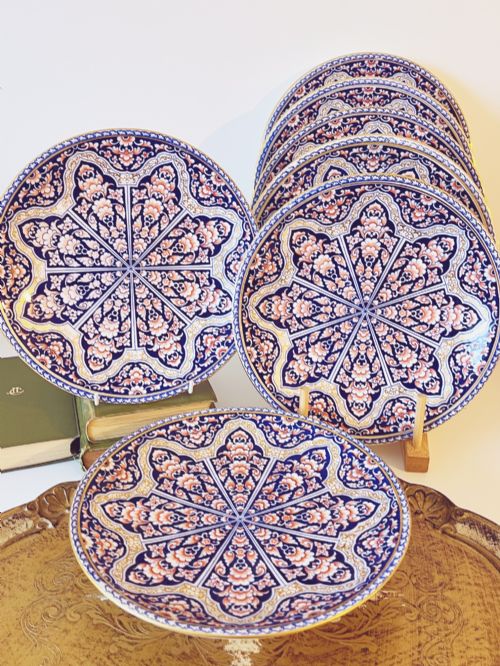


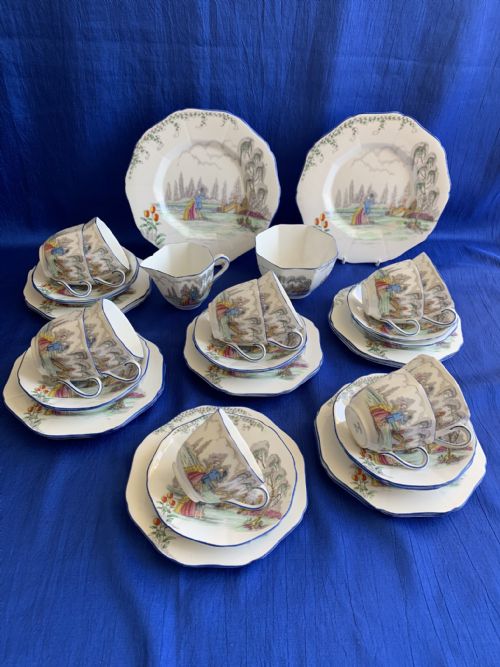


Antique Cake Plate Set
An antique cake plate set brings proper service to the table, offering matched ceramic tiers or plates alongside serving cutlery for tea.
Antique Cake Plate Set
When searching for an antique cake plate set, buyers encounter various configurations spanning the nineteenth century through the art deco period. These groupings typically include dessert services, tea sets, and sandwich sets made from porcelain, bone china, and earthenware.
The nineteenth-century examples often take the form of dessert services with comports and plates, while later twentieth-century iterations lean towards sandwich sets and tea services. Ceramic forms are occasionally accompanied by serving cutlery in silver or silver plate.
Materials and methods
The ceramic components rely on porcelain, bone china, and stone china, shaped into plates, comports, and serving vessels. Decoration involves hand painting and glaze application, frequently enhanced with gilt and gold leaf highlights.
Metal serving items utilise silver or silver plating, paired with handles of various materials. These pieces demonstrate the manufacturing traditions of nineteenth-century potteries and twentieth-century tableware firms.
The listings span from the Regency era through Victorian styles to Art Deco productions of the 1930s.
Factors of quality
Quality rests upon the execution of the hand painting and the crispness of the ceramic moulding. Fine gilding work and well-preserved enamel decoration elevate the standing of a service.
The completeness of the set, particularly when paired with original boxes or matching serving cutlery, dictates the character of the grouping. Maker attribution also influences distinction among similar ceramic wares.
Royal Crown Derby·John Ridgway·Spode·Doric China Longton Stafford·Royal Doulton·Wileman Foley Shelley·Davenport·Gladstone Potteries·Lee And Wigfull Sheffield
The Antique Cake Plate Set Glossary
- Comport
- A raised dish or bowl used for serving fruit or cakes as part of a dessert service. It stands on a foot or pedestal above the level of the flat plates.
- Bone china
- A type of soft-paste porcelain containing bone ash, known for its high strength, chip resistance, and translucent body. It became a staple of British ceramic manufacture.
- Stone china
- A durable, opaque ceramic body developed in the nineteenth century to bridge the gap between earthenware and true porcelain. It withstands heavy usage while accepting rich glaze colours.
- Gilt
- A thin layer of gold applied to the surface of ceramics or metalware for decoration. It provides metallic contrast against painted floral or geometric motifs.
Antique Cake Plate Set: Frequently Asked Questions
What is included in a set?
An antique cake plate set typically comprises a grouping of plates alongside serving vessels, comports, or dedicated cutlery. Some configurations contain matching tea wares or sandwiches plates.
Counts vary from small sandwich sets of seven pieces up to larger twenty-piece tea and dessert services designed for formal gatherings.
How do I date these sets?
Dating relies on maker marks, registration numbers, and ceramic bodies applied by the pottery. Stylistic cues such as regency shapes or art deco geometry offer further chronological boundaries.
Backstamps stamped or printed underneath the glaze provide the most reliable evidence for manufacturing periods.
Can I use them for dining?
Many buyers utilise these ceramics for everyday tea service or special occasions, provided they handle the pieces with appropriate care. Hand washing is strongly recommended to protect delicate gilding and hand-painted enamels.
Harsh detergents and automatic dishwashers should be avoided entirely to preserve the historic glaze.
Were boxes common?
Some serving sets and cutlery pairs were retailed in fitted presentation boxes lined with velvet or satin. These fitted containers protected silver plated knives and forks during storage.
Original boxes add historical context to the set but remain less common than loose ceramic plates.