
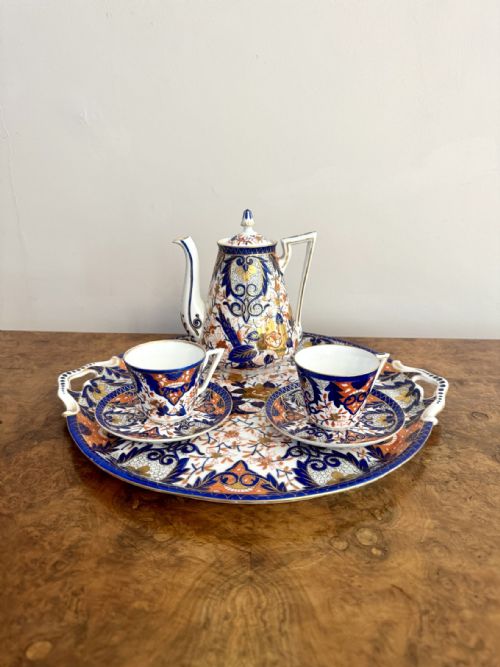


Antique Ceramic Tray Set
These antique ceramic tray set pieces bring together matched sets and fitted desk stands in porcelain, earthenware, and tin-glazed faience.
Antique Ceramic Tray Set
An antique ceramic tray set brings together coordinated vessels or desk accessories arranged for service or display. When searching for an antique ceramic tray set, buyers encounter various functional forms including coffee sets, tea sets, breakfast sets, and desktop inkstands. These groupings span multiple periods from the Regency era through to the Art Deco period of the twentieth century.
The most common configurations on this page include desk accessories featuring inkwells mounted on brass stands alongside tabletop service sets. Examples range from Dutch Delft blue and white faience pieces to English porcelain breakfast services and French dessert sets. Each assembly reflects the domestic habits and writing rituals of its respective decade.
Materials and manufacture
Makers shaped these sets from porcelain, earthenware, and tin-glazed ceramic bodies. Glazing techniques provided protective surfaces, sometimes accented with gold leaf details or hand-painted blue and white pigments.
Several desk accessories incorporate fitted brass bases or brass stands to support ceramic inkwells. Manufacturing methods varied from early nineteenth-century hand-finishing to later standardised factory production.
Listings feature items from the Regency, Victorian, Edwardian, and Art Deco periods, created in porcelain, earthenware, and tin-glazed ceramic.
Assessing quality and execution
The standard of painting and the crispness of moulded detail distinguish finer items from standard production. Superior examples display carefully applied enamels and well-preserved gilt highlights without excessive rubbing.
Completeness significantly influences a set, particularly where multiple plates, cups, or fitted ink receptacles form a single service. The integration of supporting elements like brass mounts or lazy Susan mechanisms also demonstrates higher ambition in design.
Minton Porcelain·Royal Doulton·Coalport Porcelain·Royal Crown Derby
The Antique Ceramic Tray Set Glossary
- Faience
- Tin-glazed earthenware, typically decorated with blue pigments on a white background. This technique appears frequently in Dutch pieces.
- Inkstand
- A fitted desk stand holding one or more inkwells, often incorporating pen trays. These pieces served domestic and professional writing desks.
- Imari
- A decorative style featuring rich blues and iron red combined with gold. Victorian interpretations of this aesthetic appear on various ceramic services.
- Solitaire set
- A small, single-person tea or breakfast set comprising a tray, cup, pot, and sometimes a cream jug. They were designed for private use in bedrooms.
- Supper set
- A specialised arrangement of segmented dishes fitted to a rotating tray or lazy Susan. These items allowed diners to serve themselves efficiently.
Antique Ceramic Tray Set: Frequently Asked Questions
What pieces belong in a breakfast set?
A breakfast set typically includes larger vessels for morning service, such as teapots, cups, and supporting plates arranged together on a matching tray.
These collections provided everything required for a solitary or shared morning meal before formal dining became widespread in the dining room.
How do I care for antique ceramic trays?
Keep these pieces away from direct sunlight and extreme temperature fluctuations to protect the glaze and any delicate gold leaf accents. Dust them gently with a soft, dry cloth rather than using liquid cleaners.
Hand washing is essential if cleaning is required, avoiding harsh detergents that might damage painted enamel decoration.
What is a Dutch Delft inkstand?
A Dutch Delft inkstand is a tin-glazed earthenware desk accessory featuring blue and white decoration in the faience tradition. These items usually incorporate pen rests and ink receptacles.
They reflect seventeenth and eighteenth-century Dutch ceramic techniques that continued into the nineteenth century.
How do I identify a Victorian inkstand?
Victorian inkstands often combine ceramic inkwells with brass bases or wooden trays, displaying styles ranging from Rococo Revival curves to simpler geometric forms. They date from the nineteenth century.
Makers such as Minton produced elaborate porcelain examples influenced by continental aesthetics like Sèvres.
Are twentieth-century sets different?
Twentieth-century sets from the Edwardian and Art Deco periods show lighter colour palettes and cleaner lines compared to heavier Victorian predecessors. They include dressing table sets and dessert services.
Production methods became more mechanized, though hand-finishing remained common among major potteries.