
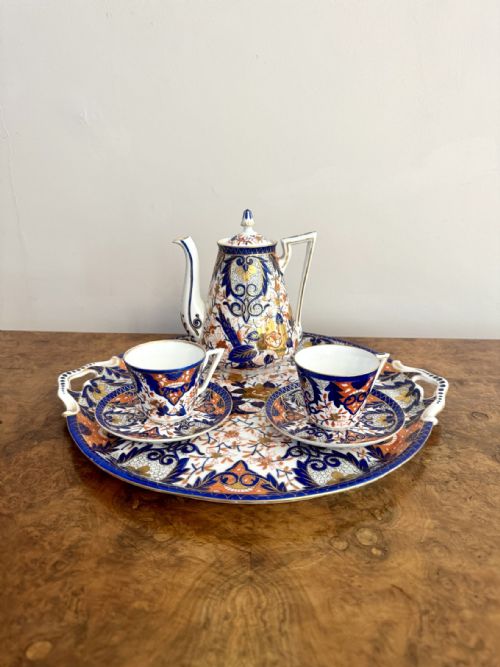


Antique Porcelain Tray Set
An antique porcelain tray set brings functional elegance to a table, combining fitted ceramic service pieces with coordinated serving trays from various historic eras.
Antique Porcelain Tray Set
When you search for an antique porcelain tray set, you encounter a diverse gathering of matched ceramic groups designed for dining, writing, or dressing table use. These composite sets typically comprise a main tray or stand accompanied by vessels such as inkwells, coffee pots, cups, or dessert plates.
The pieces span multiple periods from the early nineteenth century through the Art Deco era, encompassing styles like Victorian Imari, Dutch Delft, Rococo Revival, and Edwardian designs. You are most likely to meet coffee services, inkstands, and dressing table sets fashioned from porcelain, ceramic, and occasionally mounted on brass bases.
Origins vary widely across these listings, featuring English factories like Minton, Coalport, Royal Doulton, and Royal Crown Derby, alongside Continental, French, and Dutch makers. Forms range from breakfast sets and supper sets with lazy susans to demitasse services and miniature solitaire sets.
Materials and construction
The primary material across these sets is hard or soft-paste porcelain and ceramic, often enhanced with applied enamel colours and metallic detailing such as gold leaf. Skilled artisans shaped the vessels and trays before firing them in kilns to set the glaze.
Many sets incorporate mixed media elements, pairing ceramic inkwells or porcelain dishes with fitted brass stands, silver plate, or glass components. Painting and gilding were applied by hand, creating intricate surface patterns unique to each period and maker.
Listings feature porcelain, gold leaf, enamel, ceramic, brass, glaze, silver plate, and glass across various historical forms.
Distinguishing quality across sets
Quality in an antique porcelain tray set rests upon the precision of the hand-painting, the crispness of the porcelain moulding, and the preservation of the original gilding and enamel work. Sets that retain their complete complement of matching vessels display a higher degree of original craftsmanship.
The integration of secondary materials, such as heavy cast brass bases or finely fitted silver plate, separates standard utilitarian wares from superior decorative productions. Finer examples also exhibit sophisticated stylistic influences, such as Sèvres-style painting or intricate Dutch Delft patterning.
Elkington·Minton·Royal Doulton·Coalport·Royal Crown Derby
The Antique Porcelain Tray Set Glossary
- Porcelain
- A fine, white, vitrified ceramic material fired at high temperatures. It is distinguished by its translucency and smooth glaze.
- Demitasse
- A small cup used for serving strong black coffee. These often appear in mid-sized or larger coffee and liqueur services.
- Inkstand
- A desk accessory comprising an inkwell, pen tray, and sometimes a sander or taper holder mounted on a shared base. They form a central category within desk-related sets.
- Lazy Susan
- A revolving tray placed on a table or larger tray to assist in moving food or dishes. This mechanism appears in supper sets from the nineteenth century.
- Enamel
- A decorative glass-like substance fused to the surface of porcelain through firing. It provides the vibrant colours seen in patterned sets.
Antique Porcelain Tray Set: Frequently Asked Questions
What pieces belong in an inkstand set?
An inkstand set typically includes a ceramic inkwell positioned on a dedicated tray or brass stand, alongside spaces for pens. These desk accessories served domestic and professional writing needs.
Many examples feature lidded wells to keep the ink moist, accompanied by matching sanders or small trays for nibs and wax seals.
How were breakfast and coffee sets used?
Breakfast and coffee sets were utilised for morning hospitality, offering a matched grouping of cups, pots, and a supporting tray. They allowed hosts to serve drinks or small meals with coordinated presentation.
Later Edwardian and Art Deco iterations continued this tradition, adapting the vessel shapes to changing social habits and dining styles.
How do I identify a Regency period set?
Regency and early nineteenth-century sets display classical neoclassical forms, often featuring hand-painted motifs and simpler ceramic profiles before the more ornate Victorian styles emerged.
Examining the glaze, paste density, and decorative style helps place a set within the broader timeline spanning from eighteen-forty backward to the early decades.
What is a solitaire set?
A solitaire set is a miniature or single-person tea or coffee service designed for one user. It includes a small tray, a diminutive pot, a cup, and a saucer.
These compact sets showcase the skill of factories like Royal Crown Derby in scaling down complex tableware patterns for individual service.