
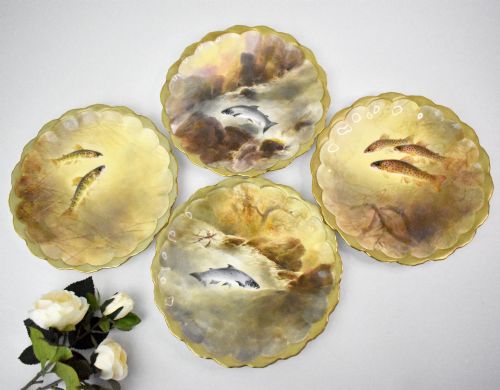

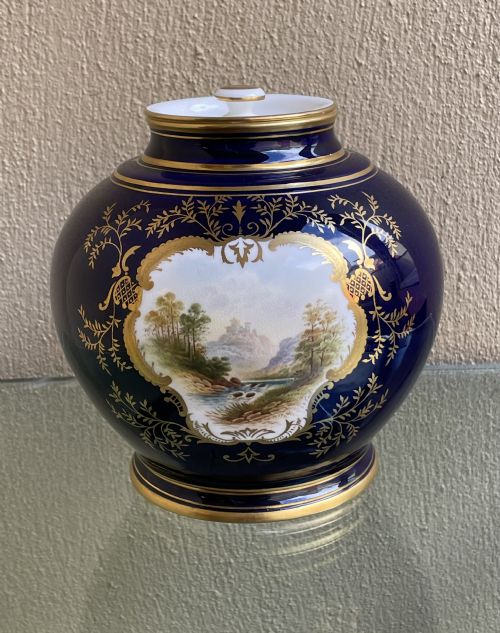


Hand Painted Landscape China
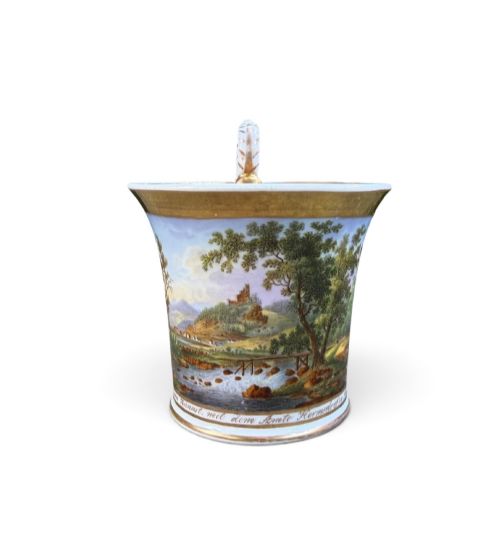
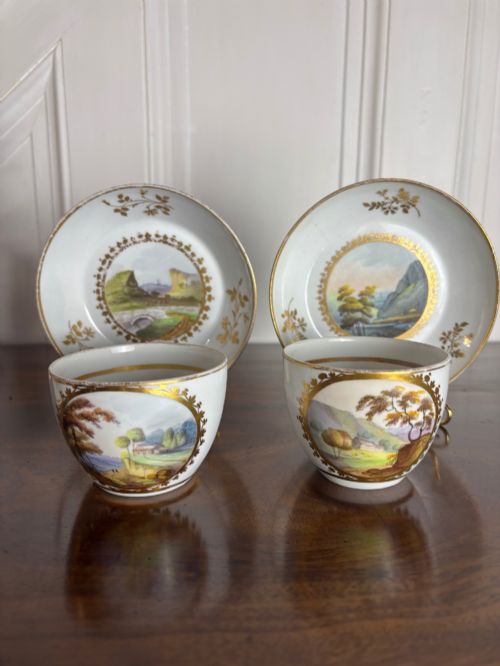
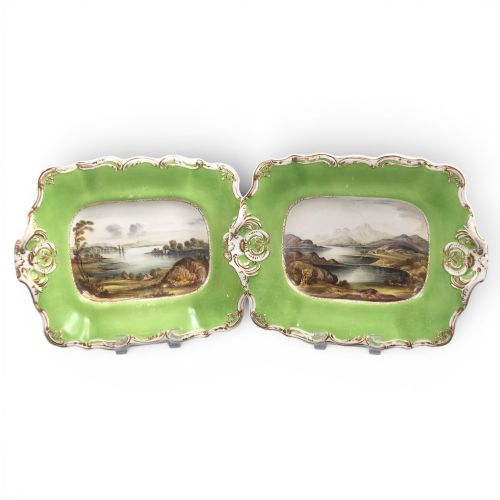
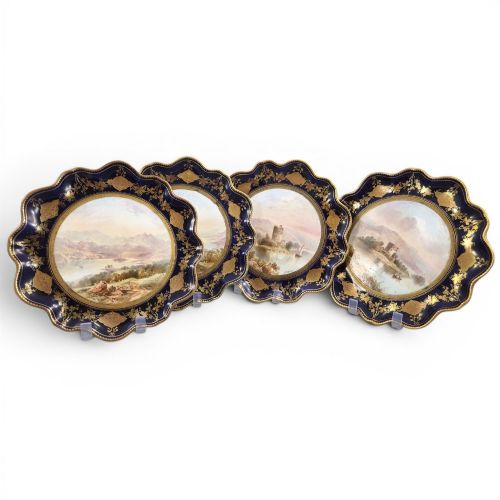
Hand painted landscape china brings topographical views and pastoral scenes straight onto porcelain plates, vases, and cups.
Hand Painted Landscape China
Hand painted landscape china comprises porcelain items decorated with scenic views, rivers, castles, and highland cattle. Buyers searching for hand painted landscape china often encounter cabinet plates, vases, and cups from the 18th century, the Victorian era, and the early 20th century.
The objects take many functional and decorative forms, including serving dishes, dessert sets, cream tureens, and spill vases. Pieces originate from English factories like Royal Worcester, Coalport, and Minton, alongside continental porcelain from France and Berlin.
The style spans Georgian neoclassical forms through to Edwardian cabinet pieces. Specific named views, such as Scottish vistas and Windsor Castle, appear frequently across the items listed on this page.
Materials and techniques
Maker's workshops used porcelain, bone china, and ironstone as the primary ceramic bodies for these scenic items. Artisans applied enamel paints by hand to render intricate landscapes and topographical details directly onto the glazed surface.
Gilding, gold leaf, and gilt accents frequently frame the painted scenes, adding metallic borders to plates, vases, and saucers. Certain Minton pieces incorporate pearl and jewelled decoration alongside the landscape painting.
Highland cattle stare out from Royal Worcester spill vases, reminding us that Victorian cows made excellent companions for mantelpieces.
Quality variations in landscape china
Quality separates by the precision of the brushwork and whether the scene is an imaginative pastoral subject or a named topographical view by a known artist. Pieces painted by specific artists like Zachariah Boreman, Joseph Birbeck Senior, or E O Ball carry distinct artistic attribution.
The sophistication of the ceramic body and the application of gold leaf or gilding contribute to the standing of a piece. Ironstone and standard earthen forms sit differently in the hand compared to fine porcelain and bone china bodies.
Berlin porcelain·Minton·Copeland and Garrett·Aynsley·Royal Doulton·Mintons·Coalport·Pucher Deroche·Derby Porcelain·Hicks Meigh and Johnson·Royal Worcester·Barr Flight Barr·Mason's Ironstone
The Hand Painted Landscape China Glossary
- Cabinet plate
- A decorative porcelain plate intended for display in a cabinet rather than for dining use. These often feature hand-painted scenes and gilt borders.
- Topographical view
- A specific, identifiable real-world location rendered accurately in paint, such as a named castle, lake, or estate.
- Gilding
- The application of gold leaf or gold paint to ceramic surfaces. It frames panels and highlights rims on plates and vases.
- Spill vase
- A tall, narrow ceramic vessel designed to hold thin wooden splints used for lighting fires or candles. They frequently carry painted landscape decoration.
- Porringer
- A small bowl with one or two handles used for porridge or broth. Mason's ironstone examples often show decorative patterns.
Hand Painted Landscape China: Frequently Asked Questions
What are cabinet plates used for?
Cabinet plates serve a purely decorative purpose, designed to be displayed on walls or inside glass-fronted furniture rather than used at the dining table. Their delicate hand-painted landscapes and gilt edges require careful preservation away from daily service.
Collectors prize them for their detailed artwork and association with notable porcelain factories and painters from the 18th and 19th centuries.
How do I identify landscape china periods?
Dating relies on factory marks stamped or painted on the underside, stylistic cues like Regency neoclassical shapes, and the specific palette of the enamel colours. Victorian and Edwardian pieces often lean towards named British views and heavy gilding.
Earlier pieces from the 18th century and Georgian eras show different porcelain bodies, such as softer pastes and distinct throwing techniques, alongside painterly hand signatures.
Were these items meant for daily dining?
Most items bearing detailed landscape painting were created for display, dessert service, or tea use in formal settings. Tablewares like dessert sets and teacups saw light use during special occasions rather than rough everyday dining.
Porringer vessels and sauce tureens performed functional kitchen or dining tasks, while spill vases stood upon mantelpieces to hold taper sticks.
Who painted these landscape scenes?
Specialist ceramic artists decorated these pieces within factory walls, sometimes signing their work with initials or full names. Notable painters include Zachariah Boreman, Joseph Birbeck Senior, H Davis, and E O Ball.
Factory records and signatures help attribute specific topographical views to the artists who captured them on porcelain.