
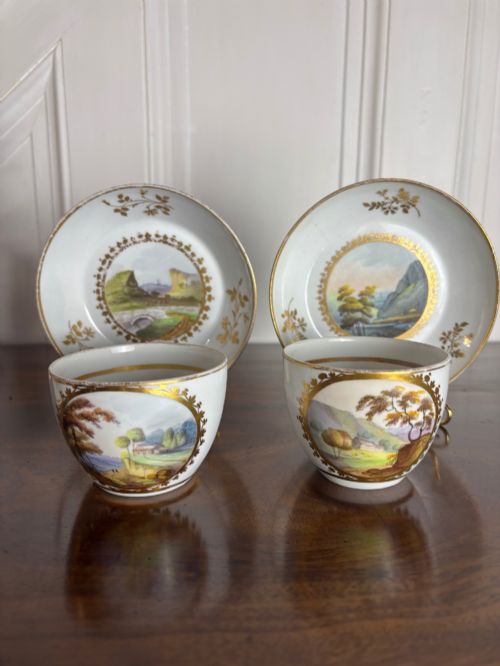


Painted Landscape Porcelain Bowl
A painted landscape porcelain bowl brings distant scenery onto the table, offering miniature vistas framed in fine ceramics.
Painted Landscape Porcelain Bowl
A painted landscape porcelain bowl takes many forms across different origins, ranging from large cabinet pieces to smaller tableware items. When searching for a painted landscape porcelain bowl, buyers encounter items created during periods such as the eighteenth and nineteenth centuries, featuring scenic views hand-painted onto porcelain or bone china. These objects combine utilitarian or decorative utility with detailed topographical or romantic scenery.
The selection on this page includes English factories like Derby and Rockingham alongside continental and Asian works. Makers incorporated scenic panels depicting specific locations, such as the Isle of Wight, alongside general pastoral views. Forms stretch from decorative bowls and dishes to larger serving vessels and baskets.
How they were made
Makers utilised fine porcelain and bone china as the primary canvas for these scenic views. Potters shaped the clay before applying intricate hand-painted enamel colours and cobalt underglaze to render trees, water, and architecture.
Many examples incorporate gold leaf, gilding, and intricate flower encrustations to frame the central landscape. Kiln firing fixed the pigments and metals into the glaze, producing durable decorative surfaces.
Listings feature items from the Georgian and Victorian eras, alongside mid-eighteenth-century continental production.
What varies in quality
The refinement of the brushwork dictates much of the distinction between standard items and superior examples. Skilled artists rendered landscapes with precise perspective, delicate shading, and botanically accurate foliage rather than rushed, formulaic strokes.
The application of complementary decoration, such as raised gilding or hand-modelled floral encrustations, marks out more ambitious production. Well-preserved gilding and crisp enamel colours without blurring elevate the standing of a piece.
Mintons·Rockingham·Derby·Mason·Richard Ginori
The Painted Landscape Porcelain Bowl Glossary
- Bone china
- A type of soft-paste porcelain containing bone ash, developed in England to create a strong, brilliantly white body.
- Cobalt underglaze
- A blue pigment applied to the raw ceramic body before glazing and firing, famous for withstanding high temperatures.
- Enamel
- Opaque glass-like coloured paints applied over the fired glaze and fixed with a secondary, lower-temperature kiln firing.
- Gilding
- The application of gold leaf or powdered gold suspended in a medium to highlight rims, handles, and scenic borders.
- Porcelain
- A ceramic material made by heating raw materials, generally including clay in the form of kaolin, in a kiln.
Painted Landscape Porcelain Bowl: Frequently Asked Questions
How are these bowls dated?
Datings rely on stylistic traits, factory marks stamped or painted on the base, and specific ceramic body compositions. Examining the palette and potting techniques helps narrow down the period.
Changes in porcelain formulas over the eighteenth and nineteenth centuries provide reliable clues for establishing when a piece was manufactured.
Were these painted landscapes decorative or functional?
While many items served practical dining or tea-drinking roles, cabinet bowls and flower-encrusted baskets were primarily intended for display. Their intricate painted scenes were meant to be admired in drawing rooms.
Over time, utility pieces often transitioned into purely ornamental objects as tastes shifted towards cabinet collections.
How should painted porcelain be cleaned?
Gentle washing in lukewarm water with mild soap preserves the delicate enamel paints and gold leaf. A soft cloth prevents abrasion to the glazed surface.
Harsh detergents and dishwashers strip away historic gilding and soften the hand-painted landscape details permanently.
Why do some landscapes feature specific places?
Topographical views gained immense popularity as travel increased and romantic appreciation of the countryside grew. Factories recorded notable landmarks to appeal to fashionable buyers.
Naming specific locations on the base or within the painted scene added local interest and educational value for the owner.