


English Ironstone Bowl
An English ironstone bowl brings robust utility and striking decoration to a table, combining heavy ceramic bodies with vibrant transfer printing or hand-painted patterns.
English Ironstone Bowl
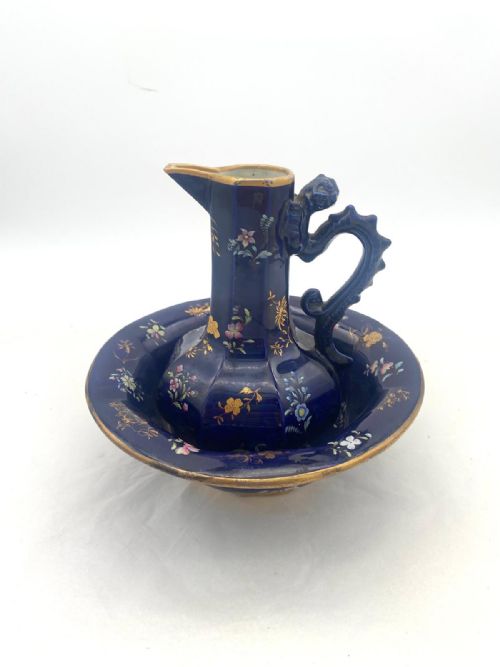
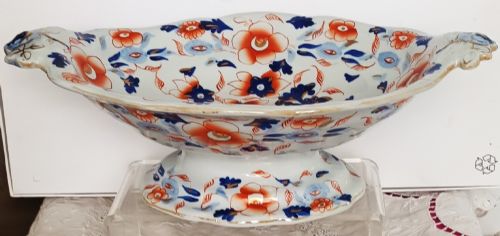
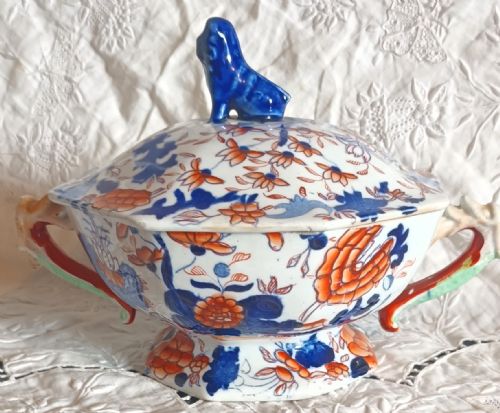
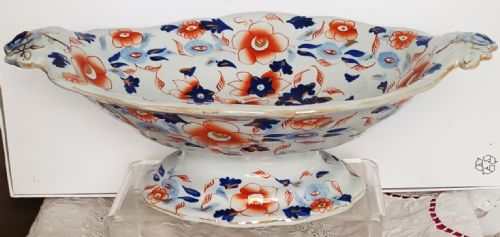
An english ironstone bowl encompasses a variety of durable domestic and decorative vessels produced during the nineteenth century and the Georgian period. Buyers seeking these items will frequently encounter footed comports, lidded tureens, large covered bowls, soup bowls, and decorative centerpieces.
The selection ranges from utilitarian serving vessels to elaborate display items featuring rich colour palettes. Most pieces originate from the nineteenth century, including specific Regency and Victorian examples designed for formal dining and side tables.
How they were made
Potters utilised durable earthenware bodies glazed to create a dense, heavy ceramic capable of withstanding daily service. Makers then applied detailed transfer printed designs or hand-painted enamels, sometimes incorporating gold leaf accents for richer visual depth.
Vessels were shaped into functional forms such as octagonal jugs, circular bowls, and footed comports before undergoing high-temperature firing. The resulting ironstone provided a sturdy alternative to porcelain while maintaining a refined appearance.
What varies in quality
Quality separates through the ambition of the form and the crispness of the applied decoration, ranging from simple utilitarian tableware to elaborate display pieces with intricate handles and covers. Hand-painted patterns and rich polychrome enamels indicate greater workshop investment than standard transfer printing.
The complexity of the shape also distinguishes the pieces, with octagonal profiles, pierced baskets, and matched undertrays demanding higher levels of ceramic skill during moulding and firing.
Mason's Ironstone·Copeland Cream
The English Ironstone Bowl Glossary
- Ironstone ceramic
- A dense, durable type of earthenware patented in the nineteenth century to provide a strong alternative to porcelain. It forms the heavy body of these bowls and tureens.
- Comport
- A footed dish or pedestal bowl raised above the table surface, traditionally used for serving fruit or sweets. These often feature decorative handles or moulded rims.
- Transfer print
- A method of decorating ceramics by engraving a design on a metal plate, pulling it on paper, and pressing it onto the earthenware before glazing. This technique allowed for repeatable blue and white patterns.
- Tureen
- A deep covered bowl designed for serving soup, vegetables, or sauces at the dining table. Many examples include matching ladles or undertrays.
English Ironstone Bowl: Frequently Asked Questions
How do I use an ironstone bowl today?
These robust vessels serve well as centerpieces on dining tables or sideboards, holding fruit, flowers, or decorative items. Their sturdy construction suits practical display in traditional or modern interiors.
Care should be taken with older hand-painted enamels and gold leaf accents, meaning hand washing is generally preferred over mechanical dishwashers.
What is the difference between ironstone and porcelain?
Ironstone is a heavy, opaque earthenware ceramic designed for durability and mass production, whereas true porcelain is vitrified, thin, and often translucent. Ironstone offers greater resistance to chipping during daily use.
The dense body allows ironstone pieces to survive in larger formats, such as heavy tureens, punchbowls, and large footed comports.
How can I date an English ironstone bowl?
Dating relies on identifying maker marks stamped into the ceramic base, alongside stylistic clues such as Georgian or Victorian decorative motifs. Transfer print styles and pattern names provide further chronological markers.
Nineteenth-century examples frequently exhibit specific pattern titles like Japan, Indian Grasshopper, or Green Mandarin within the evidence.
What patterns are common on these bowls?
Chinoiserie designs, Japanese-inspired motifs, and blue and white transfer prints dominate the decorative styles of this period. Rich enamel colours and gilt detailing appear on more elaborate comports and tureens.
Floral and natural subjects, such as grasshoppers and garden scenes, reflect the popularity of orientalist aesthetics during the Georgian and Victorian eras.