
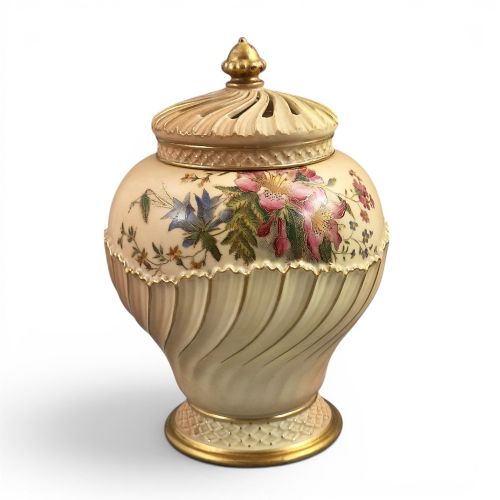


Hand Painted Floral Pot
A hand painted floral pot brings delicate botanical colour to a room, ranging from English porcelain tea vessels to Japanese lidded jars.
Hand Painted Floral Pot
A hand painted floral pot covers a diverse group of ceramic and glass vessels, including teapots, pot-pourri jars, jardiniere planters, and inkwells. These pieces span from the eighteenth century through the Victorian era and into the Art Deco period.
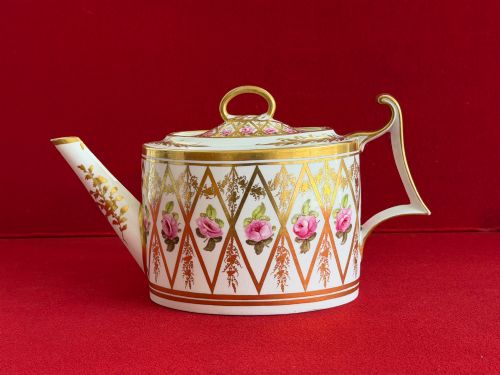
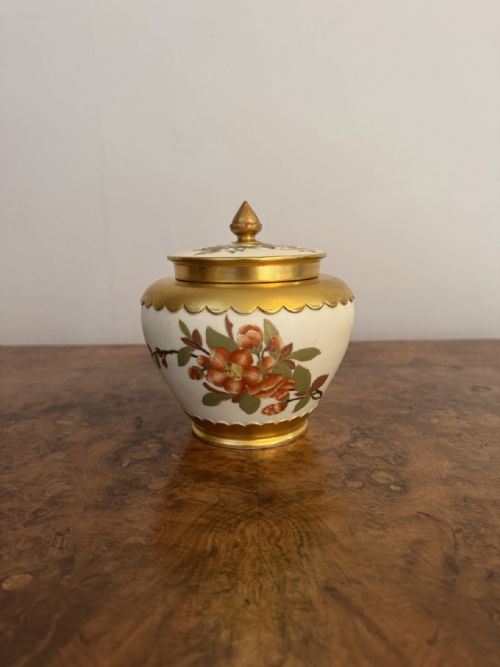
The English porcelain teapot and the Royal Worcester blush ivory pot-pourri jar form the most common versions on this page. Makers across Staffordshire, Worcester, and overseas applied botanical motifs to earthenware, porcelain, and enamel.
Vessels range from small patch boxes and trinket jars to large garden planters and vases. Each object served a domestic purpose, whether holding tea, dried flowers, or ink.
How they were made
Potters shaped ceramic and porcelain bodies by hand or in moulds before applying lead or tin glazes. Artisans then painted floral subjects by hand using mineral pigments that required high-temperature kiln firing to fix the colours.
Gilding and gold leaf were frequently added to highlights, rims, and handles, often over raised enamel details. Glass pieces utilised enamelling directly on Bristol blue or green glass substrates during the nineteenth century.
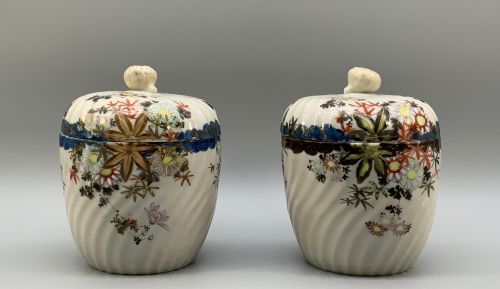
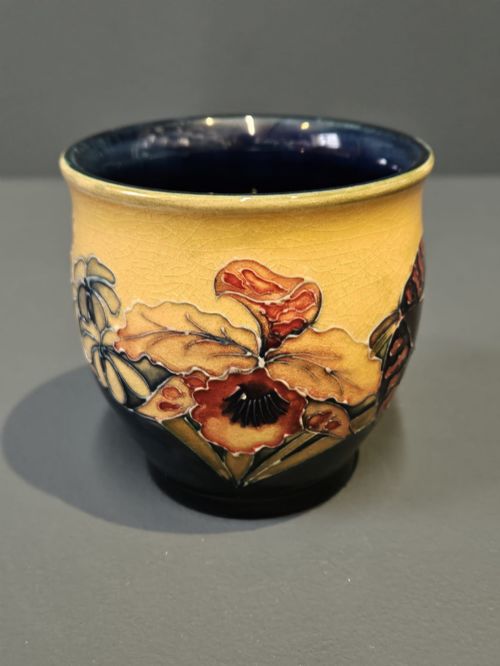
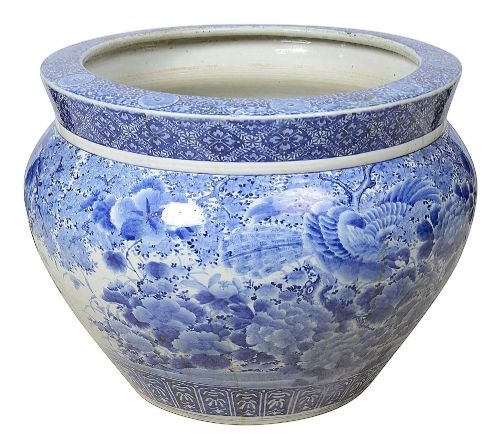
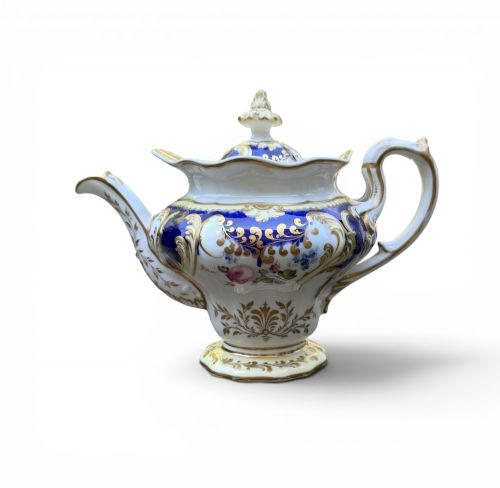
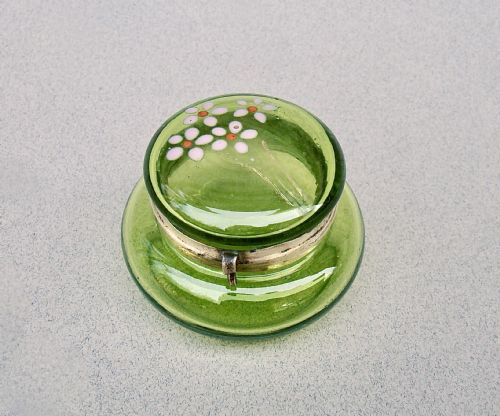
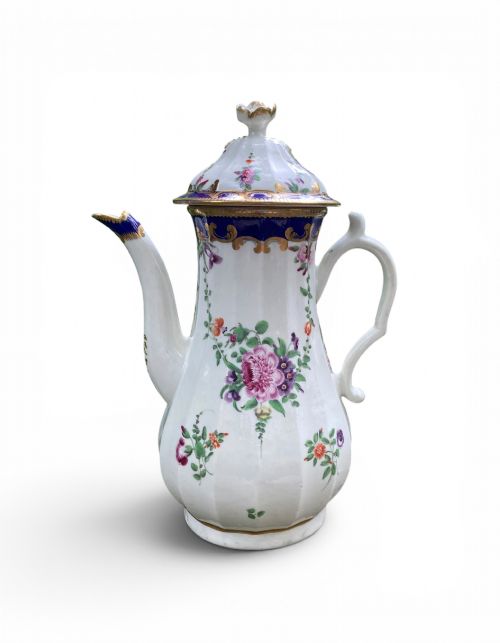
Floral decoration appears across diverse forms, including teapots, inkwells, lidded jars, and garden planters.
What varies in quality
Quality rests on the precision of the brushwork and the delicacy of the floral composition. Superior pieces display subtle tonal shading in petals and leaves rather than flat, stencilled outlines.
The crispness of the porcelain body and the richness of the gilding separate standard production wares from premier factory outputs. Potteries like Royal Worcester and Derby achieved finer potting walls and more durable glaze surfaces.
Royal Worcester·Derby Porcelain·Samuel Alcock·Thomas Wolfe·Chamberlain Worcester·KPM·Meissen·Royal Winton·James Kent
The Hand Painted Floral Pot Glossary
- Blush ivory
- A matte cream-coloured porcelain body developed by Royal Worcester that mimics the warmth of ivory. It provides a soft background for hand-painted floral decoration.
- Pot-pourri
- A lidded vessel designed to hold dried scented plant material. Pierced covers allowed fragrance to diffuse into a room.
- Famille rose
- A palette of opaque Chinese ceramic glazes dominated by pink or rose enamel colours. This style appeared frequently on export porcelain.
- Guilloche
- An intricate decorative pattern engraved mechanically into metal beneath a translucent enamel layer. It appears on silver-mounted inkwells and dressing table jars.
- Imari
- A style of Japanese porcelain decorated in underglaze blue and iron red with supplementary gold. Designs often incorporate floral and botanical motifs.
Hand Painted Floral Pot: Frequently Asked Questions
How do I date a floral porcelain pot?
Dating relies on factory backstamps, paste composition, and stylistic clues like shape and gilding. Eighteenth-century pieces typically feature unglazed foot rims and hand-mixed soft-paste bodies.
Later Victorian and Edwardian items often display impressed or printed registry marks that narrow the production year. Comparing the floral painting style to known period pattern books also helps pinpoint the decade.
Were these pots meant for display or daily use?
Many pots served practical functions in past households, from brewing tea to storing ink or dried flower petals. Items like teapots and coffee pots saw active service on dining tables.
More delicate pieces, such as small patch boxes and ornate pot-pourri jars, functioned primarily as decorative items for dressing rooms and parlours. Their survival often depends on how gently previous owners handled them.
How should I clean antique painted ceramics?
Dusting with a dry, soft brush is the safest method for preserving fragile enamel and gilt details. Water can loosen degraded glazes or historical repairs.
Harsh chemical cleaners must be avoided entirely because they strip hand-painted pigments from the ceramic surface. Professional conservation advice is recommended for heavily soiled or damaged pieces.