



Hand Painted Credenza
A hand painted credenza brings surface artistry and cabinetmaking together, offering decorative presence and storage for the discerning interior.
Hand Painted Credenza
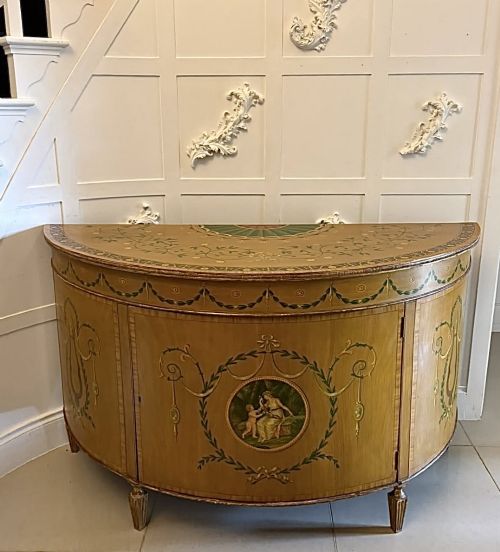
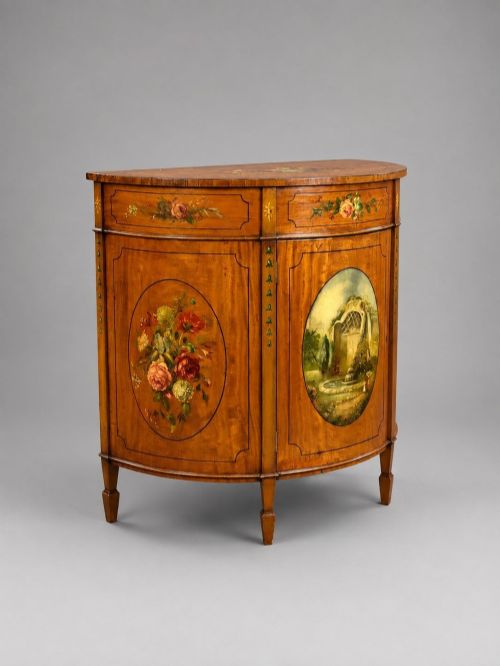
A hand painted credenza encompasses side cabinets, sideboards, and commodes finished with decorative painted surfaces rather than plain wood. These pieces emerge predominantly from the nineteenth century, the Edwardian era, and around nineteen hundred, capturing revivalist and exotic tastes.
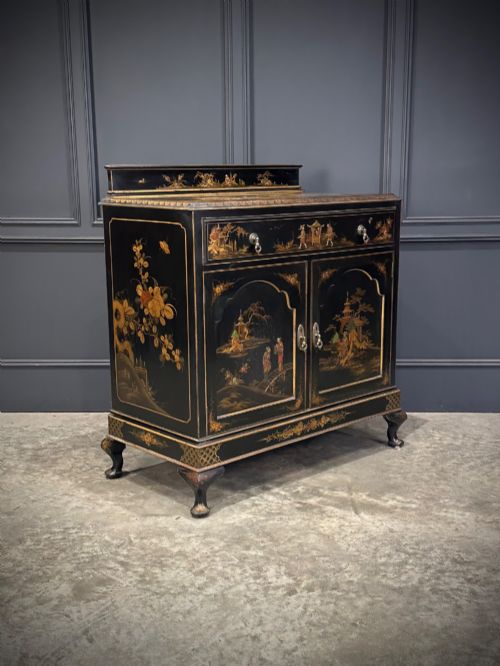
Formats range from demi-lune cabinets and bow-front side cabinets to upright display cabinets and low dressers. Many utilise timber carcasses adorned with floral motifs, classical medallions, or elaborate oriental scenes directly applied to the wood or lacquer.
Materials and construction methods
Cabinetmakers constructed the foundational carcasses from timbers such as satinwood, rosewood, walnut, maple, and kingwood, often applying veneers to achieve smooth decorative planes. Structural stability was reinforced using brass fitments and interior shelving.
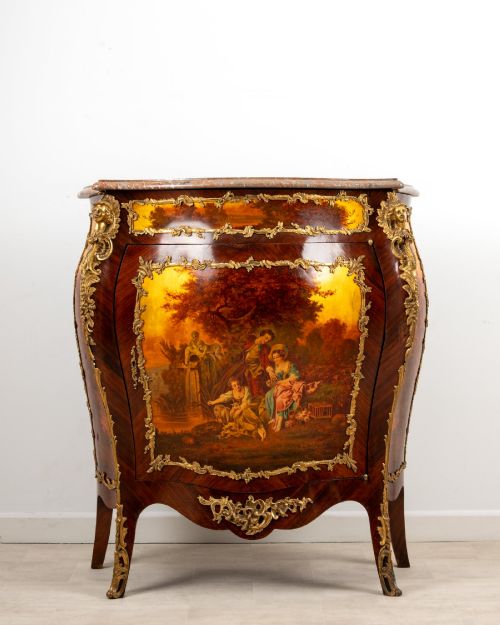
Surfaces received elaborate preparation through lacquer, paint, or varnish, with artists applying detailed hand-painted scenes directly onto the panels. Ormolu mounts, marble tops, and carved wooden stands frequently completed the assembly for high-status examples.
Hand Painted Credenza Retail Price Guide 2026
Typical asking prices for hand painted credenza among the pieces listed under this phrase on Sellingantiques today, from the lower quarter to the upper quarter. They describe what is for sale here now, not the wider market.
One unexpected cabinet carries a later hand-written vineyard sign from the Rhone valley, bridging fine furniture with French wine country.
Evaluating craftsmanship and artistry
Quality rests significantly upon the execution of the painted decoration, distinguishing fluid, highly detailed brushwork from rigid or mechanical application. The subtlety of shading and the preservation of the original pigments dictate the visual impact of the piece.
The underlying cabinetmaking dictates structural integrity, observed in the selection of figured timber veneers, the precision of the joinery, and the weight of auxiliary materials like marble tops and cast ormolu mounts.
Maple and Co·Melissa White
The Hand Painted Credenza Glossary
- Demi-lune
- A half-moon shape characteristic of tables and cabinets designed to stand flush against a wall. This profile became particularly popular during the Sheraton Revival period.
- Vernis Martin
- A simulated Japanese lacquer technique developed in eighteenth-century France and emulated later in nineteenth-century commodes. It uses multiple layers of varnish to achieve a translucent depth.
- Chinoiserie
- European artistic interpretations of Chinese and East Asian decorative styles, frequently featuring painted figures, pavilions, and landscapes on black or red lacquer grounds.
- Ormolu
- Gilded bronze mounts applied to furniture for decorative enrichment, common on French revival cabinets and commodes from the nineteenth century.
- Satinwood
- A durable, lustrous timber native to India and Ceylon with a natural golden sheen, widely utilised as a canvas for painted and inlaid cabinets.
Hand Painted Credenza: Frequently Asked Questions
Where should I place a hand painted credenza?
These cabinets serve well in principal reception rooms, hallways, or dining spaces where their decorative painted surfaces can act as a focal point. They provide functional surface area and enclosed storage without dominating the floor plan.
Ensure the piece is positioned away from direct sunlight and fluctuating heat sources to protect delicate painted panels, lacquer, and timber veneers over time.
How do I care for painted wood surfaces?
Dust the cabinet gently with a dry, soft cloth and avoid the application of modern chemical polishes or abrasive cleaners. Wax should be used sparingly and only on unpainted timber sections.
Maintain a stable indoor humidity to prevent the underlying wood from expanding or contracting, which can otherwise cause the paint layers to craze or flake.
What is the difference between Chinoiserie and Vernis Martin?
Chinoiserie reflects European fascination with East Asian motifs, typically presenting hand-painted figures, pagodas, and landscapes against black or red lacquered backgrounds. It draws on traditional Asian export aesthetics adapted by Western workshops.
Vernis Martin is a specific European lacquer technique known for its luminous, multi-layered translucent finish, often deployed on French commodes alongside elaborate ormolu mounts.
Are these cabinets purely decorative or practical?
While celebrated for their artistic painted panels, these pieces were manufactured to serve as functional storage furniture. Cupboards, drawers, and shelving offer practical utility for tableware, linens, or general household items.
Interior configurations vary by form, ranging from shallow demi-lune commodes to deeper dresser bases and glazed display cabinets designed to showcase objects.