


Hand Painted Compote
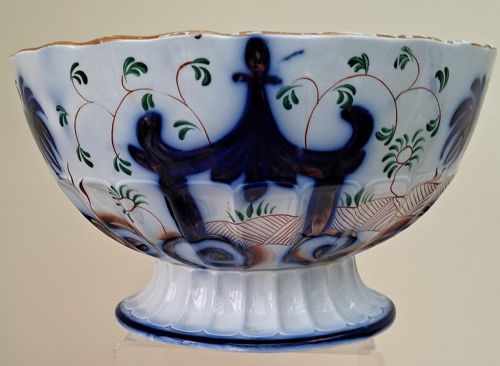
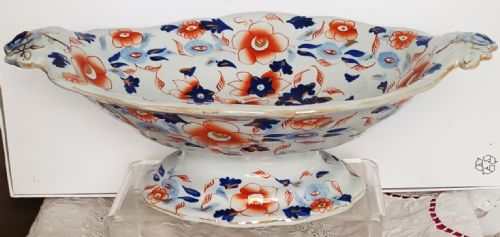
A hand painted compote brings decorative floral panels and raised pedestals to a table, combining utility with fine ceramic artistry.
Hand Painted Compote
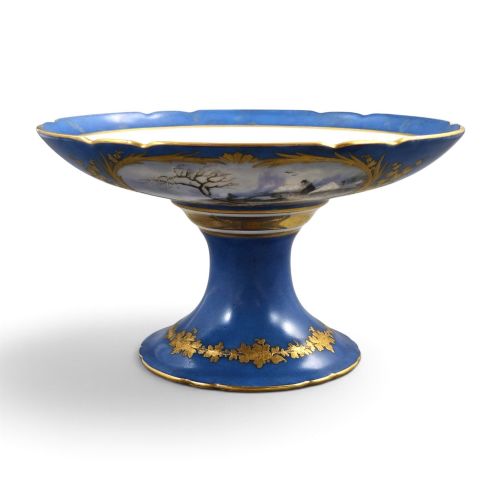
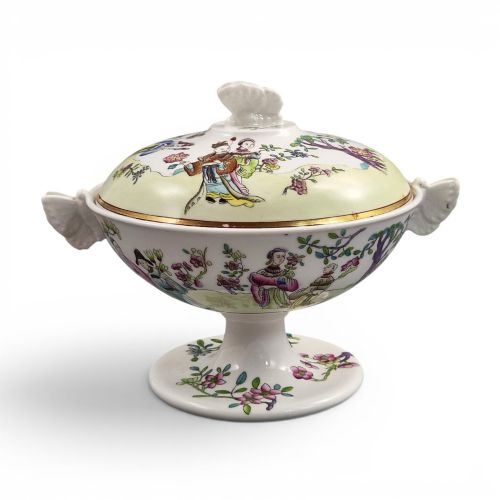
When you search for a hand painted compote, you are looking at footed bowls, tazzas, and pedestal dishes designed for fruit or dessert service. These pieces stand raised above the table surface, often featuring painted floral motifs, landscapes, or Chinoiserie patterns across porcelain, ironstone, or ceramic bodies.
The selections span from the Georgian and Regency eras through the Victorian period and into the early twentieth century. You will frequently encounter English and continental porcelain pedestal bowls, alongside ironstone comports and gilt bronze mounted centrepieces.
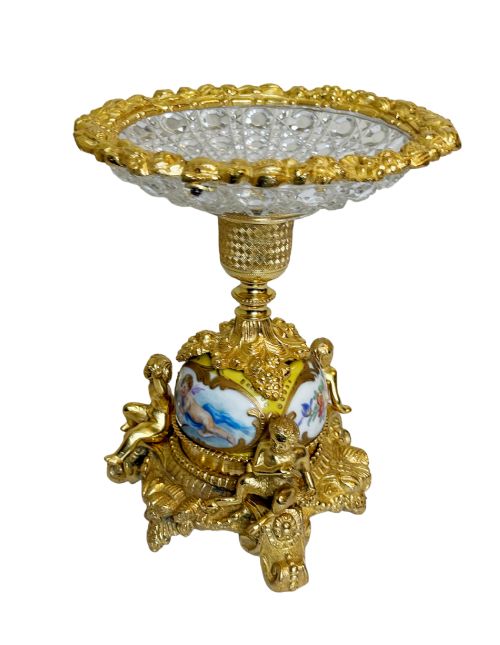
Many examples arrive with decorative handles, scalloped rims, or figural supports such as cherubs. They function equally as standalone centrepieces or as surviving elements of larger nineteenth-century dessert services.
How they were made
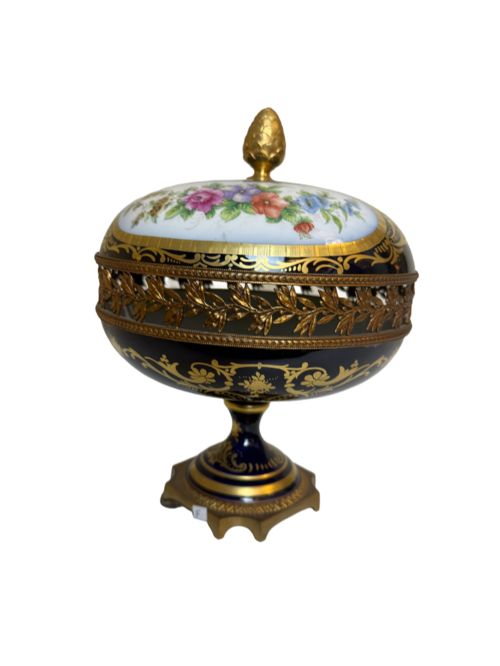
Potters shaped these vessels using ceramic, ironstone, or fine porcelain bodies, frequently mounting them on ormolu, gilt bronze, or integrated ceramic pedestals. The production combined precision moulding or throwing with hand-applied enamel decoration and surface gilding.
Artisans applied pigments by hand before firing, often incorporating gold leaf or heavy gilt accents to frame the painted scenes. Structural elements like handles and mounts were secured using traditional metalwork or high-fired ceramic bonding techniques.
Materials range from delicate soft-paste porcelain and ironstone to heavy ormolu mounts and cut crystal centrepieces.
What varies in quality
Quality rests in the crispness of the hand painting and the precision of the gilding. Finer pieces display finely detailed brushwork on botanical or figurative subjects, whereas simpler production utilises transfer-printed outlines with minimal hand-colouring.
The refinement of the supporting structure also defines the tier of the piece. Heavy, finely chased ormolu mounts and sculpted figural supports elevate a compote well above standard moulded ceramic pedestals.
Sèvres·Spode·Limoges·John Ridgway·Ulisse Cantagalli·Schierholz·Minton·Mason·Swansea·Thomas Moorcroft·Royal Worcester·Samson
The Hand Painted Compote Glossary
- Compote
- A raised pedestal bowl or dish traditionally used for serving fruit, nuts, or sweetmeats at the table. These vessels sit on a fixed stem and foot.
- Ironstone
- A durable type of heavy earthenware patented in the nineteenth century. It bridges the gap between refined porcelain and utilitarian pottery.
- Ormolu
- Gilded bronze used widely for mounts, handles, and decorative feet on nineteenth-century decorative arts. The finish provides a rich gold appearance.
- Gilt
- A thin application of gold leaf or gold paint applied to ceramic surfaces or metal mounts. It highlights rims, handles, and painted borders.
Hand Painted Compote: Frequently Asked Questions
What was a compote used for?
These elevated vessels served fruit, compotes of stewed fruit, and sweetmeats during the dessert course of formal nineteenth-century dinners.
They stood at the centre of the table, often accompanied by matching plates and smaller dishes to complete the display.
How do I date a porcelain compote?
Dating relies on body composition, glaze characteristics, and the style of the painted decoration. Ironstone and soft-paste porcelain suggest earlier periods, while factory marks and registration numbers help narrow down the exact decade of manufacture.
Stylistic shifts, from Regency neo-classicism to Victorian floral exuberance, also provide clear chronological markers.
Can I use these bowls for serving food?
While structurally sound, antique painted compotes and pedestal bowls feature delicate overglaze enamels and gold leaf that can wear with frequent washing. Most owners choose to display them as decorative centrepieces rather than using them for daily dining.
Gentle hand washing in lukewarm water is necessary if you do use them for occasional service.
What is the difference between a compote and a tazza?
A compote generally refers to a deeper pedestal bowl suited for fruit or larger portions. A tazza is typically shallower and flatter, resembling a stemmed platter designed for display.
Both terms appear frequently across nineteenth-century dining wares and share similar display functions.
How do I style a pedestal bowl at home?
A pedestal bowl works well as a focal point on a dining table, sideboard, or entrance console. You can leave it empty to showcase the interior painting or fill it with seasonal fruit, glass spheres, or dried botanicals.
The elevated height helps draw the eye upward and adds architectural interest to flat surfaces.