




Hand Painted Bedroom Furniture
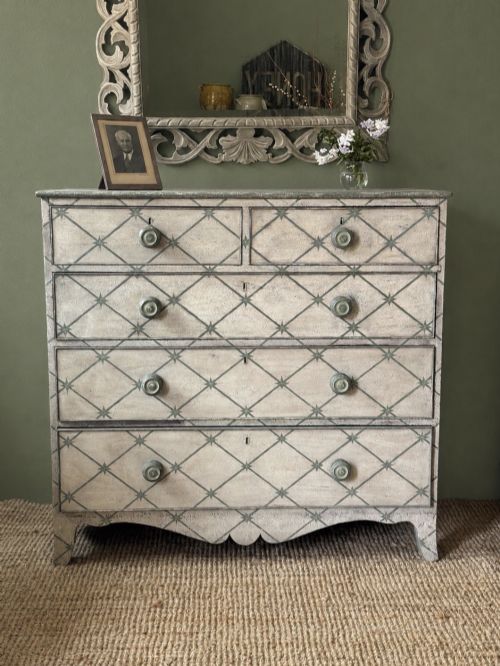
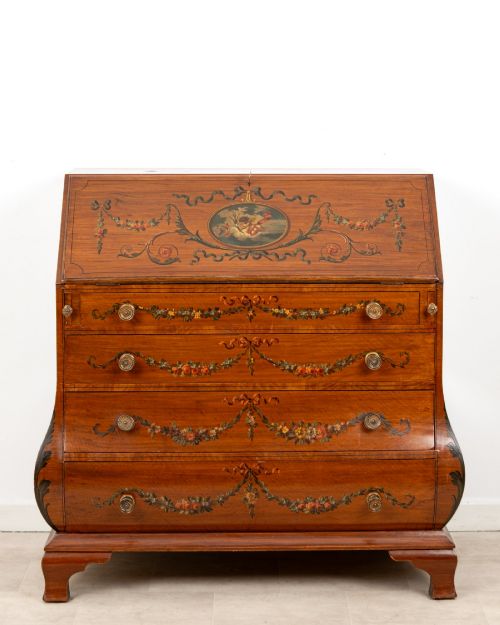
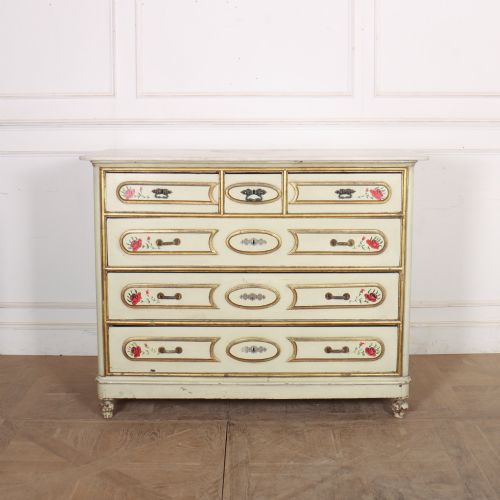
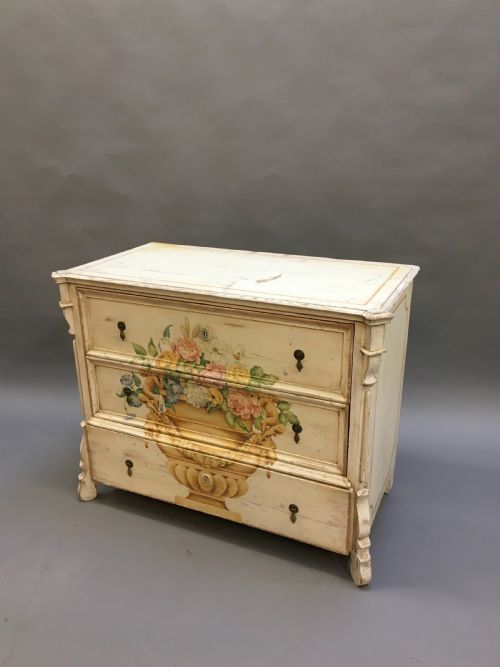
Hand painted bedroom furniture brings individuality to a room, offering practical storage through pieces decorated by hand across past centuries.
Hand Painted Bedroom Furniture
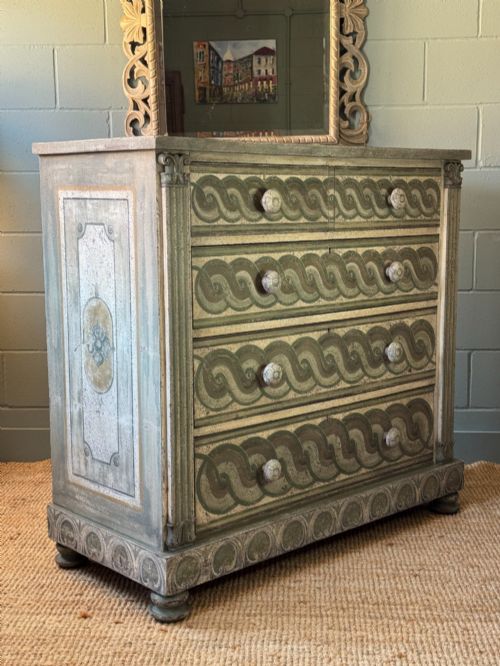
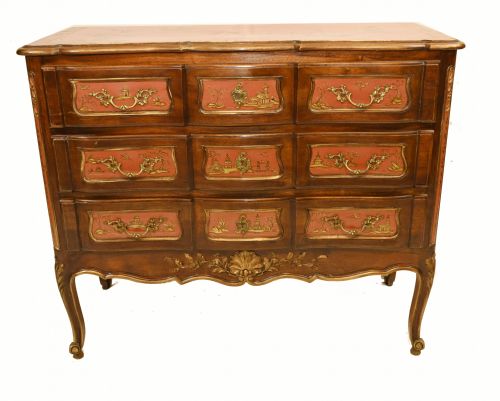
Hand painted bedroom furniture encompasses items designed for sleeping quarters and storage that carry decorative painted finishes. Buyers seeking hand painted bedroom furniture typically encounter chests of drawers, bureaux, commodes, and tallboys created across various historical periods.
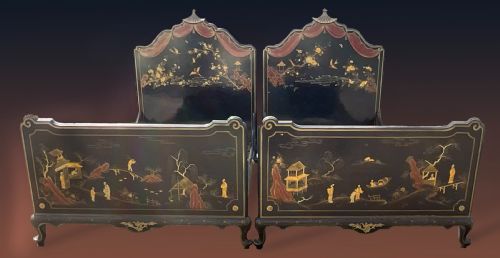
The selection on this page leans heavily towards storage pieces, particularly chests of drawers dating from the eighteenth, nineteenth, and early twentieth centuries. Alongside these case pieces, buyers find occasional seating such as side chairs and single beds.
Origins vary widely across the inventory, spanning English, French, Spanish, and Swedish workshops. Styles range from formal Regency and French Empire designs to relaxed English and Victorian country aesthetics, alongside decorative Chinoiserie and Japanned schemes.
How they were made
Carpenters constructed the underlying carcases and frames using solid timbers such as pine, ash, and fine satinwood. These solid foundations provided stable surfaces for subsequent decorative treatments.
Craftspeople applied liquid paint finishes, lacquers, and scumbled effects directly to the wood substrate. Decoration often involved detailed brushwork, hand-painted motifs, and distinct colour washes such as pale cream or Swedish grey.
One nineteenth-century chest bears a handwritten signature tucked inside, reminding us that painters sometimes left their personal mark.
What varies in quality
Quality in these pieces rests upon the execution of the painted surface and the integrity of the underlying woodwork. Skilled brushwork and harmonious colour application distinguish finer decorative examples from simpler, utilitarian items.
Construction standards also determine value, seen in the precise dovetailing of drawers and the sound alignment of carcases. Original decorative schemes preserved over time hold greater interest than later redecoration.
The Hand Painted Bedroom Furniture Glossary
- Chinoiserie
- European decorative style imitating Chinese artistic traditions. It frequently appears on lacquer and painted furniture of the eighteenth and early twentieth centuries.
- Commode
- Low cabinet or chest of drawers designed for domestic use. The term often describes continental European pieces originating from French or Spanish workshops.
- Scumbled
- Painting technique involving the layering of translucent colours over a base coat to create mottled texture. It appears on nineteenth-century pine furniture.
- Satinwood
- Hard, yellowish timber native to India and Ceylon, prized for fine cabinetmaking. It provides a pale, reflective ground for painted decoration.
- Japanned
- European imitation of Japanese and East Indian lacquerwork. The technique involves building up layers of varnish and paint, sometimes incorporating raised motifs.
Hand Painted Bedroom Furniture: Frequently Asked Questions
How do I date a painted chest of drawers?
Dating relies on examining construction methods, timber types, and the characteristics of the paint layer. Secondary woods inside drawers and the style of handles offer reliable clues to the decade of manufacture.
Paint analysis also helps, as earlier pieces display specific cracking patterns and pigment compositions distinct from twentieth-century applications.
Are these pieces suitable for daily bedroom use?
Most items serve their original storage or furnishing purposes effectively. Chests of drawers and bureaux provide practical space for clothing and papers while adding decorative character to a room.
Care should be taken with historical painted surfaces to avoid moisture and excessive friction during everyday use.
How should I care for antique painted wood?
Maintenance requires gentle dusting with a soft, dry cloth rather than modern chemical polishes. Keeping pieces away from direct sunlight and steady humidity prevents the paint from fading or flaking.
If cleaning is necessary, a lightly dampened cloth without detergents is safest for fragile historical surfaces.