





Gustavian Style Drawers
Gustavian style drawers bring pale Nordic restraint and sculptural elegance to a room, offering practical storage disguised as classical art.
Gustavian Style Drawers
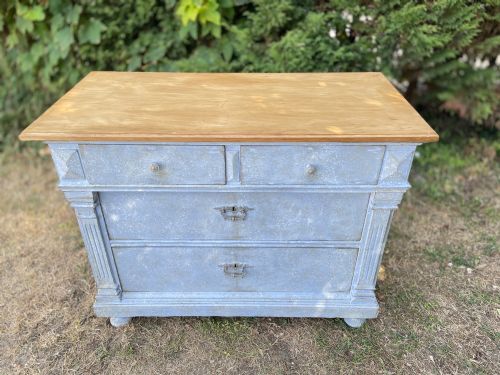
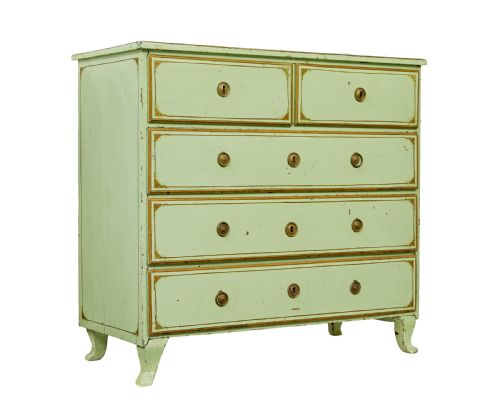
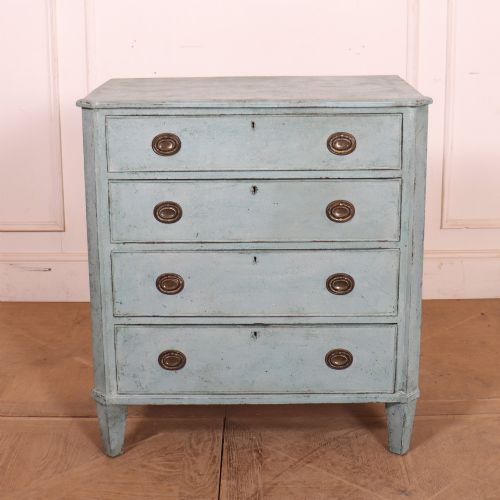
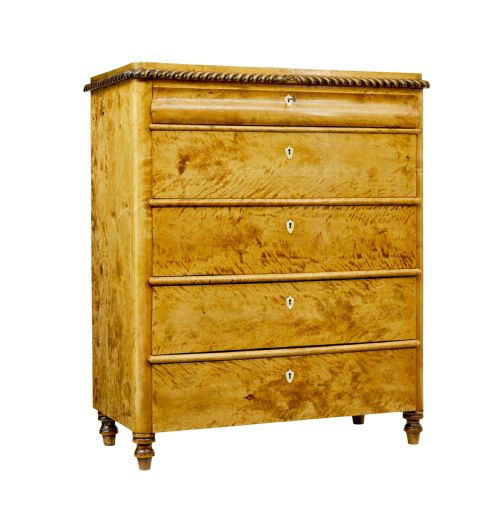
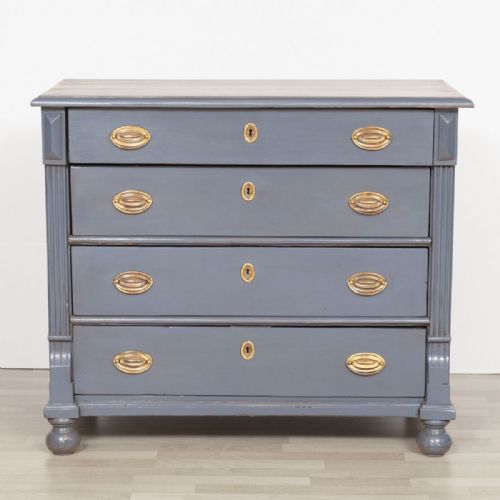
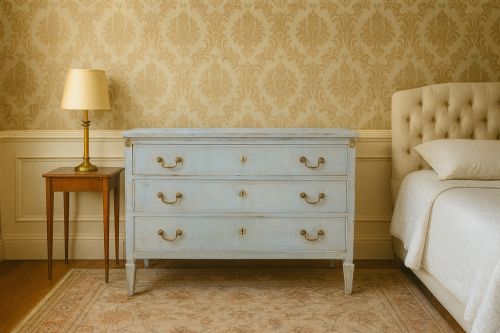
Gustavian style drawers primarily manifest as chests of drawers and commodes originating from Sweden, Denmark, and the wider Scandinavian sphere, drawing heavily on eighteenth and nineteenth-century design principles. When searching for gustavian style drawers, buyers encounter substantial pieces built from pine, birch, and oak, frequently finished in muted painted surfaces.
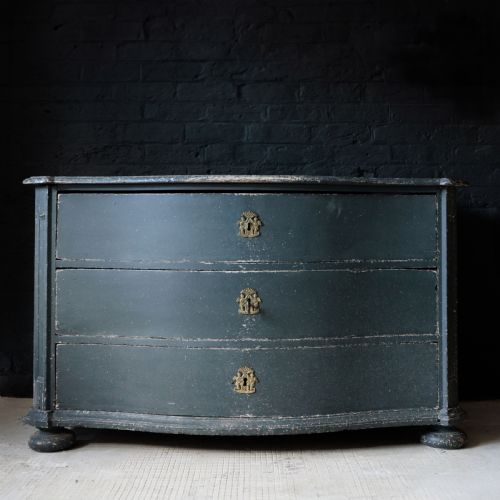
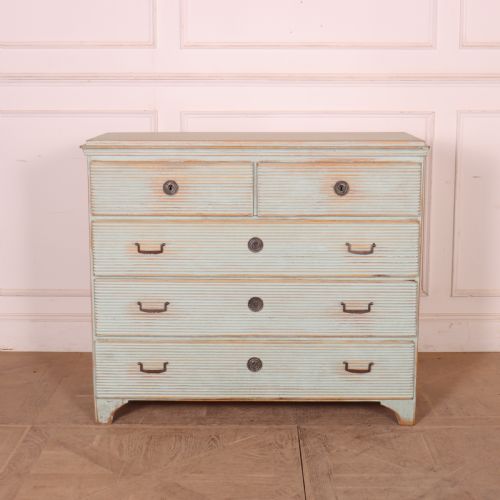
The aesthetic bridges the gap between grand neoclassical architecture and provincial utility, often displaying restrained fluted drawer fronts or serpentine contours. Pieces range from eighteenth-century examples to later nineteenth-century interpretations, alongside occasional Dutch and French continental equivalents sharing similar neoclassical lines.
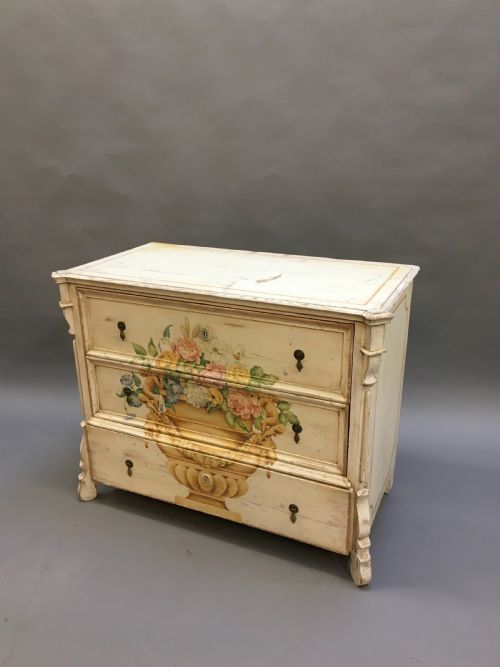
Beyond standard chests, the category encompasses bedside tables, bureau bookcases, and commodes featuring faux marble tops or hand-painted details. These pieces serve as functional bedroom and hallway storage while introducing a luminous, light-reflecting quality to interior spaces.
Materials and construction
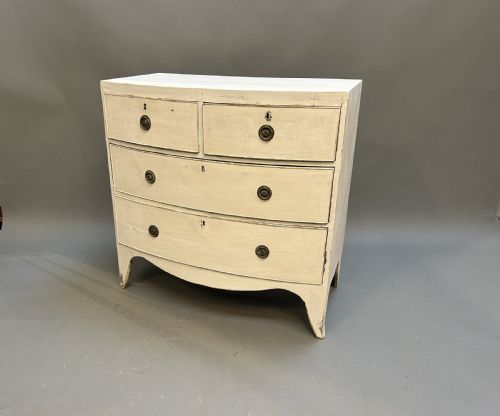
Makers utilised native softwoods and hardwoods such as pine, birch, and oak for the primary carcases, shaping them with hand tools into serpentine, bow-front, or breakfront silhouettes. Drawer fronts frequently incorporated carved decorative elements like fluting or diamond-point moulding.
Surfaces were characteristically treated with layers of paint, often applied in muted grey or pale tones, sometimes complemented by hand-painted decoration and faux marble top treatments. Brass and iron hardware provided functional fastenings and structural accents.
Object forms include bedside tables, bureau bookcases, and console tables alongside standard chests of drawers and commodes.
Distinctions in quality
Quality rests in the precision of the cabinetmaker's joinery and the subtlety of the carved architectural details, such as crisp fluting on drawer fronts and smooth serpentine curves. Earlier eighteenth-century originals demonstrate greater manual dexterity in their proportions compared to masser-market nineteenth-century adaptations.
The integrity and age of the painted surface significantly influence the character of a piece, with layered historical paint finishes holding distinct appeal over plain redecoration. Well-executed faux marble tops and balanced proportions separate standard storage chests from finer decorative commodes.
The Gustavian Style Drawers Glossary
- Commode
- A low chest of drawers or cabinet, frequently standing on relatively tall legs. This form originated in France before influencing Scandinavian Gustavian design.
- Serpentine
- A curved furniture front characterised by a convex centre flanked by concave sides. The shape requires expert carpentry to ensure drawers operate smoothly within the undulating frame.
- Caddy top
- A raised, stepped lid or top edge configuration found on certain chests of drawers. It adds vertical emphasis and profile definition to the uppermost surface.
- Fluted
- Decorated with parallel shallow vertical grooves carved into wood. This neoclassical motif draws direct inspiration from ancient Greek and Roman columns.
- Bureau bookcase
- A combination furniture piece featuring a sloping desk flap above drawers, surmounted by a shelving cabinet with doors. These pieces provided dual functionality for writing and storage.
Gustavian Style Drawers: Frequently Asked Questions
How do I spot an original painted finish?
Examine the surface under natural light for micro-cracking, wear patterns around handles, and multiple underlying layers of pigment. Genuine old paint shows gradual integration with the wood beneath rather than uniform modern opacity.
Look closely at corners and recesses where cleaning cloths rarely reach, as authentic historical surfaces retain accumulated pigment variations and subtle texture that modern repainting obscures.
What is a serpentine front?
A serpentine front is a cabinet face shaped with an undulating curve, sweeping outward in the middle and inward toward the edges. It demands precise joinery to ensure the individual drawers function smoothly.
Cabinetmakers achieved this shape by carefully cutting solid timber or bending laminates, creating a dynamic visual rhythm that catches light differently across the facade.
Where should I place a commode?
These chests work exceptionally well in bedrooms as primary storage or in hallways as statement console surfaces. Their pale painted finishes reflect natural light, brightening darker corridors and narrow spaces.
Ensure you measure the depth carefully, particularly with serpentine or breakfront models that extend further into a room than standard flat-fronted chests.
Are eighteenth and nineteenth century pieces different?
Eighth-century pieces typically exhibit heavier baroque influence transitioning into strict neoclassical symmetry, often constructed with deep patination on native timbers. Nineteenth-century versions frequently embrace lighter painted finishes and reinterpret earlier Swedish designs.
Construction methods also evolve, with nineteenth-century examples occasionally employing standardised internal framing alongside traditional hand-cut joinery.