


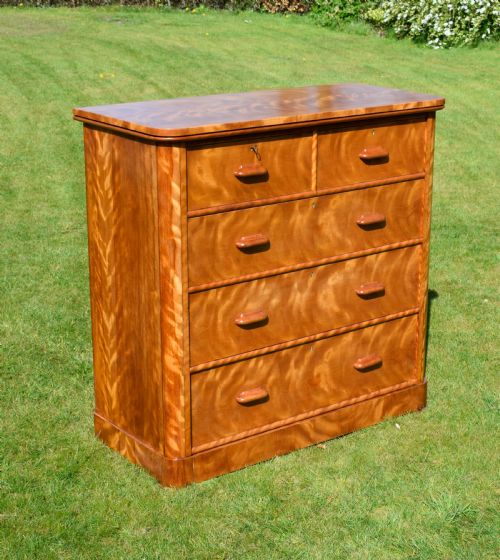


Golden Birch Drawers
Golden birch drawers bring a luminous warmth to a room, offering striking figures of grain across chests, desks and cabinets.
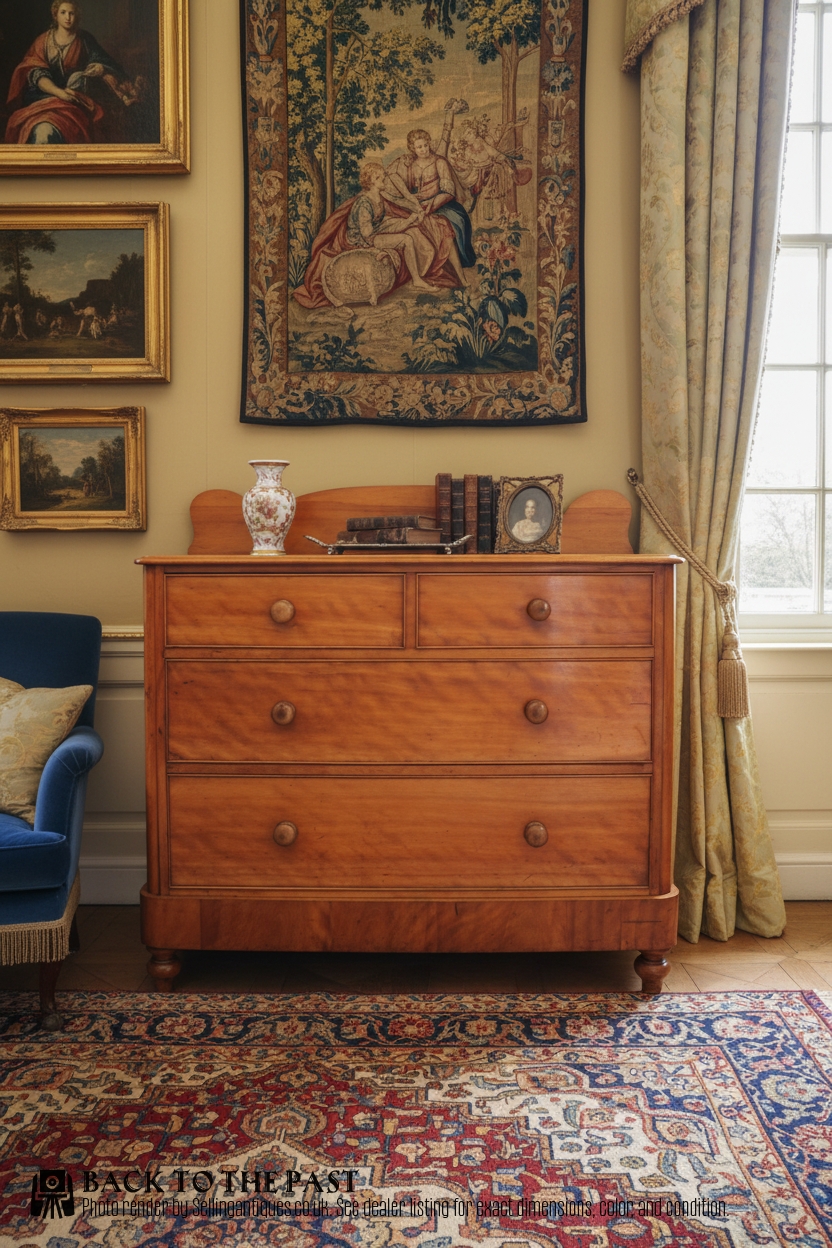
Golden Birch Drawers
Golden birch drawers encompass chests of drawers, secretaire chests, and dressing chests produced predominantly during the 19th century. Buyers seeking golden birch drawers encounter pieces originating from British Victorian workshops as well as Scandinavian makers working in Biedermeier, Empire Revival, and Rococo styles.
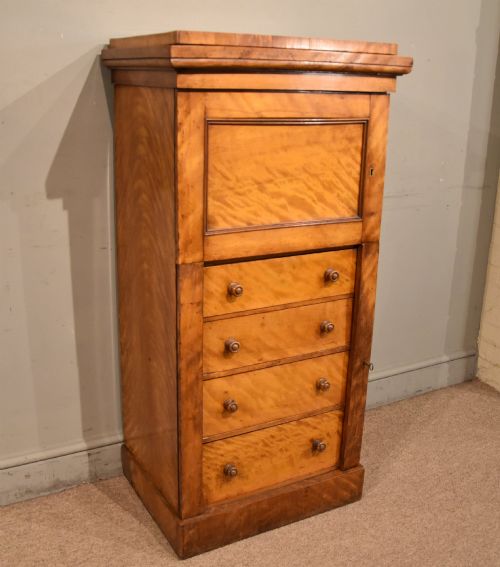
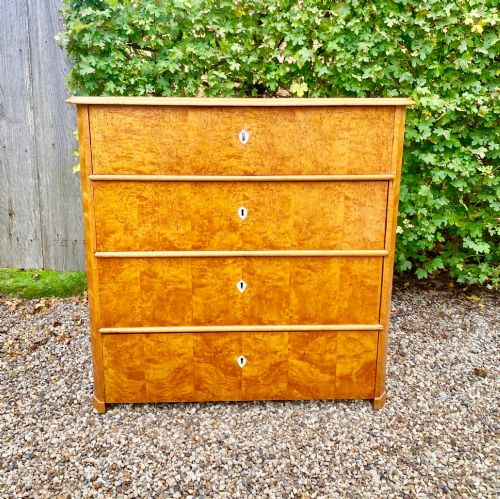
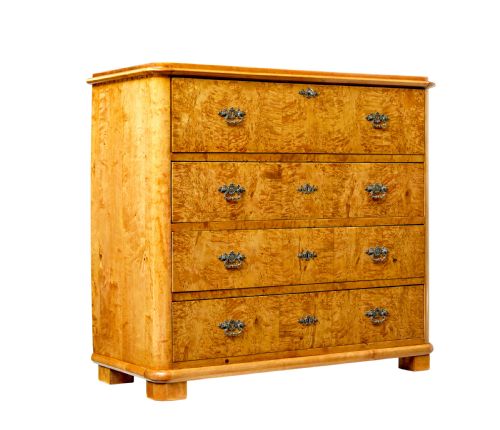
The most common forms on this page are chests of four straight drawers and secretaire chests featuring fitted writing interiors. Alongside these large pieces, tables and cabinets utilise the same pale, figured timber to create a cohesive aesthetic.
The aesthetic relies heavily on the natural blonde and honey tones of the wood, which ranges from plain pale surfaces to highly active tiger figures and burr growths. These variations give each piece a distinct personality while maintaining a bright, reflective presence in an interior.
How they were made
Cabinet makers selected birch, satin birch, and burr birch veneers, applying them carefully over secondary timbers like pine to create rich patterns across the drawer fronts. Flame birch veneer and tiger birch selections exploited the natural undulations of the grain, arranging the sheets to form symmetrical patterns.
Construction details often included secondary woods such as elm, alongside structural brass hardware and occasional bone inlays for escutcheons and drawer pulls. These materials were shaped into Caddy top chests, Wellington chests, and commodes using traditional joinery appropriate to British and Scandinavian traditions.
Some Victorian dressing chests include built-in candle sconces, ready for the dim light of an 1860s bedroom.
What varies in quality
The tier of a piece depends on the choice and matching of the veneer. Master cabinet makers selected intensely figured burr, flame, or tiger birch and laid them so the grain patterns flowed harmoniously across multiple drawers, whereas lesser pieces relied on plain timber.
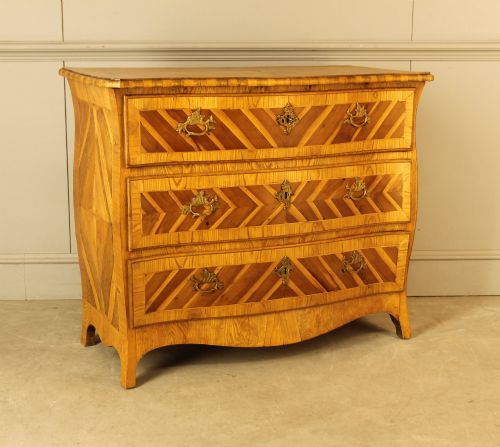
Design complexity and structural integrity separate standard utility furniture from high decorative works. Pieces exhibiting sophisticated architectural forms, such as Biedermeier commodes or Swedish Rococo bombe silhouettes, demand greater skill in shaping the underlying carcase and handling the delicate birch surface.
The Golden Birch Drawers Glossary
- Satin birch
- A term used to describe birch timber with a natural sheen and bright golden colour that resembles satinwood. This light wood reflects light effectively in domestic interiors.
- Burr birch
- A timber harvested from tree growths or burls, producing a dense, swirling cluster of eyes and knot formations. It creates a highly decorative surface on drawer fronts.
- Biedermeier
- A dominant style in Central and Northern Europe during the 19th century, focusing on clean architectural lines and polished wood veneers without excessive ornamentation. It suits the pale tones of birch exceptionally well.
- Secretaire chest
- A chest of drawers featuring a fitted top drawer that pulls down to reveal a writing surface, small compartments, and pigeonholes. It combines storage with a compact desk.
- Caddy top
- A raised, moulded tabletop profile resembling the lid of a tea caddy, frequently seen on 19th-century chests of drawers. This edge adds subtle dimension to the upper surface.
Golden Birch Drawers: Frequently Asked Questions
How do I care for satin birch furniture?
Keep these golden surfaces away from direct sunlight and excessive heat to prevent the light veneers from darkening or drying out. Dust regularly with a dry cloth and apply a quality microcrystalline wax sparingly to nourish the wood.
Avoid using silicone-based polishes or placing damp items directly onto the timber. Proper humidity control in the room prevents the birch and its underlying carcase from shifting.
Are these pieces British or Scandinavian?
The selection includes both British Victorian examples and numerous Scandinavian pieces, particularly from Sweden. British pieces often align with Victorian walnut and mahogany forms executed in lighter birch, while Swedish makers focused on Biedermeier and Rococo revival aesthetics.
Construction methods and secondary woods help distinguish the origin. Swedish pieces frequently utilise native birch throughout the primary and secondary framing.
How do I use a secretaire chest?
Pull the top drawer fascia forward to release the fall-front writing flap, which is usually supported by internal brass arms or sliding desk stays. Inside, you will find small drawers and pigeonholes designed for letters and inkwells.
Close the flap when the writing surface is not in use to restore the clean appearance of a standard chest of drawers. This dual-purpose furniture was especially popular in 19th-century bedrooms and studies.