
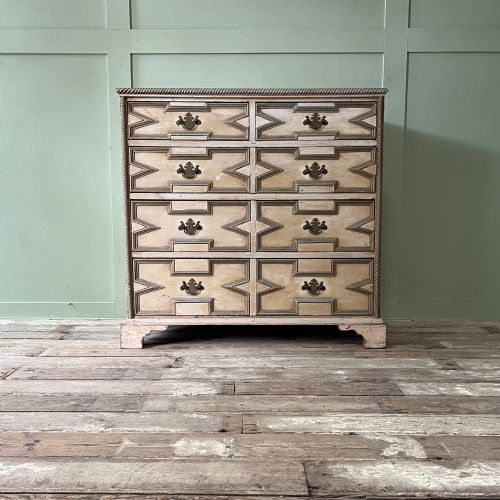
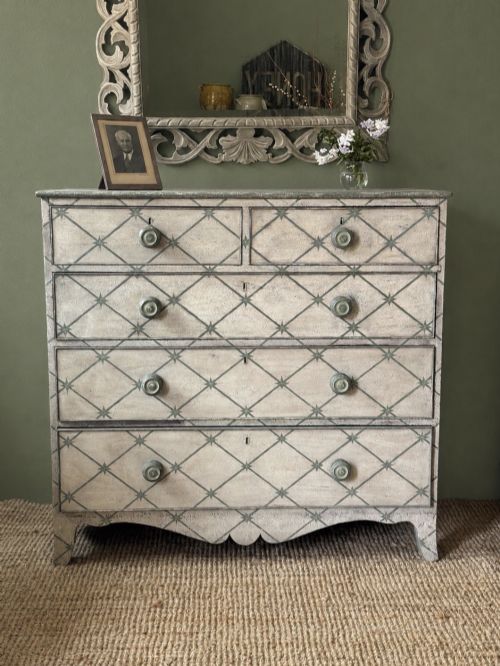
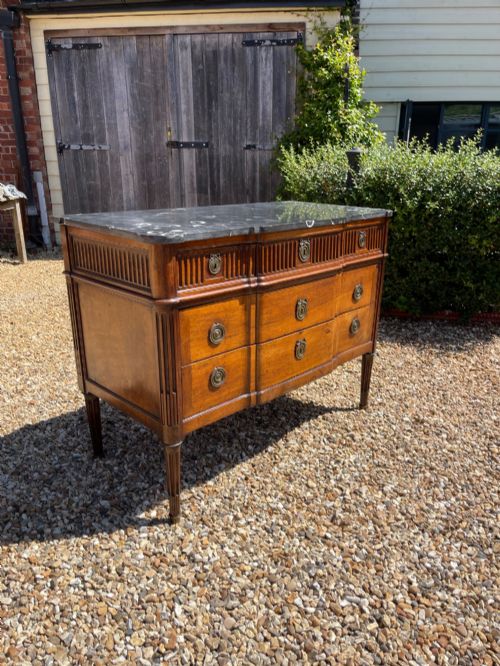
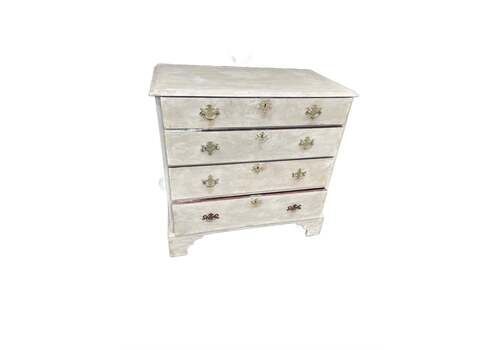



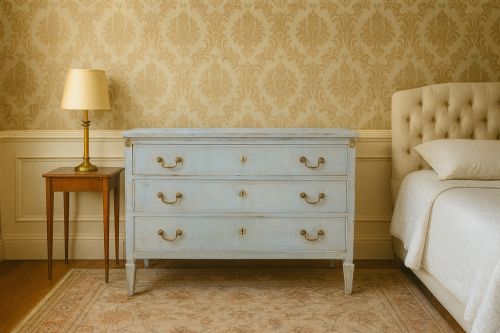


Grey Wooden Commode
A grey wooden commode brings calm, muted tone and generous storage to a bedroom or hallway, drawing on centuries of painted and polished craft.
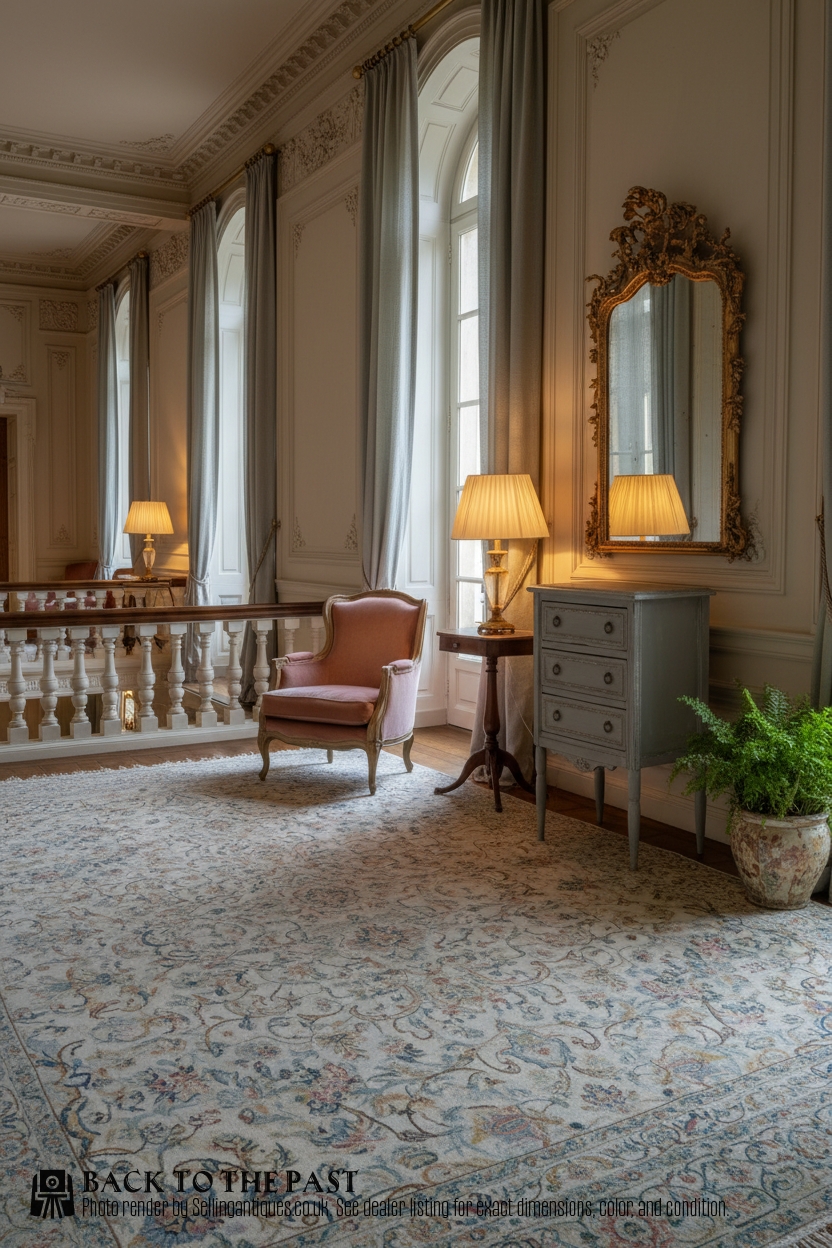
Grey Wooden Commode
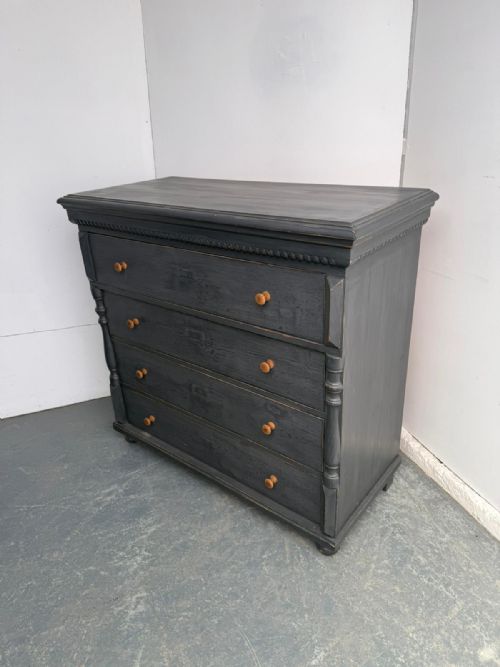
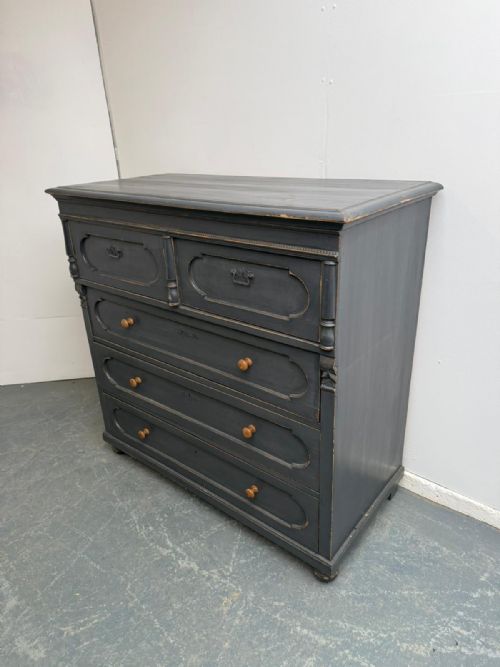
A grey wooden commode serves as a practical storage chest with drawers or cupboards, appearing across the eighteenth, nineteenth, and early twentieth centuries. These pieces encompass regional European styles, notably Swedish Gustavian, French provincial, and Victorian English forms.
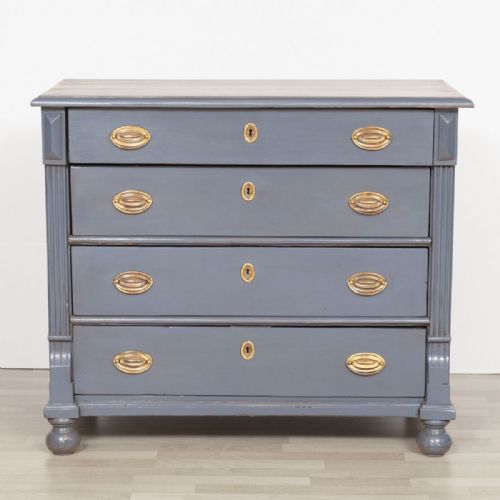
The versions most common here are painted pine or hardwood chests of drawers and marble-topped commodes finished in various shades of grey. Many pieces reflect a country or neoclassical aesthetic, featuring clean lines or subtle decorative carving.
Forms range from tall five-drawer chests to compact bedside tables and serpentine commodes. Each piece balances decorative painted surfaces with utilitarian drawer space.
Materials and construction methods
Carpenters typically built these carcasses from solid timbers such as pine, ash, elm, cherry, or walnut, sometimes applying parquetry veneers. Surfaces were then primed and painted in muted tones, or polished to reveal the natural grain of the wood.
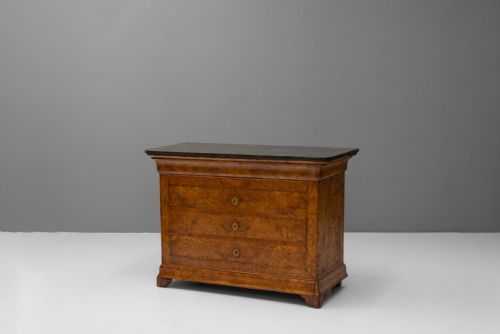
Many continental commodes feature fitted marble tops in grey or white shades, adding weight and a durable surface. Brass handles, escutcheons, and drawer pulls complete the construction, secured to dovetailed drawer boxes.
Assessing quality and craftsmanship
Quality rests in the integrity of the timber frame, the smoothness of drawer operation, and the handling of the painted or polished finish. Hand-cut dovetail joints and original brass hardware distinguish superior examples from simpler utilitarian pieces.
The sophistication of the painted surface matters greatly, with layered historical paintwork or delicate neoclassical detailing elevating a commode. Marble tops should fit the carcass cleanly without excessive chipping along the moulded edges.
Sir Clough Williams-Ellis·Edwards and Roberts
The Grey Wooden Commode Glossary
- Commode
- A low chest of drawers or cabinet, often fitted with a marble top. Originating in France, the form evolved across Europe into various regional styles.
- Gustavian
- The Swedish neoclassical style spanning the late eighteenth century, characterised by restrained symmetry and pale painted finishes. It heavily influences the light grey aesthetic seen on many northern European pieces.
- Parquetry
- Geometric wood mosaic work used for decorative veneer surfaces on furniture drawers and tops. Skilled cabinetmakers arranged contrasting timber grains to create patterns.
- Serpentine
- A furniture front or top curving outward at the centre and inward at the sides. This fluid shape requires precise woodworking skill.
- Bombe
- A swollen or bulging convex shape found on the sides and fronts of certain eighteenth-century commodes. The silhouette demands advanced curved joinery.
Grey Wooden Commode: Frequently Asked Questions
How do I clean a painted grey commode?
Dust regularly with a soft, dry cloth to prevent dirt accumulation on the painted surface.
Avoid harsh chemical cleaners or abrasive pads that can strip historic or decorative paint layers.
Are marble tops original to these commodes?
Many continental commodes were designed specifically to accommodate fitted marble slabs, which provided a durable, cool surface for washing utensils.
Inspect the underside of the marble and the supporting wooden frame to check for later replacements.
How do I date a grey wooden commode?
Examine the construction methods of the drawers, paying attention to the cut of the dovetails and the type of secondary timber used inside.
Paint analysis, hardware style, and regional design characteristics also help narrow down the decade of manufacture.
Can I use a commode in a modern living room?
These chests offer versatile surface space and deep drawers that suit hallways, living rooms, and bedrooms alike.
Their neutral grey tones allow them to blend easily with contemporary interior palettes.