
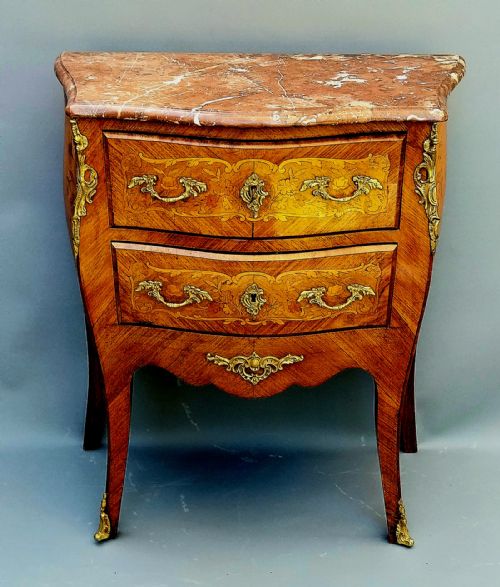
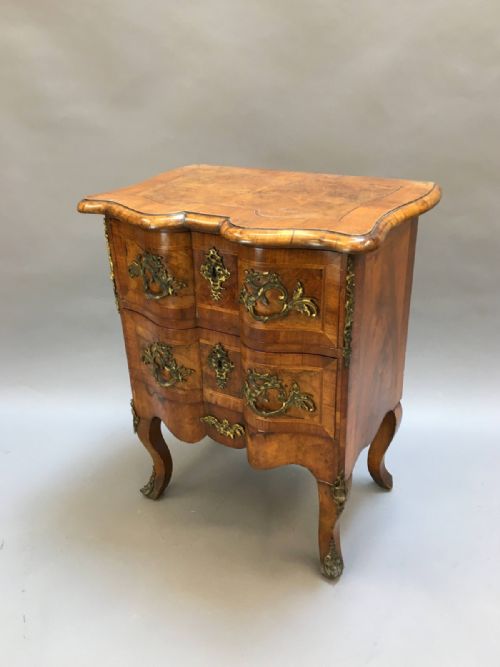


Small Louis XV Chest
A small louis xv chest brings curvaceous French style to compact spaces, offering practical surface area and timeless charm.
Small Louis XV Chest
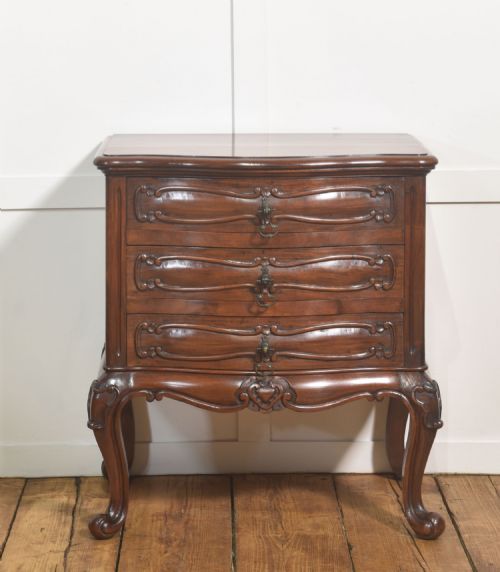
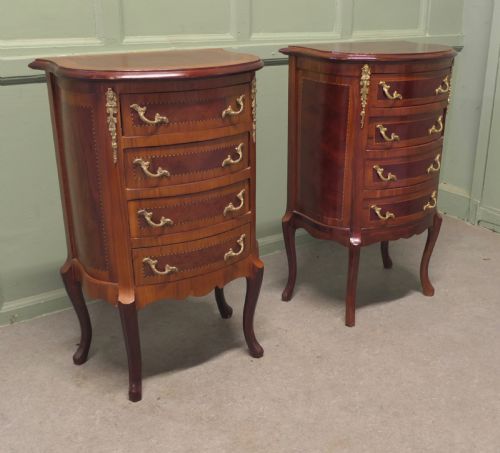
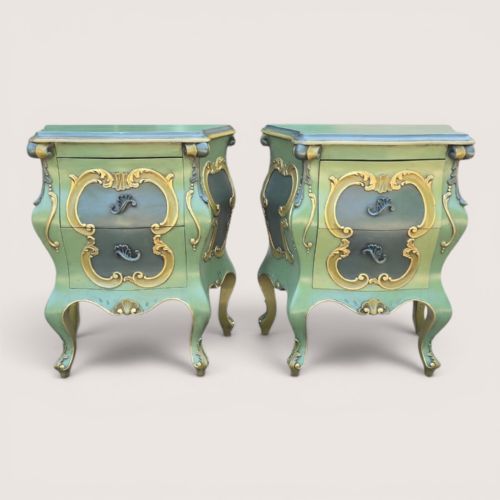
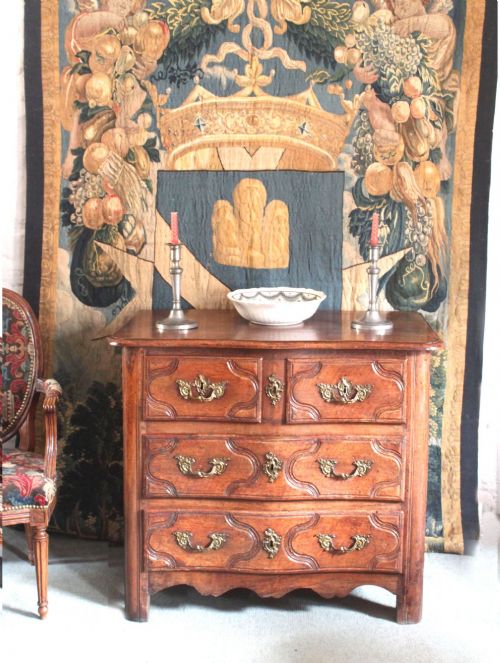
A small louis xv chest is a diminutive case piece designed for storage, featuring the signature serpentine lines and cabriole proportions of the Rococo aesthetic. These items appear primarily as bedside chests, bedside tables, commodes, and miniature furniture.
The pieces available span both authentic eighteenth century items from seventeen fifty and later revival works from nineteen ten, nineteen twenty, and nineteen thirty. Buyers encounter various formats including painted wood, inlaid kingwood, and marble topped bedside cabinets.
Materials and construction
Cabinet makers utilised a foundation of solid timbers such as walnut, oak, and fruitwood, often applying decorative veneers including kingwood and tulipwood in marquetry or parquetry patterns. Surface decoration ranged from hand painted finishes to elaborate parquetry layouts.
Marble slabs fitted to the tops provided durable, decorative surfaces on commodes and bedside tables. Cast brass and ormolu mounts highlighted the corners, handles, and apron curves of the case.
Miniature apprentice chests and jewellery boxes offer all the grand serpentine curves of a full sized commode scaled down to tabletop dimensions.
Judging quality
Quality rests in the precision of the veneer work and the fluidity of the carved serpentine shape. Superior examples display seamless matching of grain patterns across the drawers and sides.
The refinement of the cast bronze or ormolu mounts distinguishes standard production from finer pieces. Original marble tops and well preserved patination on the timber indicate higher grade craftsmanship.
The Small Louis XV Chest Glossary
- Commode
- A low chest of drawers, typically standing on relatively tall cabriole legs. These forms served various domestic functions in French interiors.
- Ormolu
- Gilded bronze used for decorative mounts and hardware. It accents the corners and handles of case furniture.
- Parquetry
- Geometric wood veneer patterns arranged in wooden floors and furniture surfaces. It creates decorative visual contrast.
- Marquetry
- Elaborate veneer work forming pictorial or decorative motifs using various coloured woods. It decorates the top surfaces and drawer fronts of fine chests.
- Serpentine
- A line or surface that curves outward and then inward in a continuous wave. This contour defines the front profile of many commodes.
Small Louis XV Chest: Frequently Asked Questions
Where do I put a small louis xv chest?
These compact pieces fit easily beside a bed as bedside tables or within hallways as accent storage. Their modest footprint allows them to function in rooms where larger furniture would overwhelm the space.
The decorative marble tops and polished wood finishes also suit living rooms as small side cabinets. They provide surface display area alongside discreet drawer storage.
How do I spot an eighteenth century piece?
Eighteenth century items show specific signs of age in their construction methods, timber shrinkage, and hand cut joinery. Examining the drawer linings and interior secondary woods often reveals period hand tooling.
Revival pieces from the nineteenth and twentieth centuries utilise later machine methods and standard fixings. Comparing the timber patination and construction details clarifies the exact period.
Are marble tops original to these chests?
Many commodes and bedside cabinets were designed specifically with fitted marble slabs to protect the wood surface. These stone tops match the recessed contours of the cabinet frame.
Replacements can happen over time if a stone slab broke. Inspecting the seating of the marble helps determine if it belongs to the original construction.
What is the difference between a commode and a bedside chest?
A commode is traditionally a larger chest of drawers designed for general room storage, though smaller versions exist. Bedside chests and cabinets are scaled specifically to sit next to a bed.
Both pieces share the same stylistic vocabulary of curved aprons and cabriole legs. The primary distinction lies in their overall height and surface dimensions.