
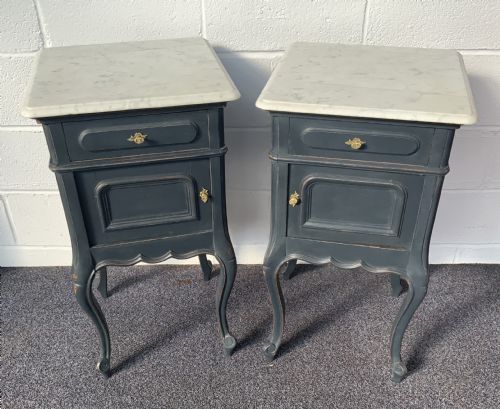


Grey Painted Bedside Table
These grey painted bedside table pieces bring muted continental charm and practical bedside storage, prized for their soft painted finishes.
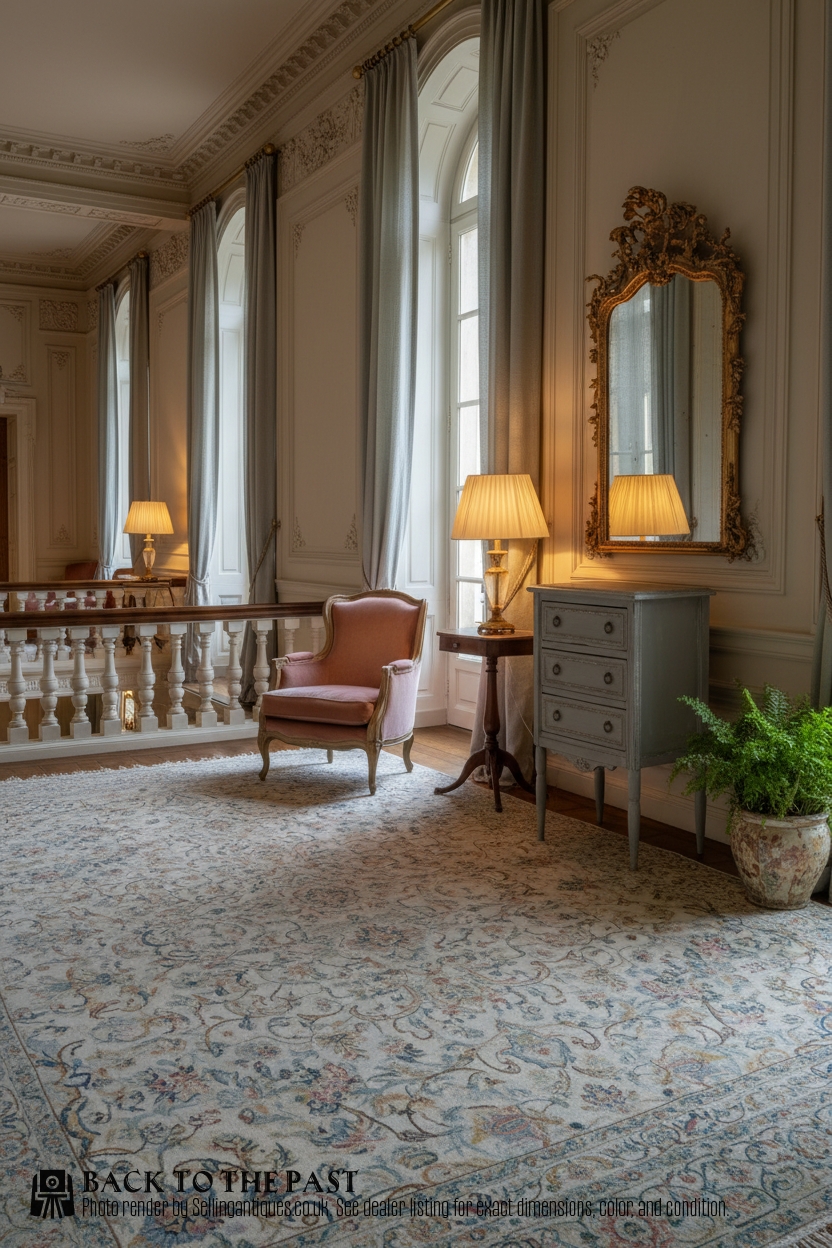
Grey Painted Bedside Table
When you search for a grey painted bedside table, you encounter a selection spanning the Victorian era through the early twentieth century. The forms range from compact bedside cabinets and cupboards to small chests of drawers, side tables, and washstands.
Continental origins dominate the selection, with numerous examples reflecting French Chateau, Provincial, and Louis XVI styles, alongside Swedish Gustavian influences. You also find English painted lamp tables and traditional Victorian pine pieces among the current offerings.
Pairs appear frequently across the inventory, particularly from French and Swedish workshops dating between the late nineteenth century and the nineteen-twenties. These matching sets offer symmetrical bedside placement while displaying various shades of grey paint, from dark tones to light finishes.
How they were made
Pine and oak serve as the primary foundational woods for these cabinets and tables, providing sturdy construction for daily use. Carpenters utilised traditional joinery methods to build the carcasses, drawers, and cupboard doors that withstand decades of opening and closing.
Surface treatments rely on applied paint finishes, sometimes complemented by faux marble tops or genuine marble inserts. Brass hardware occasionally appears on doors and drawers, adding metallic contrast to the painted wooden surfaces.
Several cabinets answer strictly to continental names, ensuring your bedside lamp rests on history that survived French provincial mornings.
What varies in quality
The sophistication of the stylistic detailing distinguishes simpler country pieces from refined continental interpretations. Items reflecting Louis XVI or Gustavian influence often display more intricate mouldings, panel work, and proportions than standard utility pieces.
The character of the painted finish and the integrity of underlying timber influence the overall standard of each piece. Original or sympathetically layered paintwork preserves the historic charm better than heavy modern resurfacing.
The Grey Painted Bedside Table Glossary
- Gustavian
- A Swedish neoclassical style originating in the late eighteenth century, known for restrained ornamentation, pale painted finishes, and elegant proportions. Pieces reflecting this style often feature subtle fluting and carved details.
- Washstand
- A historic piece of furniture designed to hold a basin and pitcher for washing before indoor plumbing became standard. Many surviving examples have been adapted for use as bedside tables or side storage.
- Faux marble
- A decorative painting technique used to imitate the appearance of real stone on wooden surfaces. Artisans applied this finish to table tops to provide a durable, luxurious look without the heavy weight of solid marble.
- Night table
- A small bedside cabinet or table intended for holding nighttime essentials. These compact forms typically include a combination of cupboards, drawers, or open surfaces.
Grey Painted Bedside Table: Frequently Asked Questions
Are these tables sold as pairs?
Many of the listings consist of matched pairs originating from French and Swedish workshops. These sets suit symmetrical bedroom layouts where uniformity is desired.
Single tables also appear in the selection, usually representing English or continental individual pieces with distinct utilitarian or decorative character.
What materials are used in these tables?
The primary material is wood, predominantly pine and occasionally oak, finished with painted surfaces. Some examples incorporate marble tops or faux marble painted surfaces for added durability and visual interest.
Brass fittings and hardware frequently accent the doors and drawers of the French and continental cabinets. Ceramic elements may also appear on associated washstands and hardware.
How do I identify a Gustavian piece?
Gustavian pieces typically display restrained neoclassical lines inspired by French court furniture of the eighteenth century. They often feature pale painted finishes, fluted columns, and subtle carved details.
The influence appears in Swedish cabinets and chests dating through the nineteenth century, maintaining a lighter and simpler aesthetic than heavier Victorian furniture.
What periods do these pieces span?
The inventory spans the Victorian era and the early twentieth century, with dates ranging from the eighteen-eighties to nineteen-twenty. Nineteenth-century continental examples sit alongside pieces from the nineteen-tens and twenties.
This timeframe encompasses both traditional British country furniture and refined European decorative styles from the late nineteenth and early twentieth centuries.
How were bedside cabinets used historically?
Historically, bedside cabinets provided concealed storage for chamber pots, personal items, and nighttime water pitchers before modern bathrooms became standard. Their enclosed cupboards and drawers kept necessities close at hand while maintaining a tidy bedroom appearance.
Over time, their practical proportions allowed them to transition easily into modern roles as lamp tables and general bedside storage.