

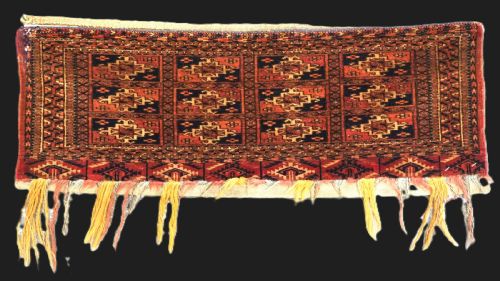
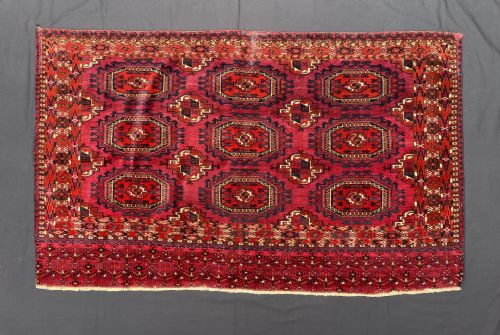
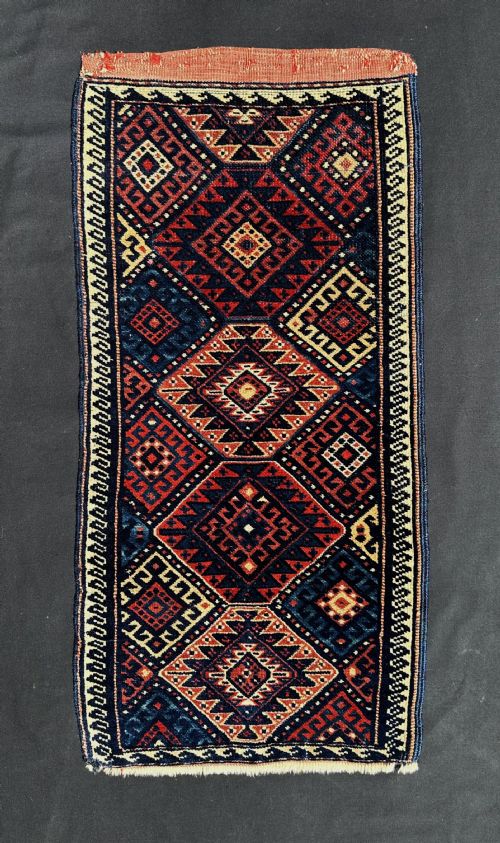


Hand Knotted Wool Bag
When you search for hand knotted wool bag, you are looking at tribal storage pieces and bag faces woven across Central Asia and Persia during the nineteenth and early twentieth centuries.
Hand Knotted Wool Bag
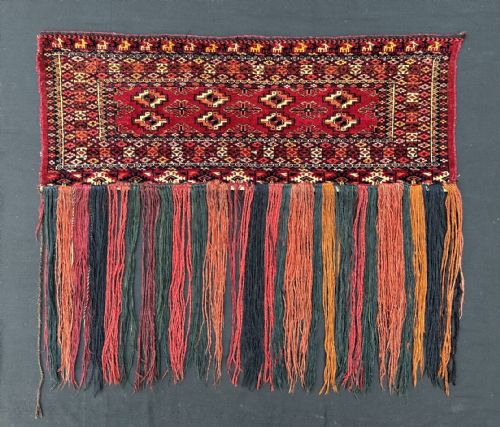
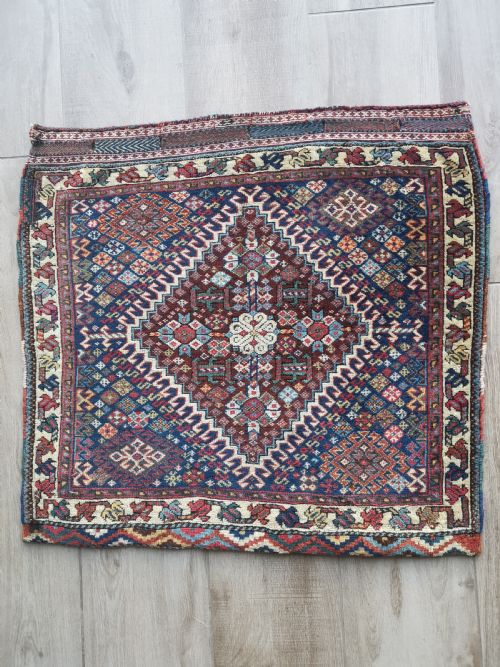
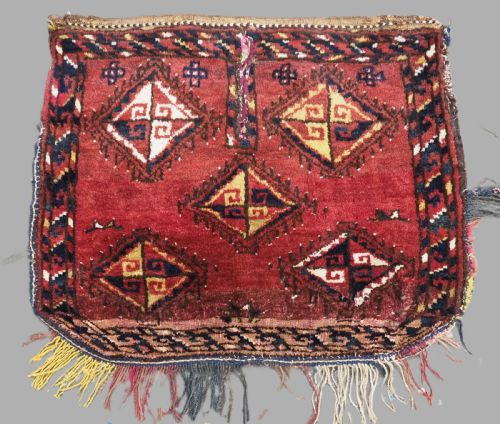
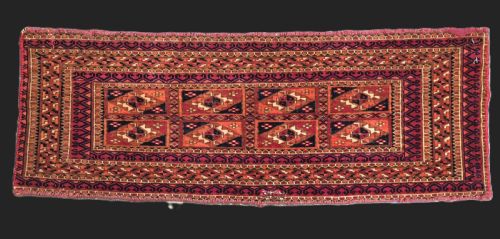
A hand knotted wool bag on this page typically takes the form of a torba, chuval, or saddlebag face originating from Turkmen, Persian, or nomadic tribal traditions.
These woven items served practical functions as tent bags, storage containers, and transport pouches before surviving as decorative textile fragments.
The selection ranges from complete pieces with original plain weave backs to individual pillow bag-faces and fragments dating from the mid-nineteenth century onward.
Materials and Construction
Weavers constructed these pieces using hand-spun wool and dyed yarn, often supported by cotton foundations.
Natural dyes provide the palette across tribal workshops, yielding deep reds, ivories, and dark contrasts that define the visual structure of each bag face.
Listings feature nineteenth-century Turkmen and Persian tribal weavings utilising natural dyes and hand-spun wool.
Evaluating the Weave
Quality rests in the density of the knotting and the precision of repetitive tribal motifs such as guls, kepse patterns, and curled leaf designs.
The crispness of the drawing and the condition of the wool pile determine how well the structure has survived from the nineteenth century.
The Hand Knotted Wool Bag Glossary
- Torba
- A small Turkmen wall storage bag used inside a tent for holding small possessions. These rectangular hangings often display repeated gul motifs.
- Chuval
- A large Turkmen storage bag traditionally used for bedding and household goods during nomadic migrations. They frequently feature multiple primary guls across the face.
- Gul
- A repeated medallion pattern used in Turkmen and Central Asian tribal weaving. Each tribal group utilised distinct gul variations to signify lineage and origin.
- Mafrash
- A rectangular storage bale or chest panel produced by nomadic tribes for transport and domestic organisation. Complete examples include both decorative faces and plain weave backs.
- Chanteh
- A small woven personal pouch or bag carried by nomads. These compact pieces demonstrate the same knotting techniques and natural dyes found on larger saddle rugs.
Hand Knotted Wool Bag: Frequently Asked Questions
How were these bags used?
Nomadic tribes utilised these woven containers inside tents and on animals for storing household goods, bedding, and personal items. They formed an essential part of daily domestic life.
As tents were packed and moved during seasonal migrations, the durable construction protected belongings while adding decorative warmth to the dwelling.
How do I live with a bag face?
Bag faces and small fragments adapt easily to modern interiors as wall hangings, small table mats, or accent displays. Their dense wool construction provides natural durability for low-traffic placement.
Keep them away from direct sunlight to protect the natural dyes, and support the textile properly if mounting it on a wall.
How do I tell tribal styles apart?
Tribal attribution relies on specific structural motifs, colour palettes, and knotting characteristics unique to groups like the Tekke, Yomut, and Qashqai. Each group employed distinct primary medallions and border arrangements.
Examining the handling of the wool and the specific geometry of patterns helps pinpoint the weaving origin to particular regions in Persia or Turkmenistan.