



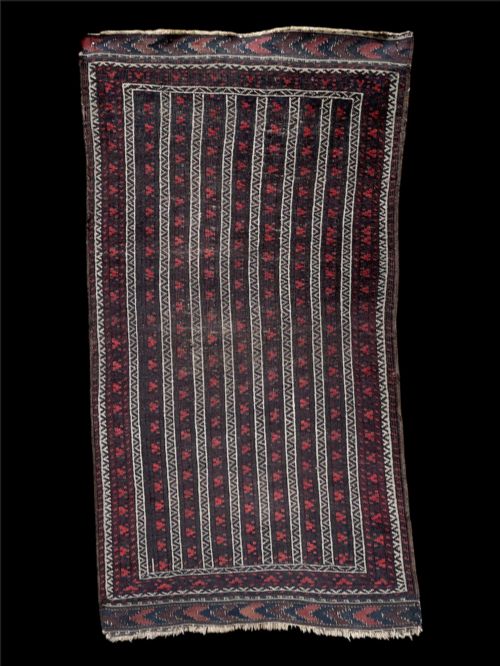
Hand Knotted Baluch Carpet
When you unfold a hand knotted baluch carpet, you meet the dense, nomadic geometry of the borderlands between Persia and Afghanistan.
Hand Knotted Baluch Carpet
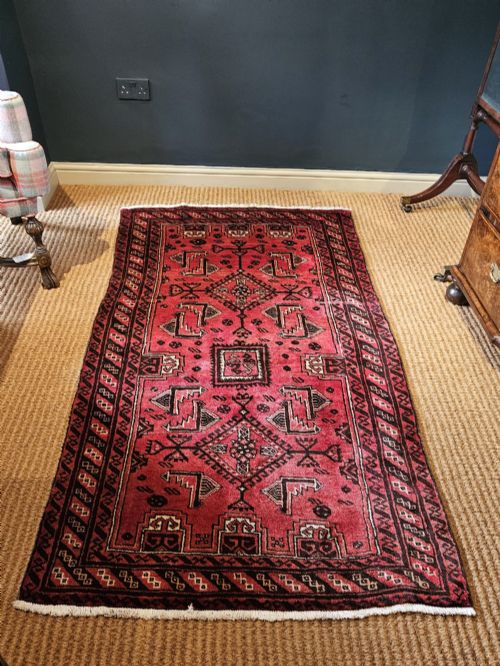
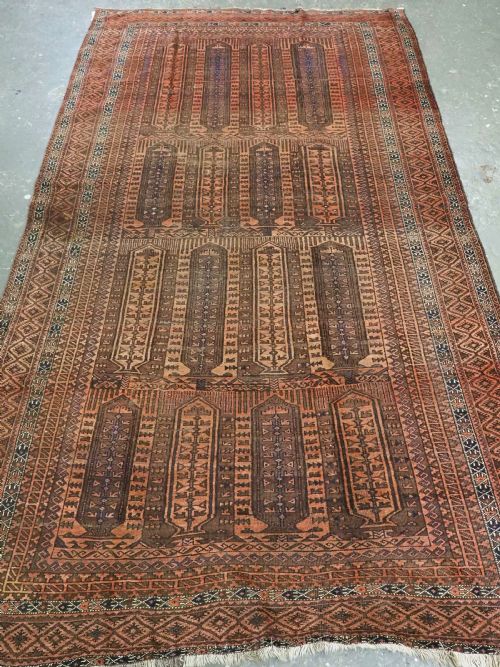
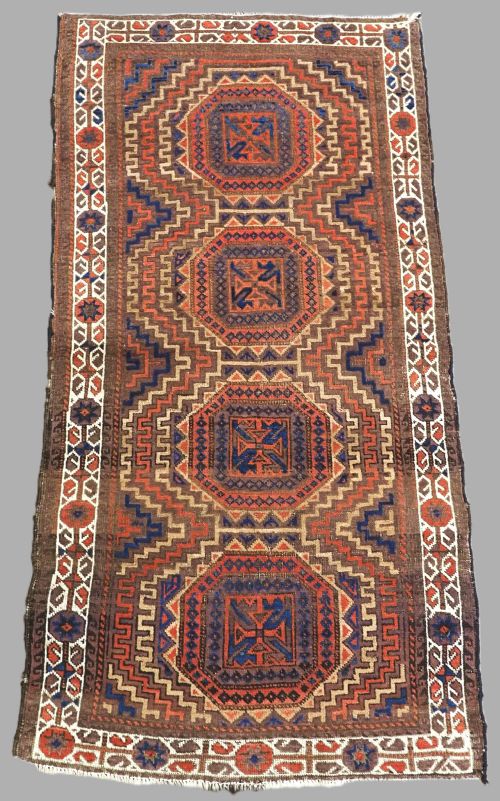
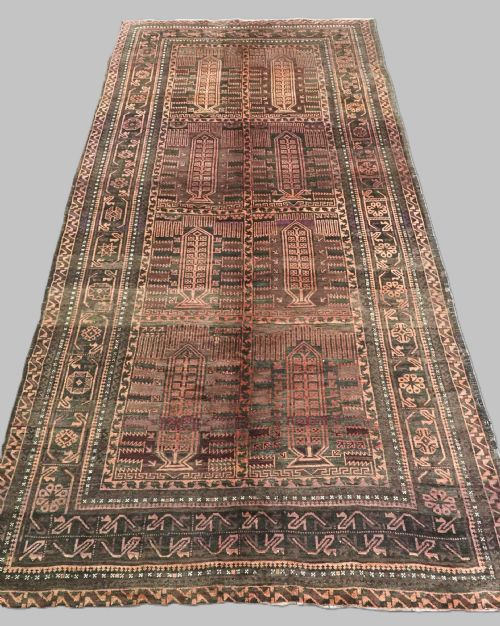
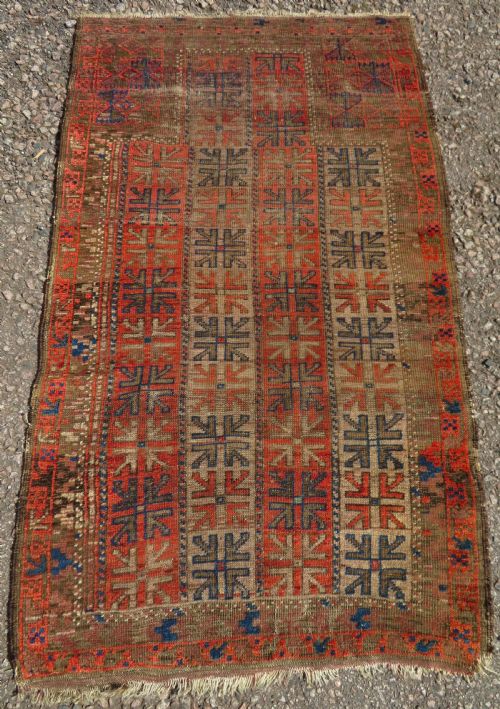
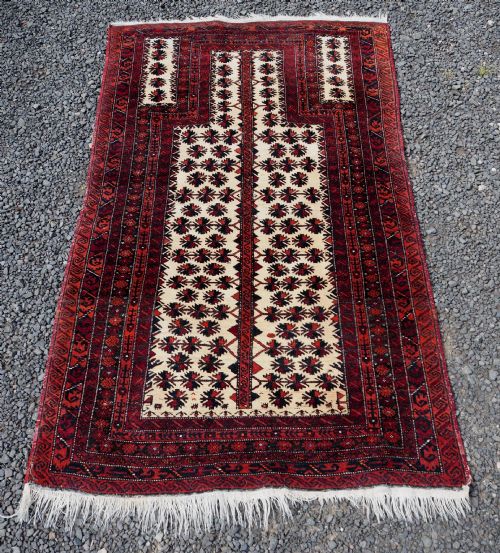
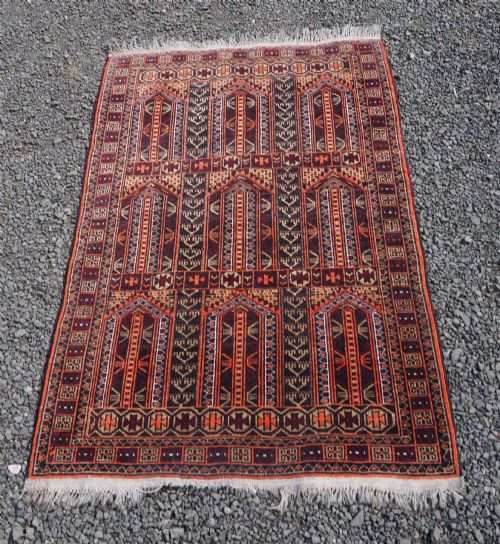
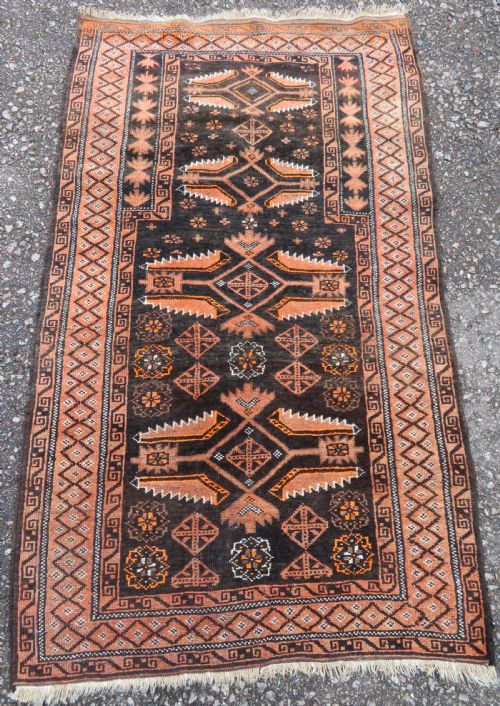
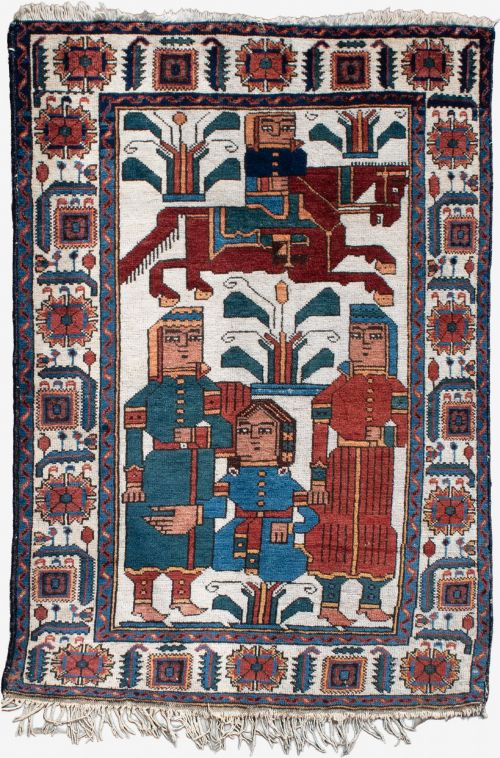
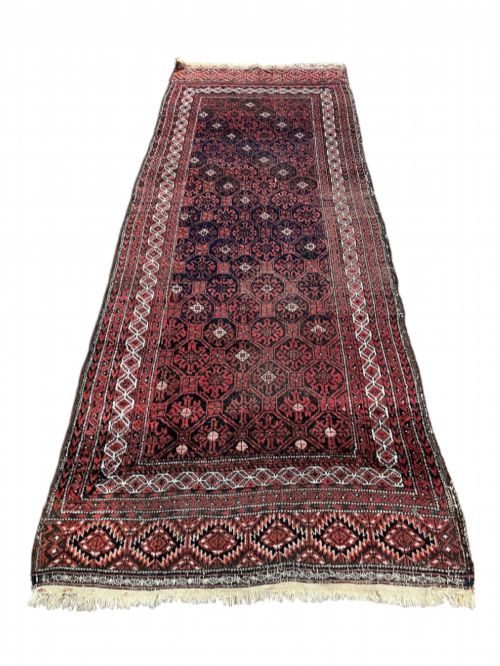
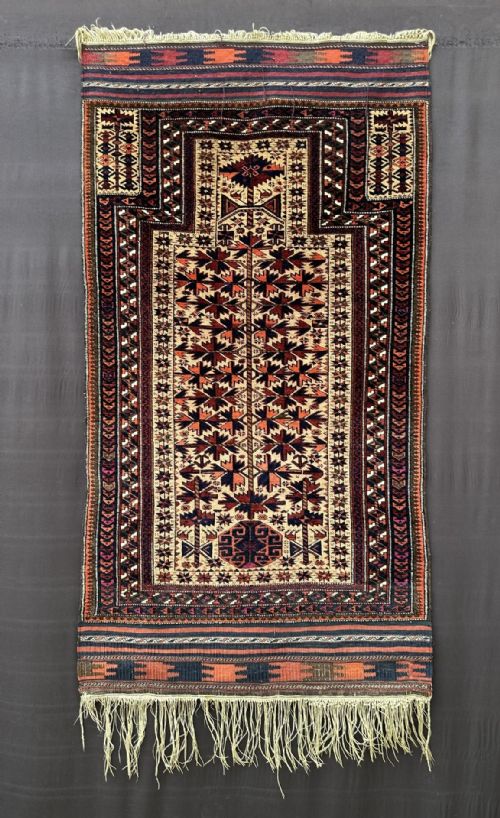
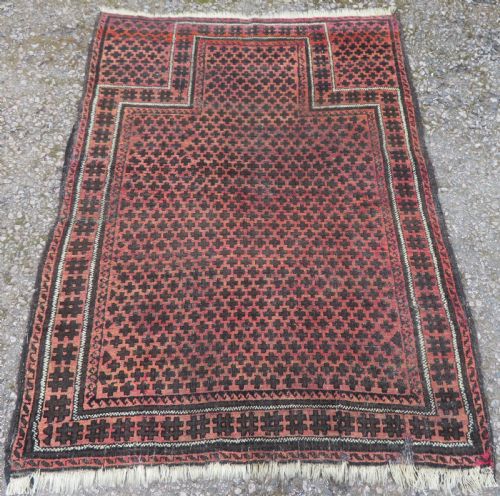
A hand knotted baluch carpet brings together tribal formats like prayer rugs, runners, and main carpets originating from nineteenth and early twentieth century borderlands. These pieces display traditional motifs such as guls, prayer mihrabs, and Kalam Donnegh patterns woven by nomadic and village makers.
The most common examples on this page are compact prayer rugs and small area carpets dating from the late nineteenth century to around 1930. They reflect Persian and Afghan tribal weaving traditions rooted in nomadic life.
Makers utilised dark, saturated palettes dominated by deep browns, indigos, and reds, often illuminated by camel hair and ivory details. Their formats range from small square rugs to elongated runners suited to nomadic portability.
How they were made
Weavers constructed these carpets using hand-spun wool foundations and pile, frequently incorporating natural dyes alongside goat hair and camel hair for structural resilience. The knotting technique yields a dense, durable pile designed to withstand heavy daily use.
Materials like wool and camel hair were locally sourced and processed by hand, producing tactile variations across different tribal groups such as the Timuri, Taimani, and Mushwani.
Some weavers slipped tiny accidental irregularities into their repeating guls, ensuring evil spirits could not become trapped inside the perfect geometry.
What varies in quality
Quality rests in the precision of the knotting, the complexity of the tribal design, and the depth of the natural dyes. Finely executed pieces display crisp geometry in motifs like the mina khani or pencil box pattern.
The choice of materials also divides the range, with select examples employing hand-spun wool and camel hair grounds that acquire a rich patina over decades.
The Hand Knotted Baluch Carpet Glossary
- Mihrab
- A niche design representing the direction of prayer, frequently found on tribal prayer rugs. It guides the layout of the central field.
- Gul
- A medallion motif used repeatedly across Turkmen and tribal carpets. Each clan or group often had distinct variations.
- Kalam Donneh
- A repeating cone or boteh motif resembling a shrub or leaf. It appears frequently in western Afghan tribal weaving.
- Camel Hair
- Undyed natural fibre utilised in the pile or ground of select carpets for its soft tone and durability. It adds subtle texture to the weave.
- Prayer Rug
- A smaller format carpet featuring a mihrab arch designed for devotional use. These pieces measure compactly for portable deployment.
Hand Knotted Baluch Carpet: Frequently Asked Questions
Where were hand knotted baluch carpets made?
These carpets originate from the borderlands of Persia, Afghanistan, and parts of Baluchistan. Nomadic and village tribes produced them in these regions.
Weavers utilised local materials and traditional designs handed down through generations of tribal makers.
What materials are used in these rugs?
The construction relies primarily on wool and hand-spun wool, often paired with cotton foundations. Natural dyes provide the underlying colour palette.
Certain examples incorporate goat hair or camel hair in the borders or ground for added strength.
How do I care for an antique rug?
Keep the carpet out of direct sunlight to protect the natural dyes from fading over time. Regular gentle vacuuming without a beater bar removes trapped dust.
Professional cleaning should be undertaken by specialists familiar with antique textiles.