
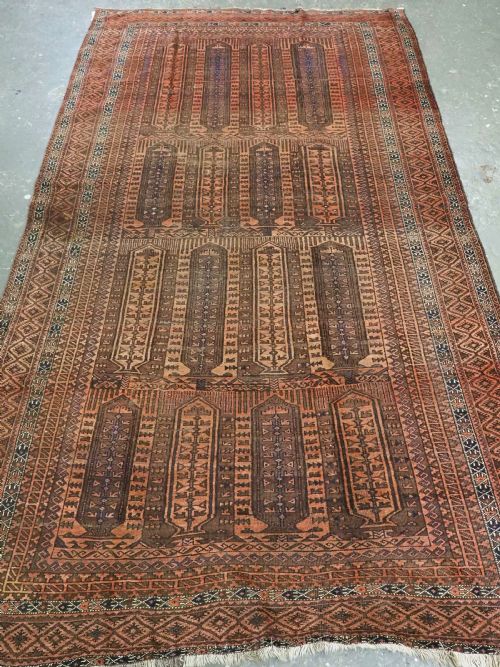
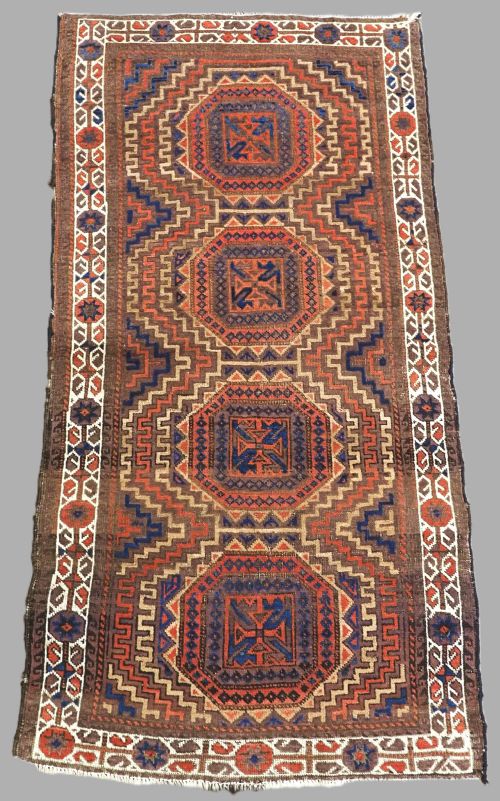
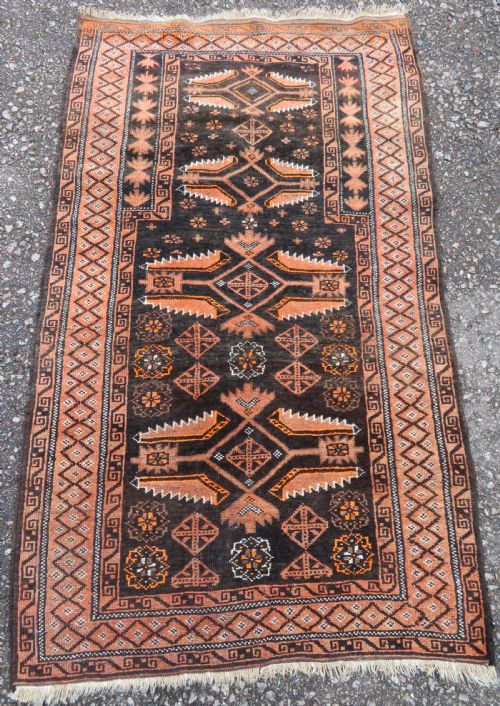
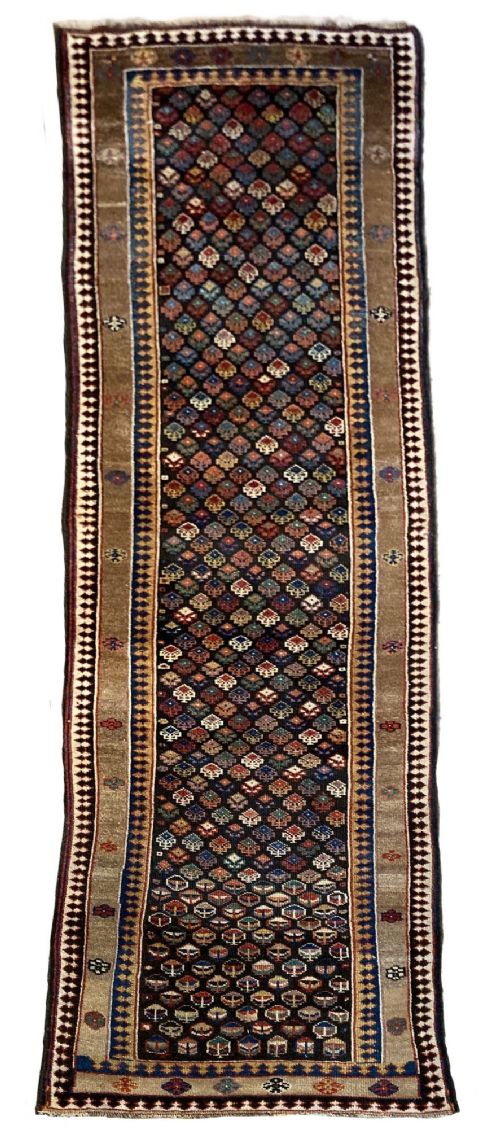


Brown Geometric Carpet
When choosing a brown geometric carpet, you select a tribal weaving shaped by nomadic heritage, natural dyes and time-honoured wool work.
Brown Geometric Carpet
A brown geometric carpet encompasses room-size carpets, long runners, prayer rugs and flat-woven kilims originating from tribal and village communities across Central Asia, Persia and the Caucasus. These heavy floor coverings and tent furnishings were produced by nomadic and semi-nomadic groups for domestic utility, export trade and personal use within domestic spaces.
Buyers browsing this selection encounter pieces spanning the late nineteenth century through to the early decades of the twentieth century. The prevailing forms showcase characteristic repeating motifs, central medallions and linear borders executed in earthy tones, deep browns and muted natural hues.
Regional variations include Baluch prayer rugs, Yomut main carpets, Kurdish runners and Caucasian tribal formats. Each type reflects distinct weaving traditions passed down through generations of tribal artisans.
Assessing Quality and Execution
Quality in these floor coverings rests upon the density of the weave, the precision of the geometric design execution and the integrity of the wool. Finer knotting and careful handling of natural dye variations distinguish sophisticated tribal commissions from standard utilitarian pieces.
The choice of fibre foundation also influences the handle and longevity of the textile, with hand-spun wool and sturdy camel or goat hair additions providing resilience. Preservation of original kilim ends and side corded edges contributes significantly to the integrity of older survivals.
Listings feature pieces spanning the late nineteenth century to 1930, utilising wool, cotton, camel hair, goat hair and natural dyes.
The Brown Geometric Carpet Glossary
- Gul
- A repeating medallion or octagonal floral motif characteristic of Turkmen and Central Asian tribal carpets. These motifs often identify the specific tribal group or clan responsible for the weaving.
- Kilim
- A flat-woven carpet or rug produced without a pile by tightly interlacing warp and weft threads. They serve as versatile floor coverings, wall hangings and functional tent furnishings.
- Prayer rug
- A small format rug featuring a mihrab or arched design indicating the direction of prayer. These pieces were utilised for personal devotion within nomadic and village households.
- Runner
- A long, narrow carpet format designed for corridors, hallways or narrow spaces. They often display continuous repeating geometric borders and field patterns.
- Warp
- The vertical foundation threads stretched tightly on the loom before weaving begins. Weft threads are passed horizontally across these warp strings to lock the design in place.
Brown Geometric Carpet: Frequently Asked Questions
How do I care for an antique tribal carpet?
Regular gentle vacuuming without a beater bar removes dust and grit from the wool pile. Professional specialist cleaning is recommended to preserve natural dyes and textile structure.
Keep the carpet out of direct, prolonged sunlight to prevent fading. Utilising a suitable underlay prevents slipping and reduces wear on uneven floor surfaces.
Where were these geometric carpets made?
The pieces originate from tribal and village workshops across Central Asia, the Caucasus and Persia. Communities such as the Baluch, Yomut, Kurdish and Caucasian groups produced them for daily nomadic or village life.
Border regions between modern-day Afghanistan, Iran and Turkmenistan served as primary hubs for these distinct weaving traditions.
What is the difference between a kilim and a pile rug?
A kilim is flat-woven without pile, created by interlocking coloured weft threads tightly across the warp. This technique yields a lighter, reversible textile with sharp geometric patterns.
Pile rugs feature knotted wool or hair tufts sheared to create a plush, dense surface. This construction provides greater thickness and warmth underfoot.
How can I tell which tribe made a rug?
Tribal attribution relies on specific structural characteristics, colour palettes and repeating motifs such as guls or prayer arches. Different regions utilised distinct knotting techniques and edge finishes.
Comparing border bands, wool quality and secondary materials provides clear clues regarding the specific cultural origin of the weaving.