






Baluch Tribal Wool Runner
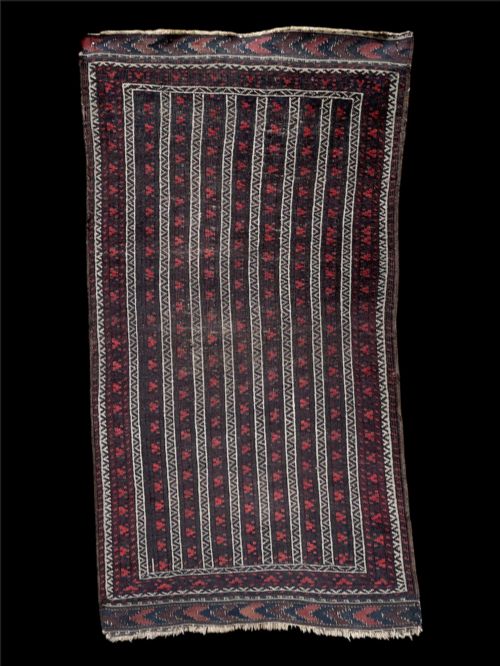
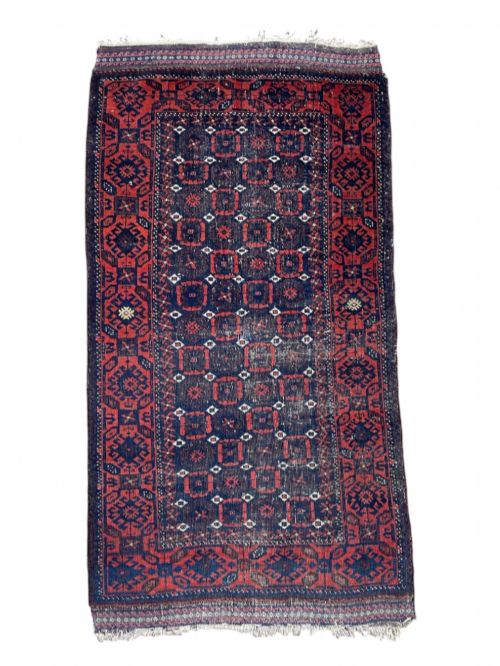
A baluch tribal wool runner brings nomadic heritage into a hallway through geometric motifs and saturated dark hues woven by skilled hands.
Baluch Tribal Wool Runner
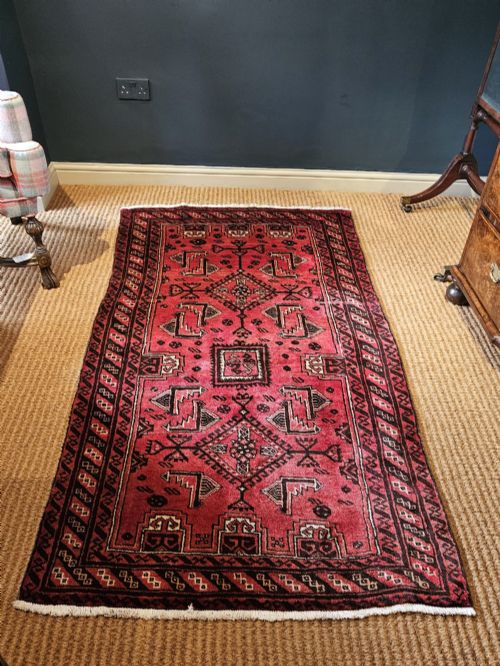
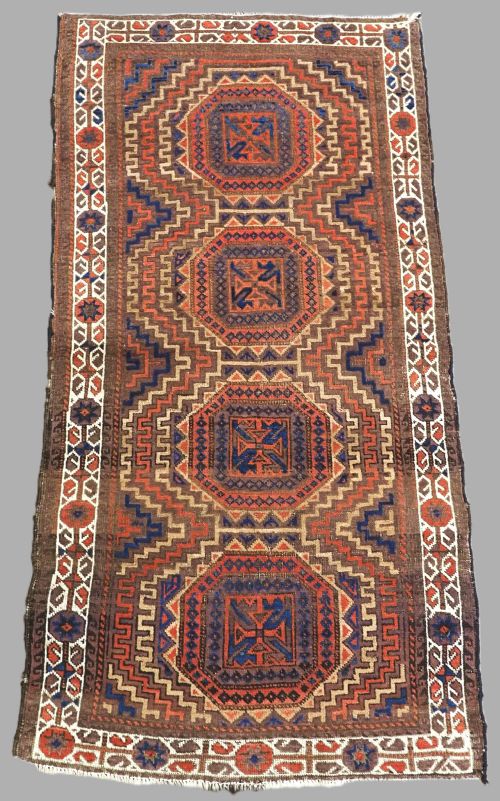
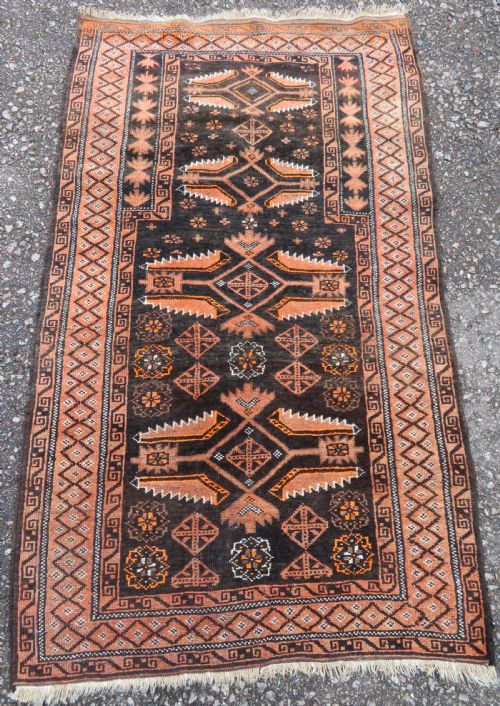
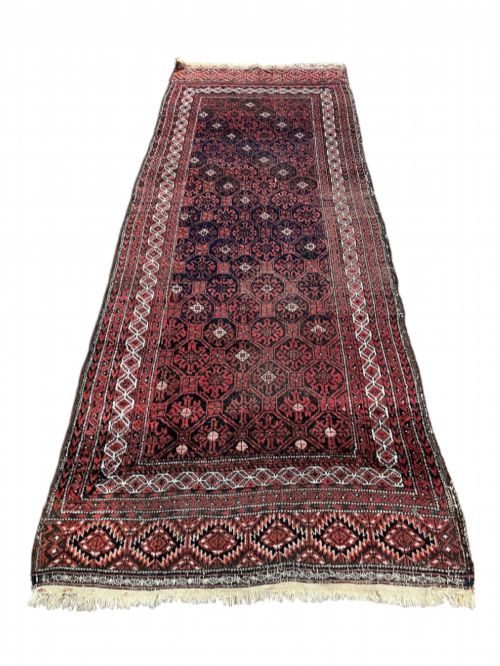
A baluch tribal wool runner represents the utilitarian artistry of nomadic and village weavers across the borderlands of Persia and Afghanistan. These elongated floor coverings typically feature repeating guls, prayer mihrabs, or geometric field patterns suited to narrow spaces.
The items found here span the nineteenth and early twentieth centuries, capturing traditional village output rather than formal court workshops. Collectors encounter formats ranging from floor runners to functional sofreh dining spreads and prayer mats.
Tribal pieces often display regional identifiers linked to specific groups such as the Timuri, Taimani, Salar Khani, and Mushwani. Their construction reflects generations of passed-down iconography adapted to domestic life.
Factors of quality and execution
Quality rests upon the fineness of the knotting, the handling of the wool, and the clarity of the primary design elements. Tighter knot counts allow complex medallion and shrub motifs to retain crisp definition.
The depth and saturation of the natural dye palette contribute significantly to visual success. Subtle variations in tone, known as abrash, indicate hand-dipping batches and lend organic movement to the field.
Structural integrity, including secure selvedges and complete end finishes, determines how well a textile survives centuries of domestic placement. Intact original formats command greater interest among purists.
Some runners retain the accidental paw print of a nomadic camp dog pressed firmly into the wet wool during drying.
The Baluch Tribal Wool Runner Glossary
- Gul
- A repeating octagonal medallion motif frequently found in tribal rug designs. It often denotes specific clan or regional origins.
- Mihrab
- An arched architectural niche design symbolising a prayer doorway, commonly featured on devotional rugs. This motif points towards Mecca during daily prayers.
- Sofreh
- A flat-woven or piled cloth utilised historically for sharing meals or preparing dough within nomadic households. These functional textiles frequently display sophisticated border geometry.
- Abrash
- A subtle tonal variation in rug pile caused by changes in dye batches or hand-spun wool lots over time. This characteristic confirms traditional natural dyeing methods.
- Kilim
- A flat-woven textile produced without a pile by tightly interweaving warp and weft strands. These pieces serve as floor coverings, storage bags, or tent dividers.
Baluch Tribal Wool Runner: Frequently Asked Questions
Where were these runners woven?
These textiles originated among nomadic and semi-nomadic groups inhabiting the border regions between modern-day eastern Persia and western Afghanistan.
Weavers worked within specific tribal confederations, passing down regional design vocabulary through generations.
How do I care for an old wool runner?
Protect the textile by placing a quality breathable underlay beneath it to prevent slipping and reduce pile friction. Vacuum gently with suction only, avoiding revolving brush bars that can pull old fibres.
Professional specialist cleaning is recommended every few years to remove embedded dust safely.
What is a prayer design on a rug?
A prayer design incorporates an arched mihrab shape that frames the upper field of the textile. Historically, users oriented this niche toward Mecca during ritual daily devotions.
Many examples feature single, double, or triple arches accompanied by stylized plant motifs.
How are different tribal groups identified?
Attributions rely on characteristic structural traits, colour palettes, and specific design motifs associated with groups like the Timuri, Taimani, or Salar Khani. Border arrangements and end finishes often provide key clues.
Certain structures incorporate goat hair or camel wool in distinct regional patterns.