



Hand Enamelled Ceramic Plates
These hand enamelled ceramic plates bring colourful painted detail and historical depth to a table or wall.
Hand Enamelled Ceramic Plates
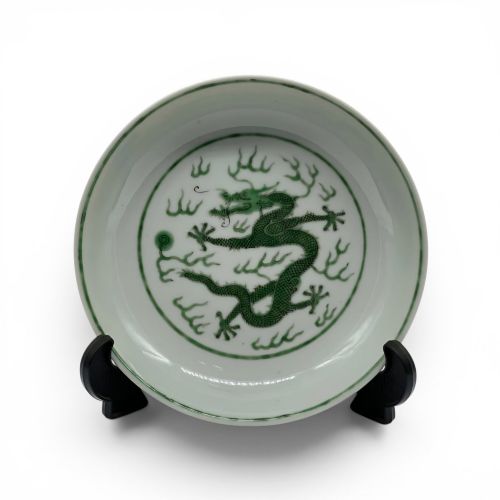
Hand enamelled ceramic plates encompass decorative chargers, dishes, and bowls originating from diverse traditions such as Chinese Export, Japanese Kutani, and European factories.
The selections span from the 18th century through the Victorian era and the Meiji period, showing forms like trefoil trays, shamrock shapes, and large chargers.
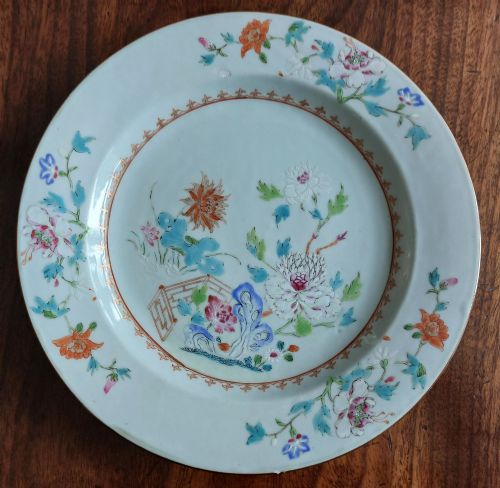
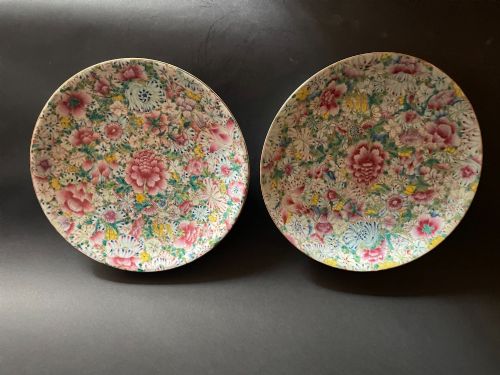
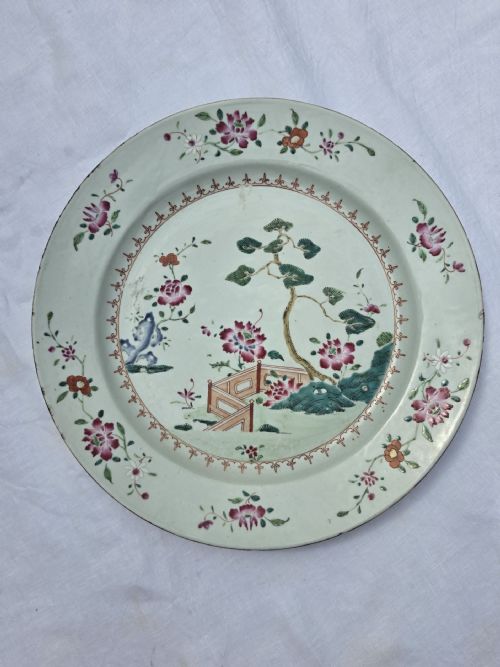
Buyers meet pieces decorated with Famille Rose palettes, birds, florals, and narrative scenes created across the 18th, 19th, and early 20th centuries.
How they were made
Potters shaped hard-paste porcelain, ironstone, and general ceramic bodies before applying initial glazes and firing the vessels.
Artisans then added overglaze enamel colours, gold leaf, and gilding by hand, often returning the pieces to the kiln for subsequent low-temperature firings to fix the palette.
Several plates depict acrobatics and circus scenes, proving that 18th-century tea bowls had a wild side.
What varies in quality
The crispness and complexity of the hand-painted brushwork dictate the visual success of each design, distinguishing standard commercial output from masterwork pieces.
The richness of the gilding and the precision of the enamel application create depth and durability across different workshops and periods.
The Hand Enamelled Ceramic Plates Glossary
- Famille Rose
- A major Chinese ceramic palette introduced in the 18th century, characterised by opaque pink enamels derived from colloidal gold.
- Imari
- A style of Japanese export porcelain featuring underglaze blue and overglaze red, gold, and other colours.
- Charger
- A large decorative plate or dish used historically for service or display rather than everyday dining.
- Hard-paste porcelain
- A dense ceramic material composed of kaolin and petuntse, fired at high temperatures to produce a durable, vitrified body.
Hand Enamelled Ceramic Plates: Frequently Asked Questions
How do I hang a heavy charger safely?
Large chargers require robust wall brackets or spring-loaded plate hangers designed to distribute the weight evenly across the rim. Ensure the fixing secures firmly into solid walling rather than plaster alone.
Check the hanger periodically to confirm the tension remains secure against the ceramic edge.
Can I use these antique plates for dining?
Most antique hand enamelled pieces suit display and decorative use rather than daily meals. Historic overglaze enamels and gilding can wear down under cutlery and frequent washing.
Gentle hand washing in lukewarm water preserves the painted surfaces if used occasionally for serving dry foods.
What is the difference between Kutani and Imari?
Kutani wares typically feature bold pictorial scenes rendered in thick overglaze colours with frequent gold highlights. Imari ceramics rely on a stricter palette combining underglaze cobalt blue with iron red and gilt.
Both styles developed in Japan for domestic and export markets during the Meiji period and earlier.
How do I date an 18th century export plate?
Dating relies on stylistic clues, including the specific Famille Rose or Mandarin palette, the weight of the porcelain body, and armorial details. Reign marks or stylistic traits pointing to the Qianlong period offer further chronological markers.
Comparing the rim shape and foot ring to documented examples helps narrow the decade of manufacture.