


Imari Style China Plates
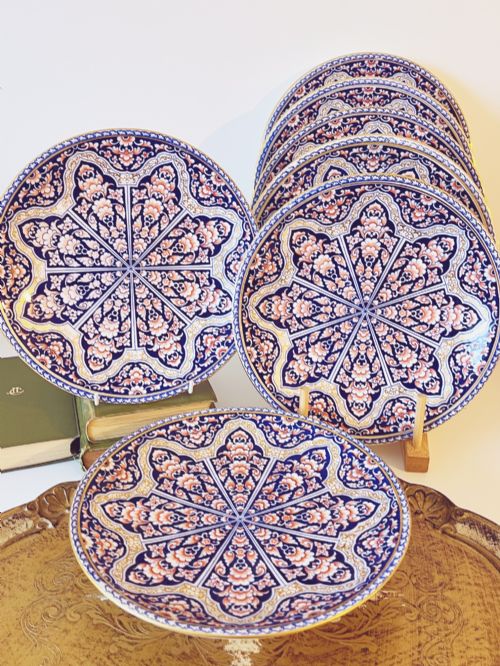
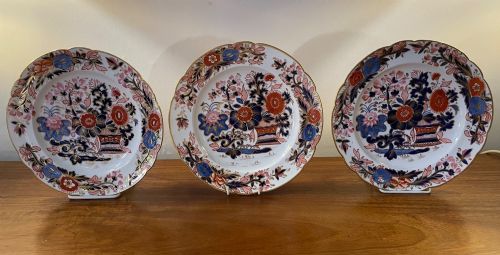
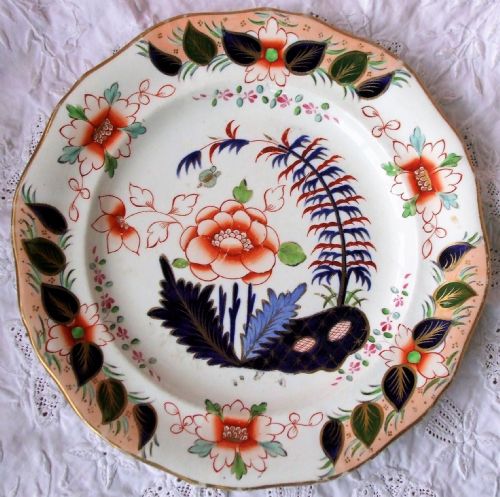
Imari style china plates bring bold palettes of iron red, underglaze blue and gold leaf straight to the table.
Imari Style China Plates
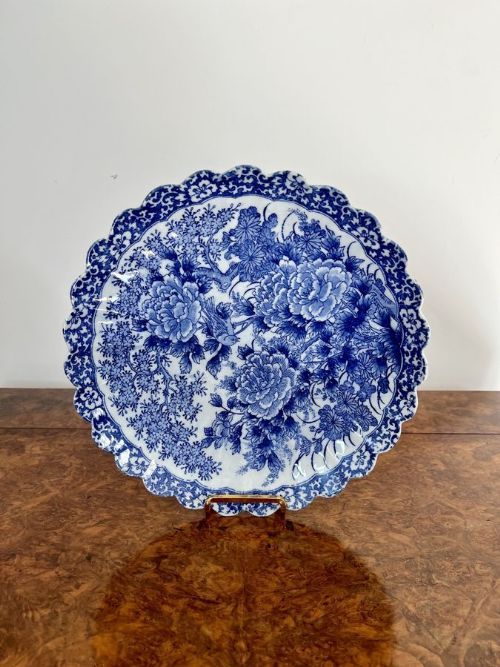
When you search for imari style china plates, you encounter an array of ceramic tableware spanning the nineteenth century, including Georgian and Regency periods. The forms range from individual decorative plates and soup bowls to larger dessert services, dinnerware sets, and serving platters.
English potteries adapted traditional Japanese Imari aesthetics, producing distinctive patterns such as the dragon in compartments, Bengal tiger, and water lily. You are just as likely to find English ironstone and bone china interpretations as Japanese imports from the Edo and Meiji eras.
The assortment on this page demonstrates how domestic makers adopted the distinctive palette, applying enamel and gold leaf to earthenware, porcelain, and heavy ironstone bodies. Each piece reflects the enduring popularity of East Asian motifs within British dining culture.
Materials and manufacture
Potters shaped these plates using ceramic, porcelain, bone china, and dense ironstone, firing the clay bodies before applying intricate hand-painted designs. The foundational underglaze blue was applied first, followed by secondary overglaze colours like iron red and green enamel.
Makers finished the surface decoration with applied gold leaf and rich gilding, which caught the candlelight during formal nineteenth century dining. Clear glaze sealed the pigments, protecting the delicate metallic accents from daily wear during service.
One nineteenth century Minton service bears the wonderfully eccentric pattern name 'Crazy Cow' alongside its traditional tiger motifs.
Assessing quality and finish
Quality rests primarily in the precision of the hand-painted brushwork and the crispness of the underglaze blue outlines. Superior examples show careful alignment of the enamel colours within the printed or painted borders, whereas lesser pieces display hurried execution.
The richness and preservation of the gold leaf or gilding distinguish finer services from standard commercial output. Weight and potting thickness also matter, particularly when comparing heavy ironstone bodies to translucent porcelain tea and dessert wares.
Royal Crown Derby·John Davenport of Longport·Flight, Barr And Barr·Chamberlain Worcester·Minton·Mason
The Imari Style China Plates Glossary
- Imari palette
- A distinctive colour scheme typically combining deep underglaze blue, iron red, and generous amounts of gold leaf or gilding. This palette originated in Japan before being imitated by European porcelain and ironstone factories.
- Ironstone
- A heavy, durable type of earthenware patented in the nineteenth century to withstand rigorous daily dining use. It provided a stable white surface that accepted colourful enamel patterns readily.
- Kakiemon
- A style of Japanese ceramic decoration featuring asymmetrical arrangements of flowers, birds, and animals in a refined palette. English factories frequently copied these specific motifs alongside traditional Imari designs.
- Comport
- A raised dish or pedestal bowl used centrally on the dining table to serve fruit or sweetmeats during dessert courses. These pieces often matched the surrounding service plates.
- Ashet
- A traditional Scottish and northern English term for a large serving platter or meat dish. They formed a crucial part of nineteenth century dining services.
Imari Style China Plates: Frequently Asked Questions
Are these plates safe for daily dining?
Most nineteenth century plates feature delicate enamel painting and gold leaf that can be damaged by modern dishwashers and harsh detergents. Hand washing in warm, soapy water preserves the pigments.
While robust ironstone bodies tolerate everyday use, antique ceramic glazes may contain trace materials. Many collectors prefer to reserve these pieces for display or occasional dessert courses.
How do I date an imari plate?
Dating relies on maker marks stamped or painted to the underside, alongside the specific characteristics of the clay body and glaze. Early nineteenth century pieces often show heavier potting and hand-brushed pattern numbers.
Stylistic shifts between Georgian restraint and Victorian exuberance also provide clues. Comparing the paste - whether bone china, soft-paste porcelain, or ironstone - helps narrow the decade of production.
What is the difference between Japanese and English imari?
Japanese originals from the Edo and Meiji periods typically utilise finer porcelain bodies with distinct potting rings and lighter weights. The blue tones are often deeper, and the clay reveals subtle differences upon close inspection of the unglazed foot rim.
English makers like Mason and Royal Crown Derby adapted these visual cues onto ironstone or bone china. Their patterns often incorporated British shapes such as ashets and soup bowls alongside traditional Asian motifs.
How were dessert services used?
Nineteenth century dessert services followed the main dinner, featuring specialised plates, comports, and bowls for fruit, nuts, and sweet confections. They transformed the dining table for the final course.
Guests did not necessarily eat off heavy porcelain throughout the meal, but dessert allowed hosts to display their finest armorial or patterned china to company.