


Orange Cobalt Ironstone China
These pieces of orange cobalt ironstone china combine robust earthenware with striking enamelled patterns, offering both durability and bold visual character for the table.
Orange Cobalt Ironstone China
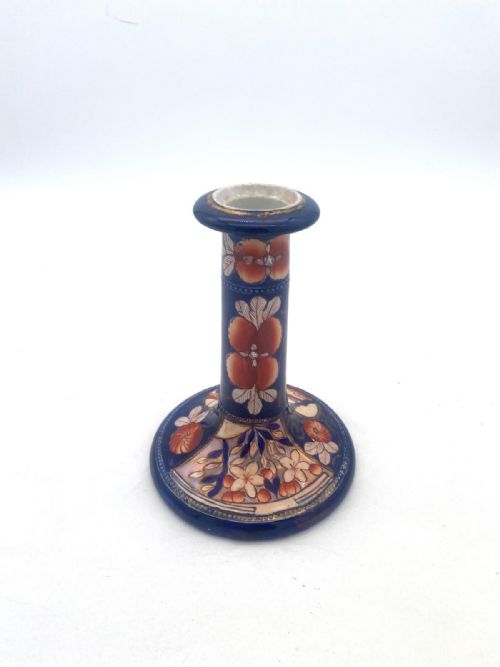
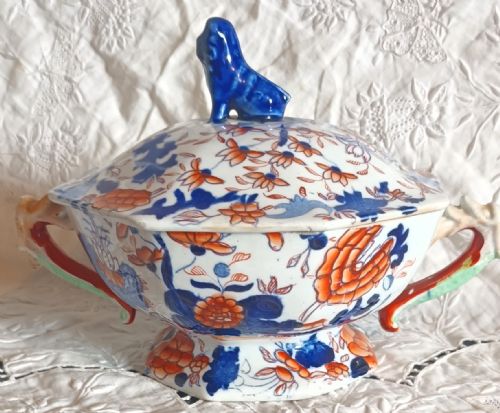
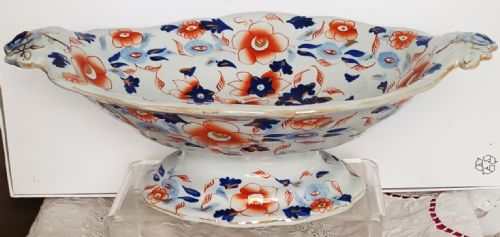
When you search for orange cobalt ironstone china, you encounter nineteenth-century plates, comports, tureens, jugs, and candlesticks produced during the Georgian, Regency, and Victorian periods. The selection on this page centres predominantly upon nineteenth-century tableware and decorative items originating from English makers.
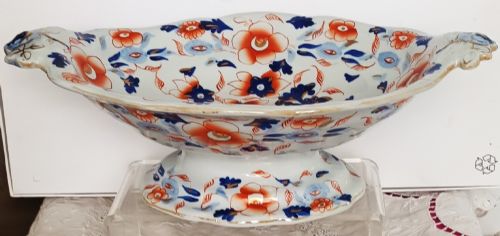
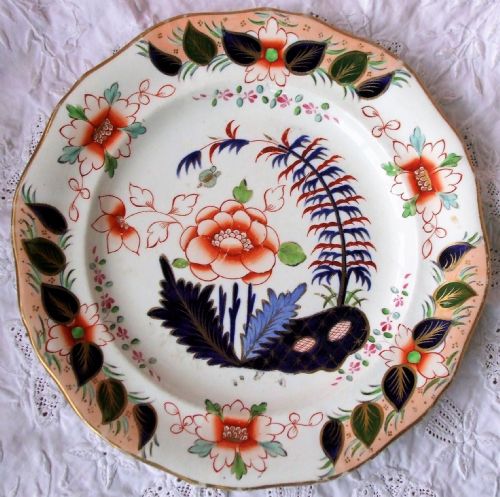
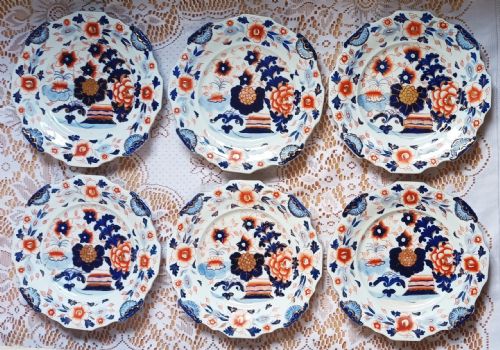
The forms range from utilitarian service vessels like pitchers, ashets, and footed comports to decorative items including potpourri vases and miniature watering cans. Plates appear frequently, often in sets featuring named patterns such as Japan, School House, Pagoda, or Water Lily.
Georgian and Victorian examples dominate the evidence, spanning robust earthenware bodies decorated with rich cobalt blue and vibrant orange enamel. Buyers searching this category typically seek these patterned utilitarian and decorative wares for display or period table settings.
How these ceramics were produced
Potters utilised ironstone ceramic and earthenware bodies to create durable vessels capable of daily service while maintaining refined forms. These dense clay bodies provided a stable foundation for heavy glaze application.
Artisans applied enamel colours, including distinct cobalt blue and orange pigments, often supplemented by gold leaf and gilt highlights. Firing fixed these enamels onto the glazed surface, producing the characteristic contrasting patterns seen across the wares.
Alongside grand comports and tureens, potters also turned their skills to crafting a tiny miniature watering can in ironstone.
What distinguishes finer examples
The crispness and registration of printed or hand-painted patterns, such as the Japan Fence or School House designs, separate standard production from superior pieces. Precision in applying cobalt blue and orange enamel dictates the visual appeal of each service.
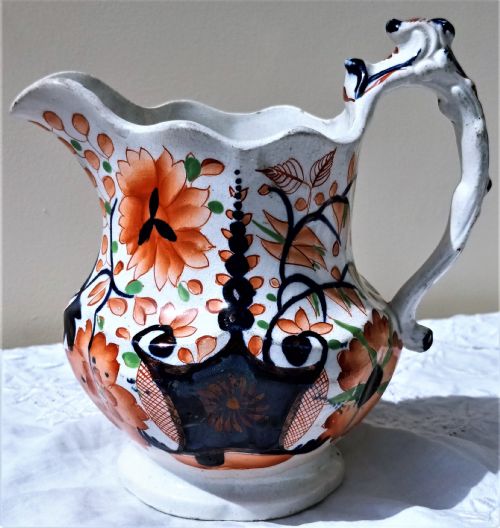
The preservation of gilt highlights and gold leaf across high-handling areas like handles, rims, and finials indicates the level of care a piece received. Intricate mouldings on forms such as Hydra jugs and footed comports also demonstrate superior craftsmanship.
Masons Ironstone·John Davenport of Longport
The Orange Cobalt Ironstone China Glossary
- Ironstone
- A patented ceramic body invented in the nineteenth century to provide a durable, heavy alternative to porcelain. It resists chipping while accepting vibrant enamel decoration.
- Comport
- A footed serving dish or pedestal bowl raised above the table level. These pieces typically present fruit or confectionery during formal services.
- Ashet
- A large serving platter or dish used for presenting joints of meat or main courses. The term derives from the French assiette.
- Imari
- A decorative style inspired by Japanese export wares featuring cobalt blue, iron-red orange, and gilt. English factories adapted this palette extensively during the Georgian and Victorian eras.
- Hydra
- A distinctive jug form featuring a serpent-shaped handle and moulded body details. Mason's frequently utilised this classic shape for miniature and full-sized vessels.
Orange Cobalt Ironstone China: Frequently Asked Questions
What is ironstone china?
Ironstone is a dense, heavy ceramic body patented in the nineteenth century as a durable alternative to porcelain. It combines earthenware properties with high strength.
Potters used ironstone for utilitarian and decorative tableware, decorating the surfaces with bold glazes and enamels.
How do I identify patterns?
Patterns such as Japan, School House, Pagoda, and Water Lily appear across nineteenth-century plates, comports, and tureens. These designs rely on cobalt blue and orange enamel.
Makers often stamped their names or pattern titles on the underside of the ceramic body to record production.
Were these pieces used daily?
Nineteenth-century households utilised ironstone dishes, jugs, and ashets for everyday dining and serving. The robust ceramic body withstood regular handling.
Finely gilt comports and decorative potpourri vases saw more reserved service in formal reception rooms.
How should I clean them?
Clean these nineteenth-century ceramics gently by hand using warm water and mild soap. Avoid abrasive scourers to protect the enamel colours and gilt.
Hand drying preserves the glaze and prevents moisture penetration around older crazing lines.