
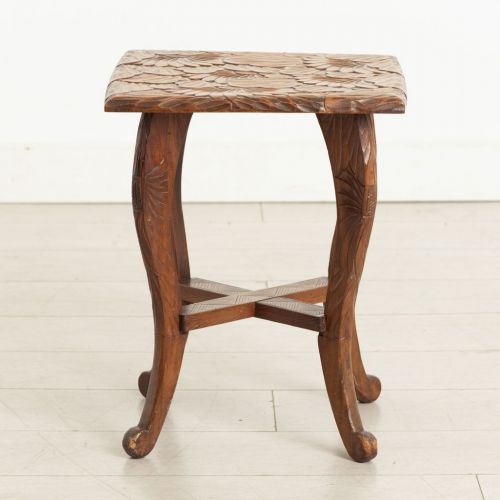
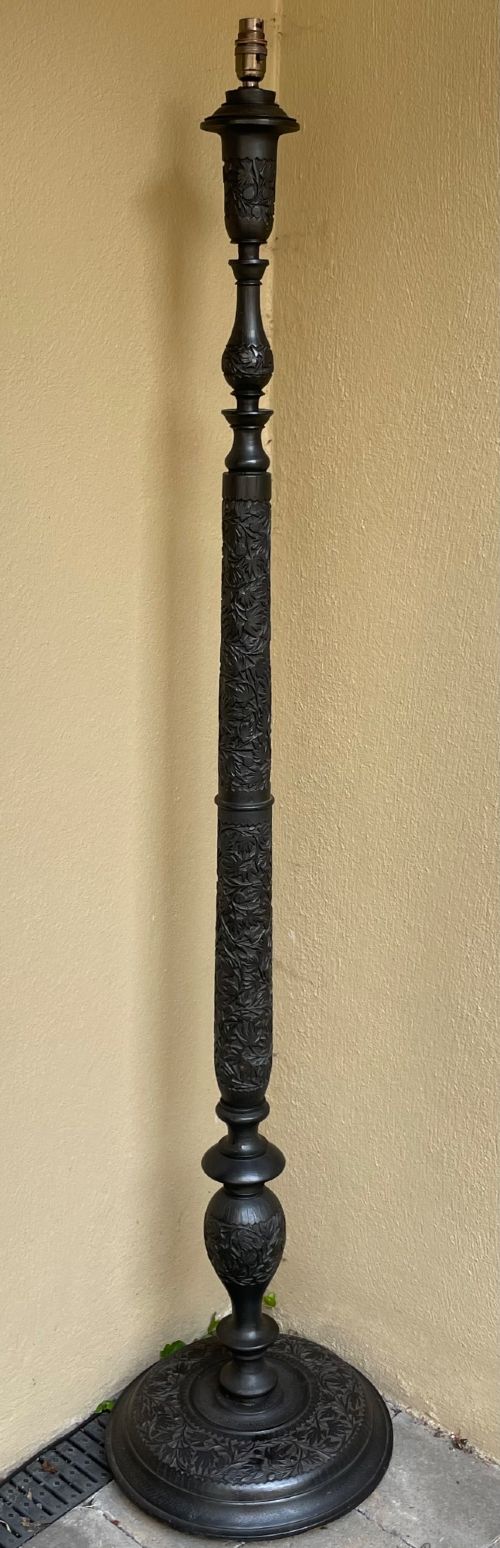
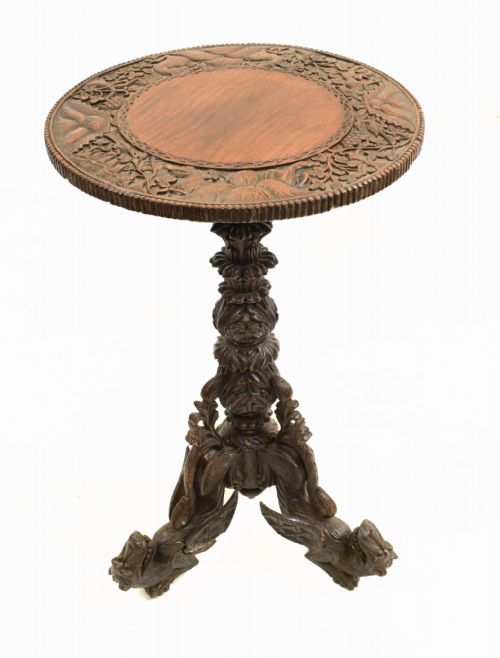


Hand Carved Wooden Lamps
Hand carved wooden lamps combine regional carving traditions with functional lighting, bringing tactile texture and history to an interior.
Hand Carved Wooden Lamps
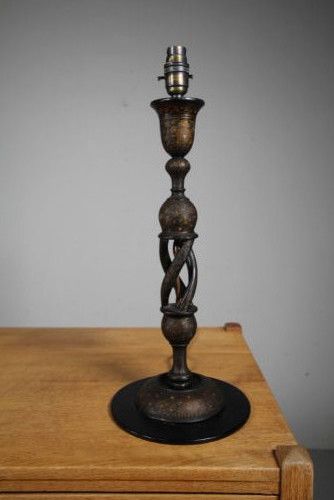
Hand carved wooden lamps encompass diverse regional styles such as Anglo-Indian, Black Forest, and Kashmiri work, often appearing alongside carved tables and torchieres. Buyers seeking hand carved wooden lamps encounter table lamps, standard lamps, and floor-standing pieces dating from the nineteenth century into the mid-twentieth century.
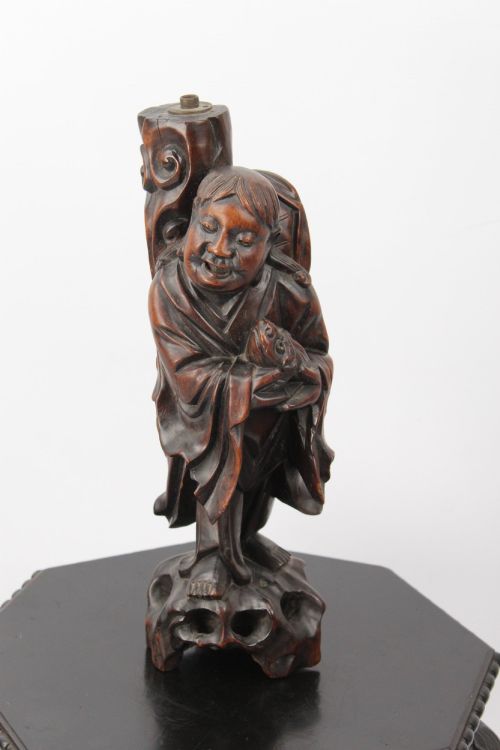
The selection ranges from Swiss Black Forest bear lamps in linden wood to tall Kashmiri twist designs and Japanese root wood pieces. Many items show colonial influences, regional motifs, or figural carving executed in hardwood, teak, and walnut.
Makers and origins span British colonial workshops, European folk art traditions, and East Asian carving centres. These pieces frequently double as sculptural objects, bringing distinct regional character and deep relief work into domestic spaces.
Assessing quality and execution
Depth, crispness, and confidence of the chisel work dictate the visual strength of the carving, distinguishing skilled regional artistry from routine production. The choice of timber also matters, with dense hardwoods and well-figured root wood holding sharper details over time.
Proportion and structural integrity separate superior standards and table lamps from simpler adaptations, particularly where tables have been converted to lighting or stands retain original wiring components and integrated bases.
A watchful night watchman in a carved wooden sculpture keeps silent guard over the collection of lamps and tables.
The Hand Carved Wooden Lamps Glossary
- Torchiere
- A tall standing lamp or pedestal designed to direct light upwards. These pieces often feature turned shafts and carved wooden standards.
- Root wood
- Timber sourced from the root system of a tree, prized for its gnarled, twisting grain and organic forms. Japanese and Chinese makers utilised this material for naturalistic lamps.
- Black Forest
- A style of wood carving originating in Switzerland and Germany, renowned for realistic animal sculptures. Bears are a common subject in this regional tradition.
- Anglo-Indian
- Furniture and decorative objects produced in India under British rule, combining British forms with traditional Indian carving. These works frequently employ teak and padauk.
- Twist turning
- A woodworking technique creating a spiralling, rope-like column along the shaft of a lamp or table leg. This method appears frequently in Kashmiri pieces.
Hand Carved Wooden Lamps: Frequently Asked Questions
How do I date a wooden lamp?
Dating relies on stylistic markers, timber types, and turning methods associated with periods from the nineteenth century to the mid-twentieth century. Regional characteristics often align with specific colonial eras or European folk art movements.
Examination of the wiring holes, lamp fittings, and wear patterns on the wood base provides further context for the age of the piece.
Where were Black Forest lamps made?
Black Forest carvings originated primarily in the forest regions of Switzerland and Germany during the nineteenth and early twentieth centuries. Local carvers specialised in naturalistic animal figures, particularly bears.
These pieces were exported widely to European and British markets as decorative and functional items for domestic interiors.
What is an Anglo-Indian lamp?
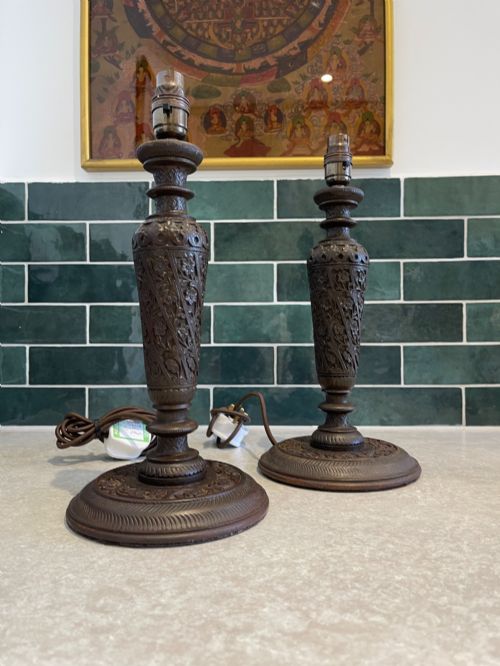
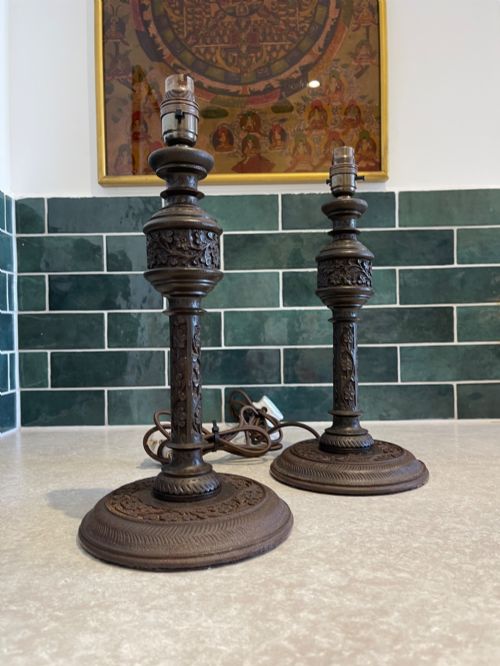
Anglo-Indian lamps reflect the cultural exchange between British design preferences and Indian craftsmanship during the colonial period. They typically feature dense foliage, intricate piercing, and regional timbers like teak.
Such pieces range from standard lamps to converted occasional furniture adapted for modern lighting.
How should I clean a carved lamp?
Maintenance requires gentle dusting with a soft brush to reach into the recesses of the hand carving without damaging the wood surface. Avoid harsh chemical polishes that can build up within the textured grain.
Applying a traditional beeswax periodically helps nourish the hardwood and maintain the natural lustre of the finish.