


Carved Wooden Figure Lamp
These carved wooden figure lamp examples bring character and atmospheric illumination to a room, combining sculptural presence with functional lighting.
Carved Wooden Figure Lamp
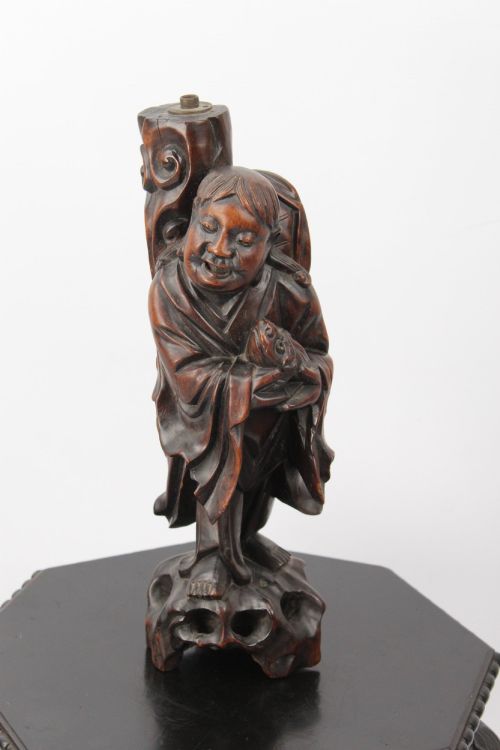
A carved wooden figure lamp brings sculptural form into domestic lighting, drawing on centuries of figurative woodworking traditions from Europe and Asia. When searching for a carved wooden figure lamp, buyers encounter pieces ranging from root wood table lamps to figures mounted on stands with original polychrome surfaces.
The materials and styles span multiple periods, including 19th century examples, earlier 17th century architectural elements adapted as lighting, and regional folk art. European figures often feature gilt polychrome or walnut, while Asian examples utilise root wood and depict traditional subjects.
Most items on this page manifest as table lamps or adapted sculptures originating from Victorian, Venetian Baroque, or East Asian traditions. Buyers select these objects to introduce narrative and texture into an interior scheme.
Materials and construction methods
Makers shaped these lamps from hardwoods such as walnut, oak, and mahogany, alongside organic root wood forms chosen for their natural contours. Woodcarvers worked by hand, employing gouges and chisels to define facial expressions, drapery, and anatomical details.
Surface decoration frequently involved applied gold leaf and polychrome paint, sealing the wood and adding rich colour to figures of Venetian or Asian origin. Over time, many sculptures underwent conversion from decorative statues or architectural supports into functional table lamps.
The material palette spans simple root wood, figured mahogany, and metal components, reflecting diverse European and Asian folk traditions.
Assessing quality in carved wooden figure lamp pieces
The integrity of the original surface finish, whether aged polychrome paint or patinated walnut and root wood, dictates the visual success of the object. Pieces retaining their early or original gilding and pigment demonstrate superior preservation.
The Carved Wooden Figure Lamp Glossary
- Polychrome paint
- Decoration consisting of several colours applied to wood or stone sculpture. This surface treatment was frequently sealed with varnish during the nineteenth century.
- Root wood
- Timber sourced from the root system of a tree, prized for its gnarled, twisting grain. Root wood pieces often dictate the spontaneous, organic shape of the finished sculpture.
- Gilt
- A thin layer of gold leaf applied to the surface of wood or gesso. It provides a reflective, metallic finish that catches ambient light.
- Caryatid
- A carved female figure serving as an architectural support in place of a column. Earlier architectural fragments of this type are occasionally adapted into lamps.
Carved Wooden Figure Lamp: Frequently Asked Questions
Are these lamps originally wired for electricity?
Most antique figures were originally carved as decorative sculptures, torcheres, or furniture components rather than lamps. They were subsequently adapted for electrical wiring during the twentieth century to suit modern domestic use.
Buyers should examine the entry points for cables to ensure the conversion respects the antique wood structure.
How do I care for a painted wooden figure?
Painted and gilt surfaces require gentle dusting with a soft, dry brush rather than liquid cleaning products. Moisture can lift fragile nineteenth-century polychrome and gold leaf.
Keep the lamp away from direct sunlight and strong heat sources to prevent the timber from splitting.
How do I date a carved wooden lamp?
Dating relies on stylistic markers, tool marks left by the carver, and the natural ageing of the timber and surface pigments. Comparing the sculptural style to documented period pieces helps establish an approximate decade.
Root wood table lamps and European figures often carry distinct regional characteristics associated with nineteenth-century production.
Can I use standard lampshades with these figures?
Selecting a lampshade depends on the scale and visual weight of the carved figure. Simple, neutral shades allow the intricate details of the woodcarving to remain the focal point.
Consider the height of the sculpture when choosing harp fittings to ensure balanced proportions.