


Vintage Wood Figure Lamps
These vintage wood figure lamps bring carved human form into domestic lighting through root wood, polychrome paint, and walnut.
Vintage Wood Figure Lamps
Vintage wood figure lamps combine sculptural human representations with functional illumination, taking the form of table lamps and torchere floor lamps. When searching for vintage wood figure lamps, buyers encounter pieces carved from root wood, walnut, and other timbers, often originating from Asian, Venetian, and European workshops.
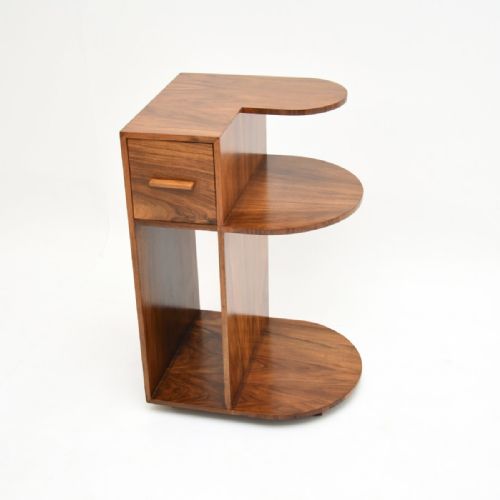
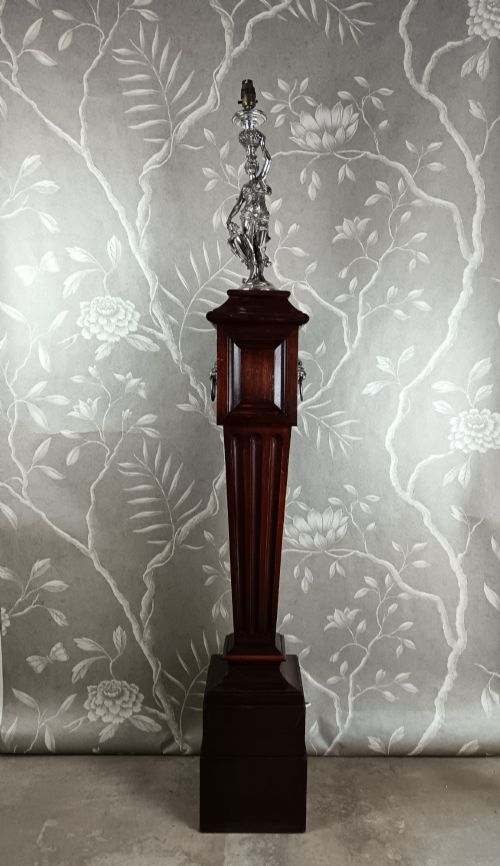
The selection ranges from nineteenth-century Chinese and Japanese root wood carvings adapted for electrical use to mid-nineteenth-century Venetian figures retaining original gilt and polychrome surfaces. Alongside these are pedestal torchere floor lamps incorporating metal figural statues, as well as occasional items like side tables that share materials with the lighting.
The domestic placement of these objects spans side tables, desks, and floor spaces where the carved wooden or metal figure acts as the primary visual focus. Buyers frequently meet pieces that date across the nineteenth and twentieth centuries, reflecting regional carving traditions from Italian workshops to East Asian root wood ateliers.
How they were made
The construction of these pieces relies heavily on traditional woodworking techniques, notably the manual carving of natural root wood to follow organic contours. Artisans also utilised walnut and applied surface embellishments including gold leaf and polychrome paint to accentuate the details of the figures.
Metal elements such as brass or silver plating sometimes integrate with the wooden structures, particularly in pedestal torchere floor lamps. Glass components and internal wiring adapt these carved sculptures into functional lamps while preserving the original hand-carved surfaces.
Periods represented span the 19th Century, 1850, 1890, 1900, Edwardian, 1920, 1930, and 1940.
What varies in quality
The distinction between tiers of quality rests upon the fidelity and depth of the carving, where masterwork root wood or figural sculptures display intricate anatomical and textural precision. Simpler or later examples present more generalised forms with less defined detailing in the wood.
The preservation of original surface treatments, such as original gilt polychrome paint on Venetian pieces or aged patination on nineteenth-century walnut and root wood, significantly elevates the character of the object. Alterations to the original carved structure or replacement surface coatings differentiate standard examples from those retaining their initial finish.
WMF
The Vintage Wood Figure Lamps Glossary
- Root wood
- Timber harvested from the root burls of trees, valued for its gnarled, twisting natural patterns. It provides the organic structure for many nineteenth-century table lamps.
- Polychrome
- Decorated in multiple colours, frequently applied to gesso or wood surfaces. This technique defines the painted finishes found on Venetian figures.
- Torchere
- A tall stand or pedestal designed to support a light fixture. Examples in this category incorporate figural statues alongside the main shaft.
- Figured walnut
- Wood grain exhibiting an attractive, mottled pattern created by branching or growth irregularities. It appears across nineteenth and twentieth-century side tables and related furnishings.
- Gilt
- Covered thinly with gold leaf or gold paint to simulate solid gold. Original gilt surfaces survive on mid-nineteenth-century Venetian pieces.
Vintage Wood Figure Lamps: Frequently Asked Questions
What periods do these lamps come from?
The available selection spans the nineteenth century through to the mid-twentieth century, encompassing Victorian, Edwardian, and Art Deco eras.
Specific dates recorded in the listings include 1850, 1890, 1900, 1920, 1930, and 1940, alongside broader nineteenth-century and Edwardian categorisations.
How were root wood lamps constructed?
Carvers selected natural tree roots with distinct organic shapes and knots, then worked the timber to form lamp bases.
These natural forms were subsequently adapted for electrical fittings while retaining the irregular, twisting contours of the root.
Where should I place a torchere floor lamp?
Torchere floor lamps suit corners or open wall spaces where their height and figural statuary can be viewed without obstruction.
They function effectively beside seating areas or in hallways to provide ambient upward illumination.
How do I identify Venetian figure lamps?
Venetian figures typically feature original gilt and polychrome paint surfaces applied over carved wooden forms on stands.
They reflect Venetian Baroque styling and date to the mid-nineteenth century, distinguishing them from root wood or walnut pieces.