

Pair of Oriental Lamps
A pair of oriental lamps brings balanced symmetry and rich cultural detail to a room, drawing the eye with matched forms and decorative depth.
Pair of Oriental Lamps
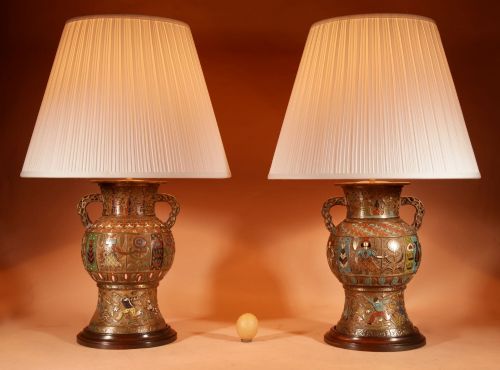
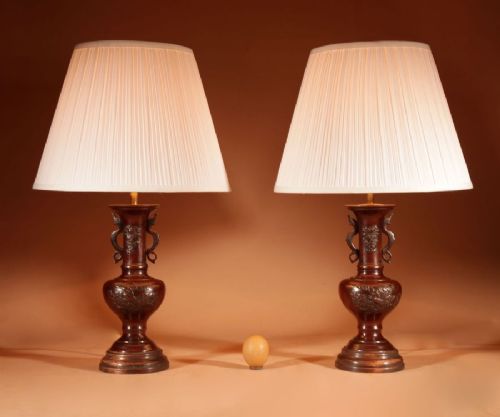
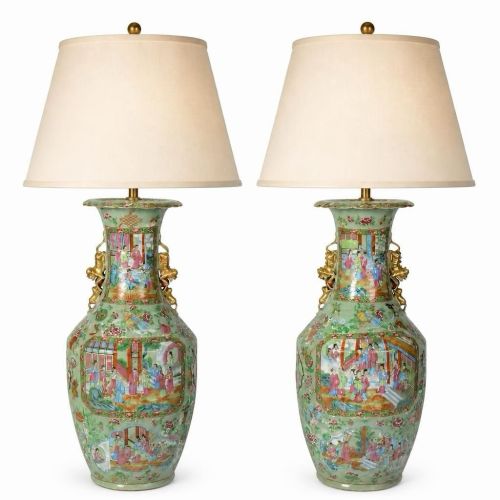
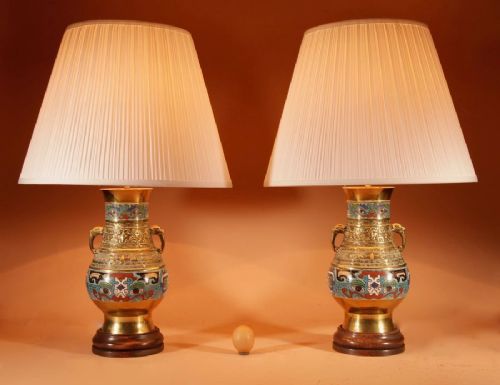
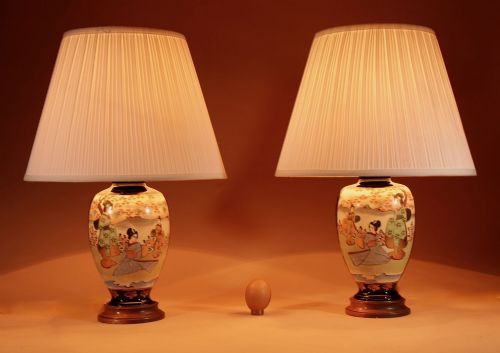
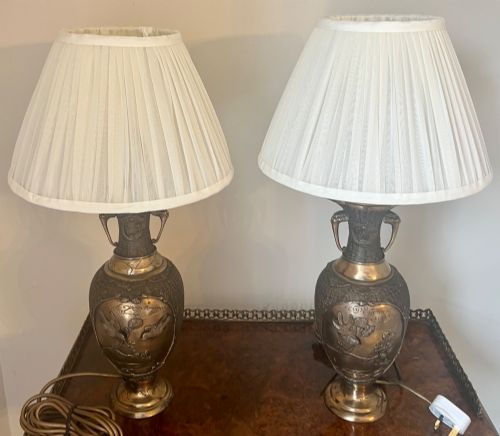
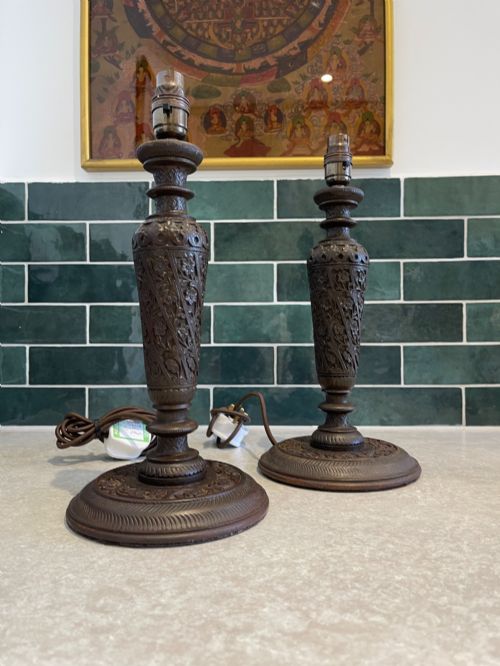
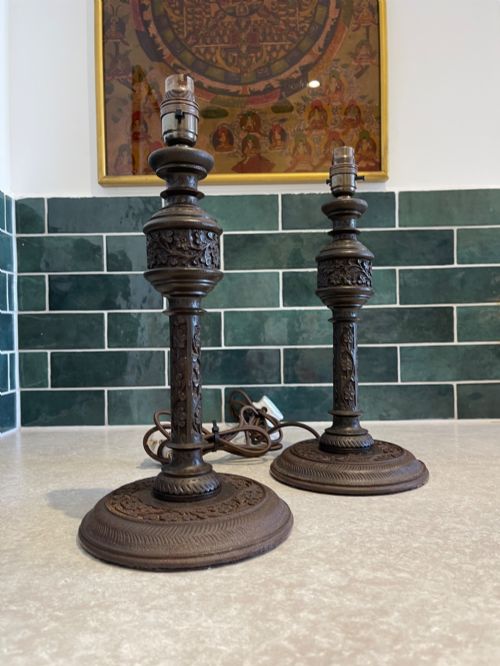
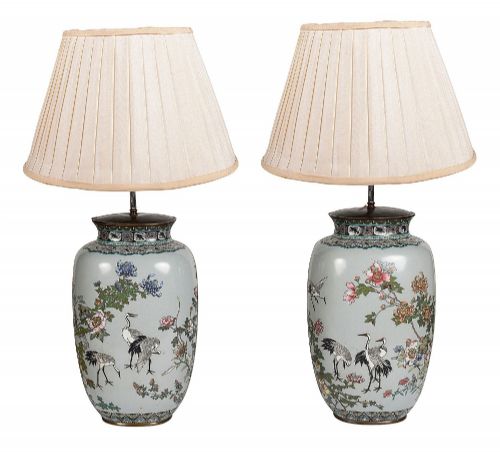
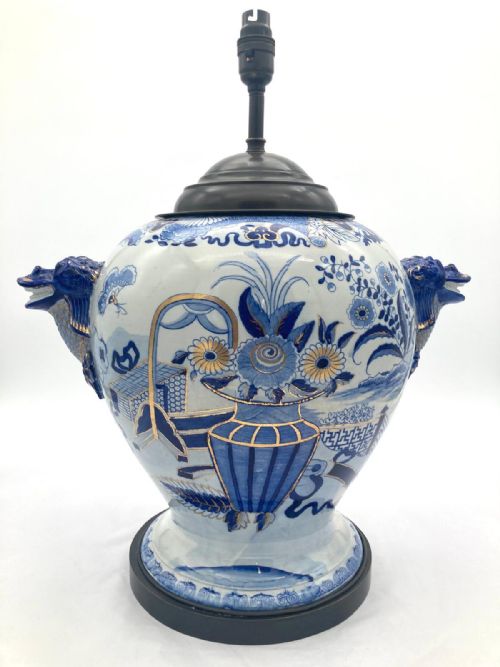
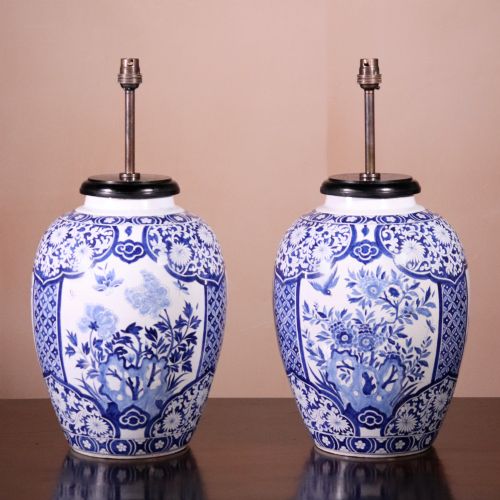
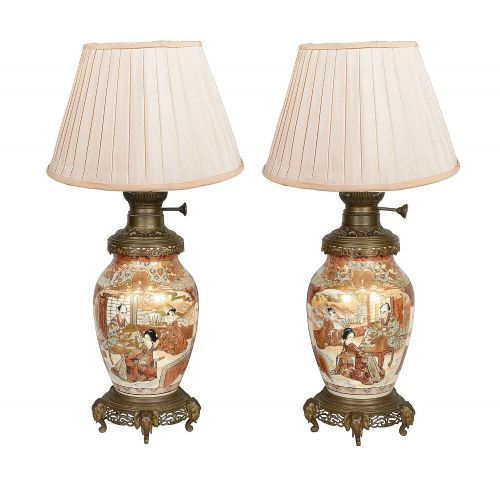
A pair of oriental lamps comprises matched lighting pieces created from imported or inspired eastern vessels, most frequently encountered as table lamps converted from 19th-century and early 20th-century porcelain vases, ginger jars, and bronze or cloisonné urns.
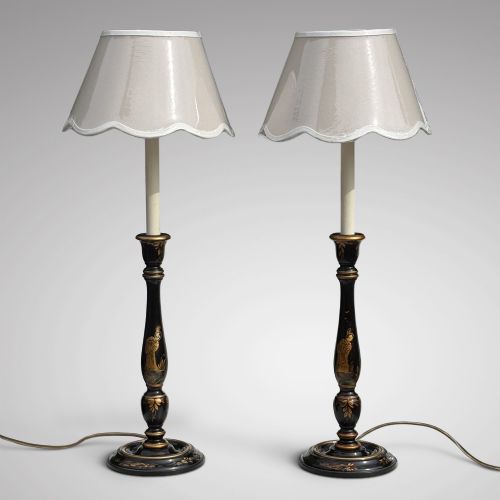
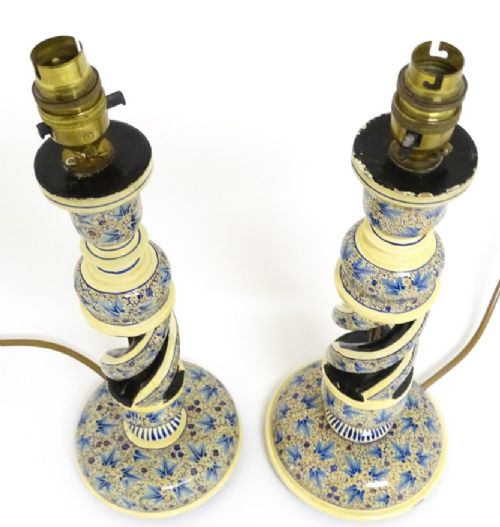
The selection ranges from Japanese Satsuma, Kutani, and Meiji bronze pieces to Chinese blue and white, Famille Rose, and powder blue porcelains, alongside Kashmiri hand-painted works and lacquered Chinoiserie designs.
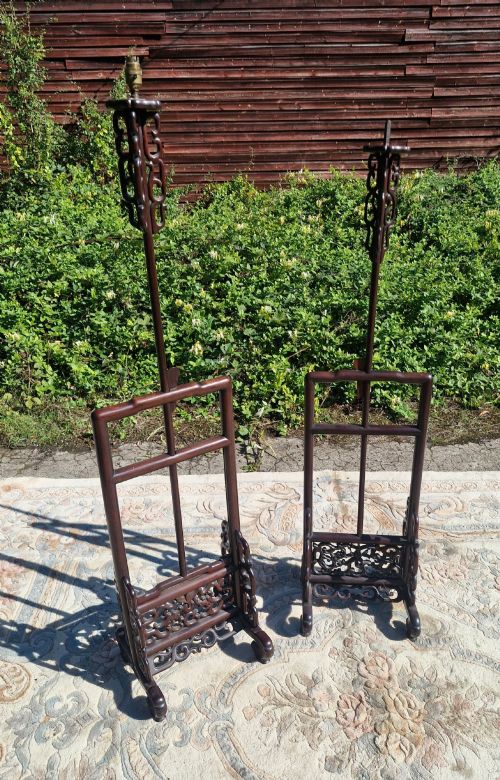
Beyond standard ceramic vessels, forms extend to adjustable lamp standards, ormolu-mounted vases, and figural models such as Blanc de Chine Shi Lions, reflecting diverse periods from the Regency era through the 1930s.
How they were made
Many examples begin as traditional ceramic, bronze, or brass vessels - such as porcelain jars, cloisonné enamel vases, and champlevé bronzes - which are subsequently adapted for electrical use with fitted wiring and hardware.
Surface decoration relies on meticulous techniques including hand-painting, underglaze blue, enamel work, and lacquer, often paired with cast metal mounts like ormolu to elevate the final silhouette.
Structural components integrate natural materials such as hardwood, silk, and fabric shades that complement the detailed body of each lamp.
Materials span porcelain, bronze, brass, silk, and hardwood across periods ranging from the Regency era to the 1930s.
What varies in quality
The distinction between tiers rests upon the fineness of the original vessel's artistry, where hand-painted detail, crisp enamel work, and well-cast bronze or brass components indicate superior craftsmanship.
Coherence of the pair matters significantly, as matched heights, balanced proportions, and symmetrical weathering or glaze consistency determine the visual harmony of the set.
The method and subtlety of conversion - how cleanly the electrical fittings integrate with the historic vase or jar - also influence the overall standard of the piece.
The Pair of Oriental Lamps Glossary
- Cloisonné
- Enamelwork created by pouring coloured glass pastes into compartments formed by soldered metal wires on a bronze or copper base. This technique produces intricate, patterned surfaces often seen on Japanese and Chinese vases.
- Famille Rose
- A prominent palette of Chinese porcelain decoration featuring an opaque pink or purple enamel introduced in the 18th century. The style encompasses soft floral and figural compositions.
- Satsuma
- Japanese earthenware pottery characterised by a fine crackle glaze and decorated with elaborate polychrome and gilt designs. These pieces frequently depict historical figures and natural motifs.
- Ormolu
- Gilded bronze mounts applied to furniture and ceramic bases for decorative accent and structural support. This French technique adds metallic warmth and classical proportion to oriental vessels.
- Champlevé
- An enamelling technique where troughs or cells are carved directly into a metal surface to hold coloured glass paste. It creates durable, richly textured patterns on brass and bronze bodies.
- Kashmiri
- Items originating from the Kashmir region, noted here for hand-painted wooden or lacquered decorative objects. These pieces exhibit dense, colourful surface patterns.
Pair of Oriental Lamps: Frequently Asked Questions
How do I choose between Chinese and Japanese lamps?
Chinese pieces often feature blue and white porcelain, Famille Rose enamels, or crackleware glazes that emphasise traditional narrative scenes and botanical motifs. Japanese examples frequently showcase Meiji bronzes, Satsuma earthenware, or intricate cloisonné work with distinct metallic detailing.
Selecting between them depends on whether your space leans towards the painted ceramic warmth of Chinese export styles or the sculpted metallic and crackle-glazed depth typical of Meiji period artistry.
Are these original lamps or conversions?
The vast majority of period oriental lamps are thoughtful conversions made from older vessels such as ginger jars, vases, and bronze urns. These bodies date from the 19th and early 20th centuries, adapted later for modern electrical use.
This method preserves historical craftsmanship while allowing antique ceramic and metalware to function practically as lighting in contemporary interiors.
How do I style a matched pair in a room?
Matched pairs offer natural symmetry and work best when placed together to anchor a space, such as on flanking side tables, a large sideboard, or matching cabinets. Their shared height and decorative scheme create visual balance.
Ensure the shade colour and fabric harmonize with the surrounding room palette so the intricate details of the porcelain or bronze bodies remain the primary focus.
How do I identify a Meiji period bronze?
Meiji period bronzes date from the late 19th to early 20th century and typically display heavy, solid casting with deep patination. They often incorporate fine surface detailing, high relief work, or integrated champlevé enamel accents.
Examining the base and the weight of the metal helps confirm the substantial construction characteristic of this era of Japanese metalwork.