

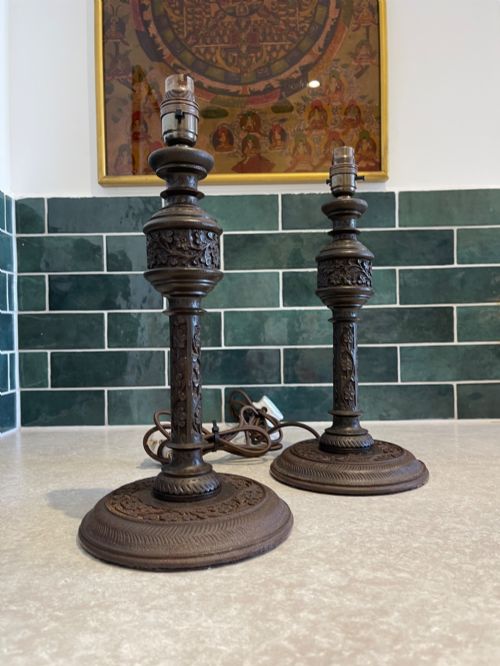
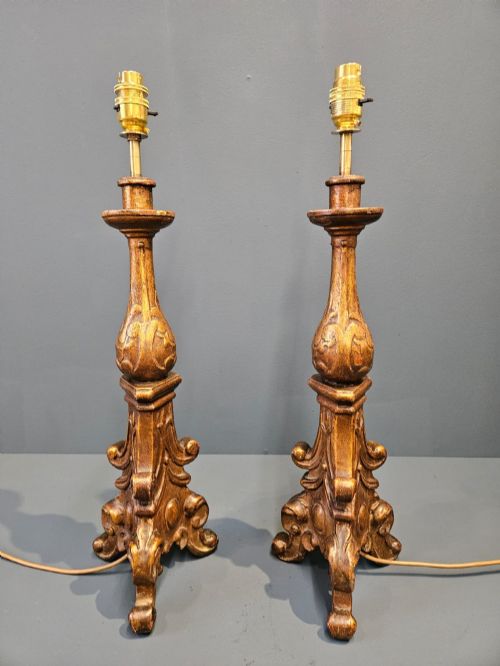
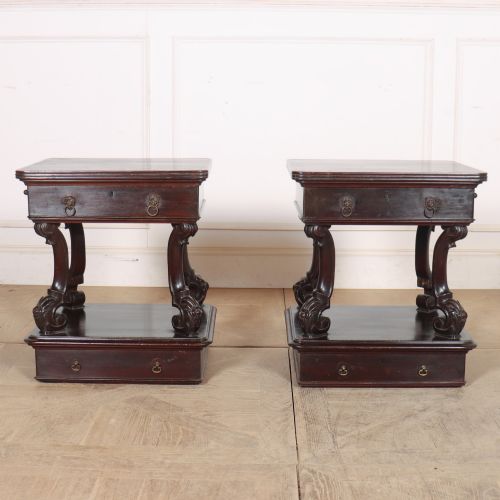
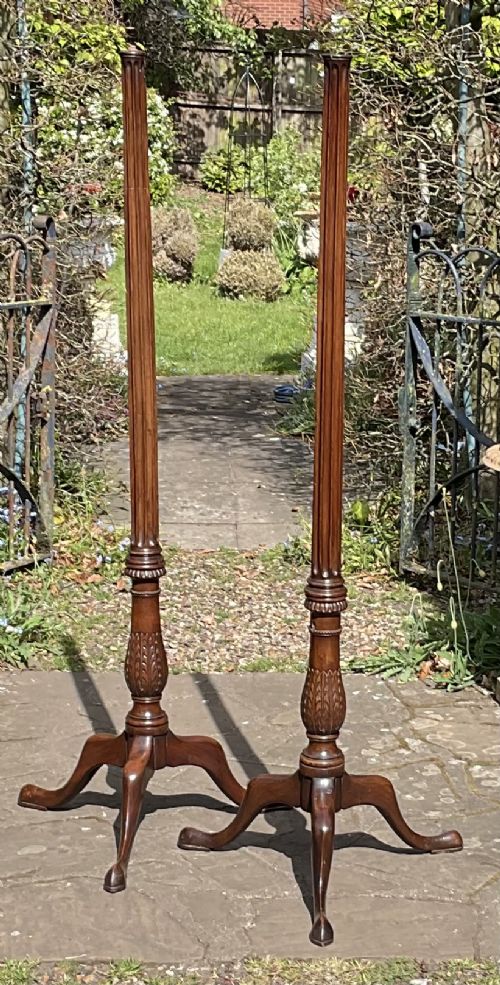


Pair Carved Wooden Lamps
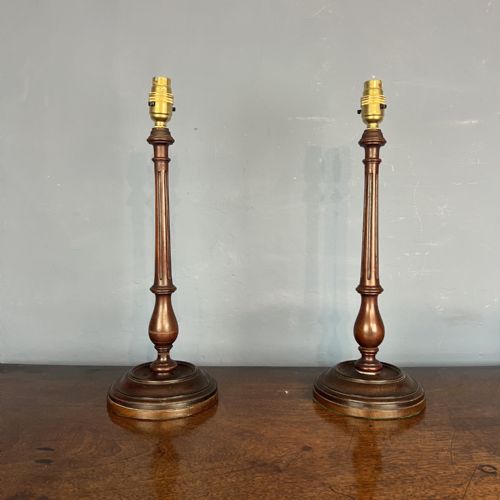
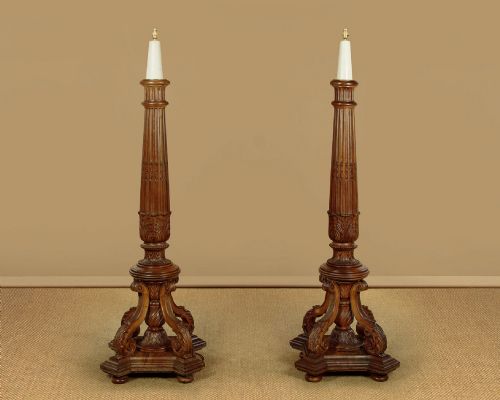
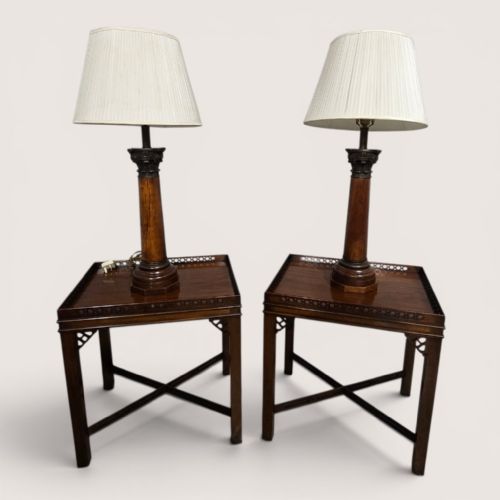
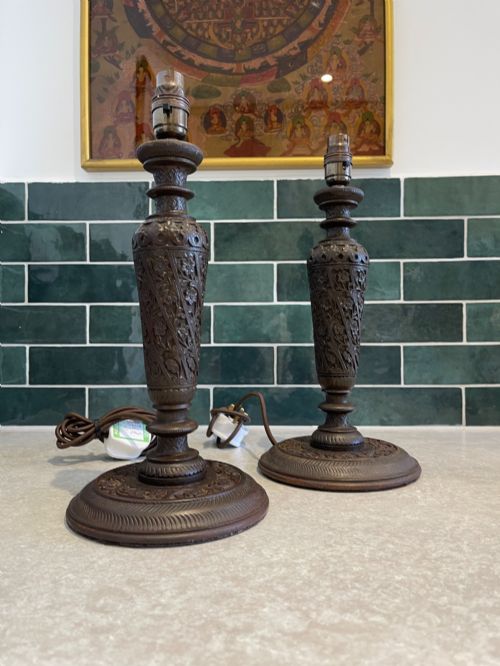
These pair carved wooden lamps bring matched illumination and sculptural presence to a room, spanning styles from the eighteenth century to the twentieth.
Pair Carved Wooden Lamps
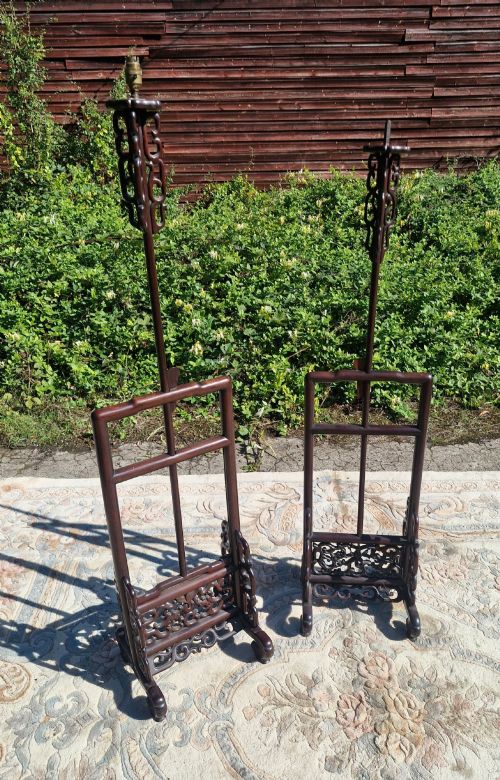
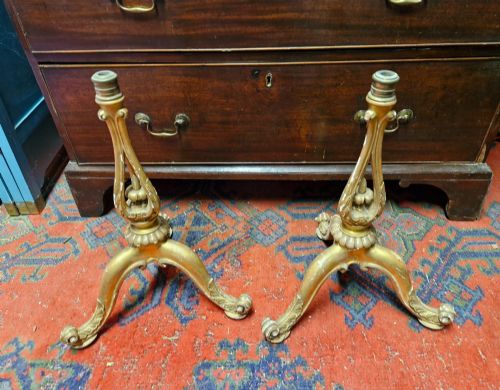
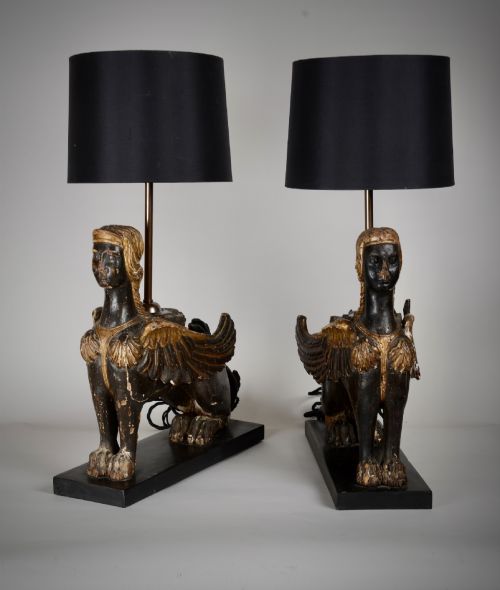
Pair carved wooden lamps appear in several distinct forms across this selection, ranging from heavy floor-standing standards to smaller table-top bases and converted candlesticks. You will encounter them in woods such as mahogany, walnut, oak, and root wood, alongside gilded and polychrome surfaces.
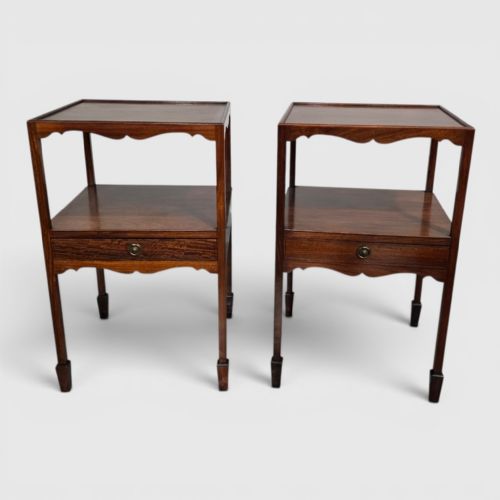
The origins stretch across English, French, Italian, and Asian traditions, encompassing Anglo-Indian, Kashmiri, and Chinese craftsmanship. Table lamps and tall standard lamps dominate the offerings, often accompanied by related bedside furniture adapted for lighting.
How they were made
Carvers shaped dense timbers like mahogany, walnut, and oak by hand, creating intricate relief work, fluted columns, and tripod bases. Gilding, marbleising, and polychrome finishes were then applied to wood surfaces to catch the light.
Many taller examples utilise adjustable mechanisms or turned sections joined securely to bear the weight of standard shades and electrical fittings. Earlier pieces frequently began life as candlesticks or architectural elements before later conversion into lamps.
The selection includes mahogany, walnut, oak, and giltwood pieces spanning from the eighteenth century through the Edwardian period.
What varies in quality
Quality rests upon the crispness of the hand-carving and the depth of the timber's grain, where deep relief work displays superior artisan skill. The integrity of the original wood structure and the subtlety of any gilding or painted surface further separate standard production from finer examples.
Proportion and balance dictate the visual weight of a pair, particularly in taller floor standards where slender shafts must meet stable bases securely. Matching between the two pieces remains essential, as minor discrepancies in turning or height reveal how closely the pair was conceived together.
The Pair Carved Wooden Lamps Glossary
- Giltwood
- Timber coated with a thin layer of gold leaf over a prepared gesso ground. This finish reflects candlelight and lamplight with a warm, metallic glow.
- Standard lamp
- A tall floor-standing lighting fixture designed to illuminate a room from standing height. These pieces often feature heavy weighted bases to maintain stability.
- Root wood
- Timber sourced from the root system of a tree, prized for its gnarled, twisting grain patterns. Japanese and regional makers utilised these organic forms for decorative bases.
- Conversion
- An antique object, such as a candlestick, torchere, or vase, adapted for modern electrical wiring. This practice gives older decorative items a functional role today.
- Tripod base
- A support structure resting on three feet or legs. This design provides balanced stability for floor standards and occasional tables.
Pair Carved Wooden Lamps: Frequently Asked Questions
Are these lamps newly wired?
Electrical setups vary significantly across older lighting, with many pieces retaining older wiring or requiring professional rewiring to meet current safety standards.
Buyers should inspect the internal cord path and consult a qualified electrician before connecting any antique lamp to a power source.
How do I date a wooden lamp?
Dating relies on examining the timber species, tool marks left by the carver, and stylistic cues borrowed from periods like the Georgian or Victorian eras.
Secondary woods, construction joints, and the wear patterns on the base offer further clues to a piece's true age.
Can I use modern lampshades on these?
Most standard fittings accept contemporary shades, provided the harp or carrier matches the drop and diameter of the chosen shade.
Proportion dictates the final look, so larger standard lamps require wider shades to balance the visual weight of heavy wooden bases.
What is the difference between a table lamp and a standard lamp?
Table lamps are proportioned for placement on side tables, cabinets, or desks, sitting lower within the room's overall layout.
Standard lamps stand directly on the floor as independent vertical structures, projecting light from a higher vantage point.