


Antique Indian Lamp Base
These antique Indian lamp bases bring rich regional texture and hand-worked character to a room.
Antique Indian Lamp Base
An antique Indian lamp base is a decorative lighting fixture transformed from traditional regional objects or made specifically for export during the late nineteenth and early twentieth centuries. When searching for an antique Indian lamp base, buyers encounter items that predominantly hail from Kashmir or reflect Anglo-Indian taste.
The dominant forms on this page are table lamps, often tall in stature, created from varied turned or carved profiles. These range from nineteenth-century pieces to examples dating around nineteen-twenty.
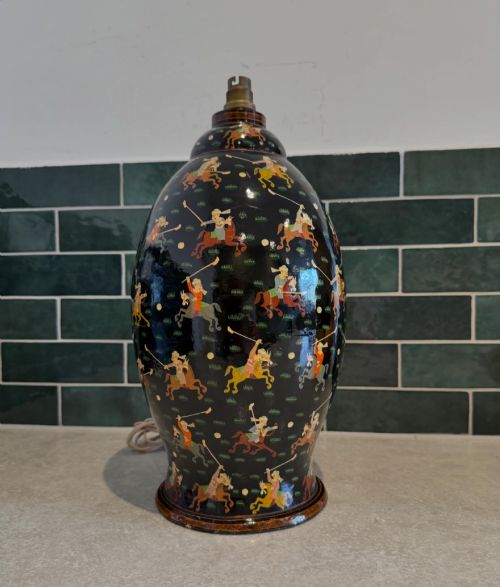
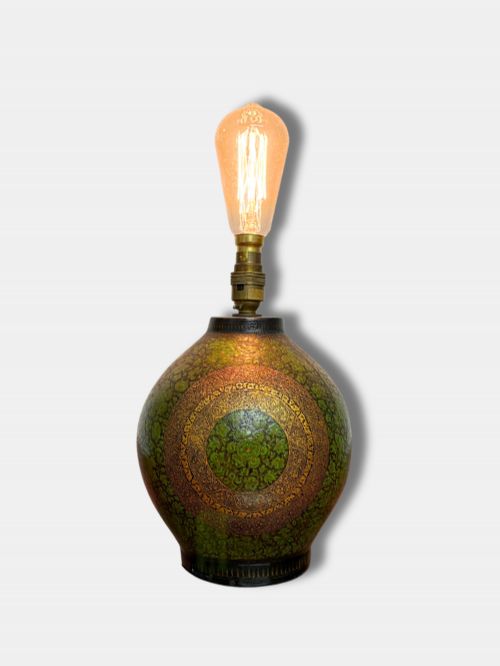
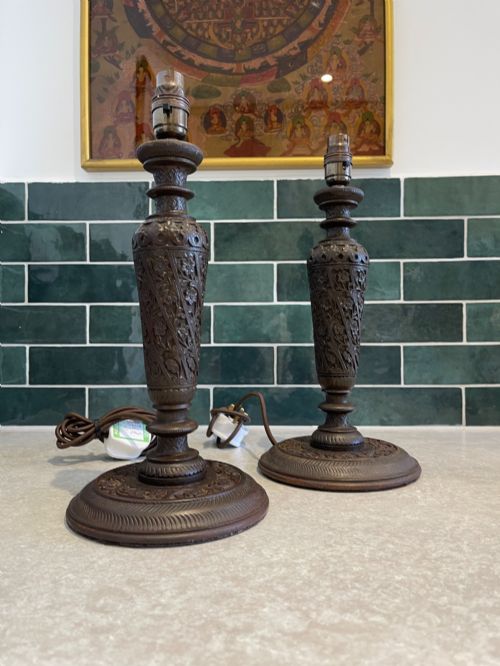
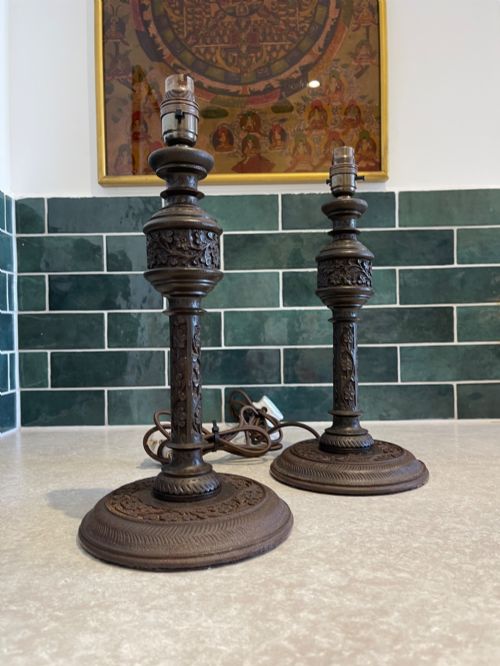
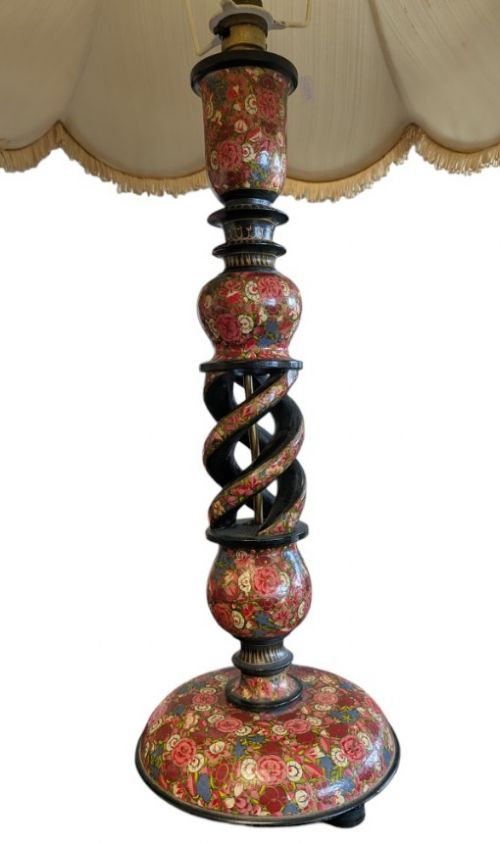
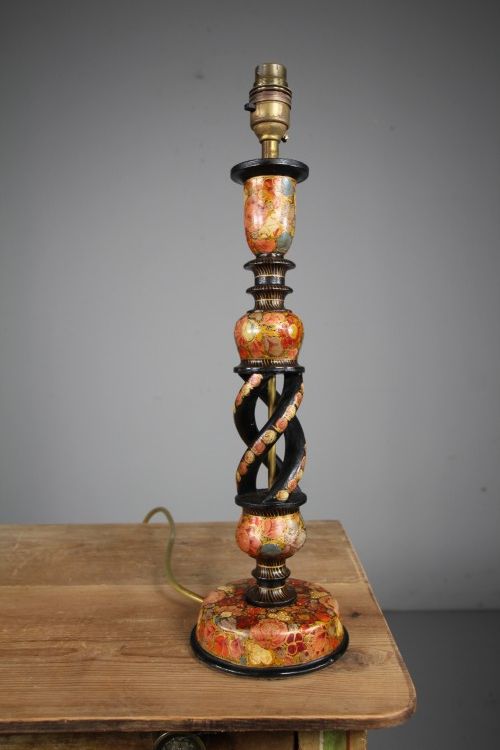
Most examples originate from Kashmiri workshops, showing characteristic painted, lacquered, or gilded surfaces. Alongside these are turned walnut and heavy brass options from the broader Indian and Anglo-Indian tradition.
How they were made
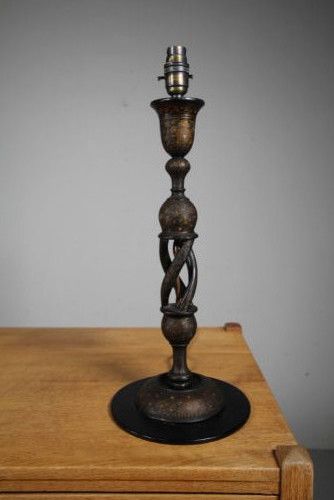
Makers shaped these bases using timber such as walnut and wood products like papier-mache, turning or carving them into slender columns and twist forms. Artisans then applied intricate handpainted decoration, lacquer, or gilt gold and green finishes.
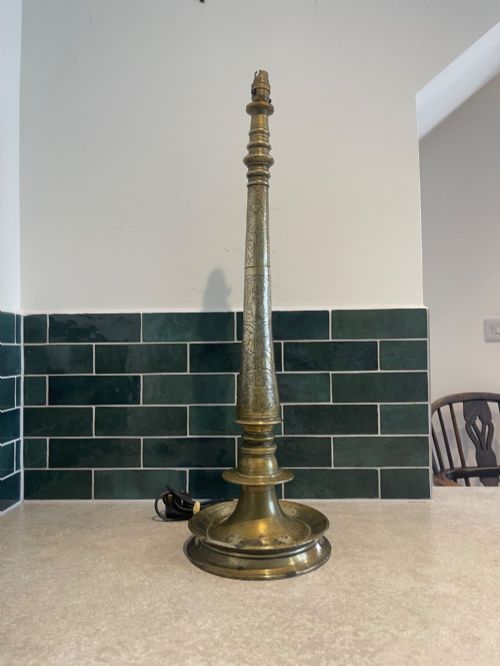
Metal versions rely on cast and beaten brass, offering a contrasting tactile weight to the painted wooden and papier-mache bodies. Many examples have been subsequently rewired for modern interior use while retaining their original regional aesthetic.
Several tall twist lamps have survived the century, ready to hold up a lampshade after a quiet life in papier-mache or walnut.
What varies in quality
Quality rests in the crispness of the wood carving or the precision of the turned twist form, alongside the complexity of the handpainted Kashmiri surface decoration. Finer pieces retain vibrant gilt and lacquer work with well-preserved detail.
The structural integrity of the turned timber or the substantial weight of the brass base distinguishes standard items from superior examples. Preservation of the original hand-applied finish dictates the standing of each piece.
The Antique Indian Lamp Base Glossary
- Kashmiri
- Pertaining to the Kashmir region, known for distinctive handpainted and lacquered wooden objects. These pieces often feature floral motifs and rich colour palettes.
- Anglo-Indian
- A style blending British domestic forms with traditional Indian craftsmanship, typical of the colonial period. This aesthetic influenced furniture and decorative objects made for export.
- Papier-mache
- A composite material made from paper pulp or reinforced paper sheets, moulded and painted. It provides a lightweight yet durable body for intricate surface decoration.
- Twist lamp
- A lamp base featuring a spiral or barley-twist turned wooden column. This decorative turning technique adds vertical movement and visual rhythm to the profile.
Antique Indian Lamp Base: Frequently Asked Questions
Are these lamp bases rewired for modern use?
Many examples have been rewired to meet contemporary electrical standards while preserving the historic body.
Buyers should check individual listings to confirm the current wiring status before purchase.
What materials are typical for these lamps?
The listings show a primary use of turned wood, walnut, papier-mache, and brass.
Surface finishes often incorporate lacquer, handpainting, and gilt gold highlights.
How do I date an antique Indian lamp?
Dating relies on stylistic markers, materials, and documented periods ranging from the nineteenth century to the nineteen-twenties.
Turned profiles and traditional Kashmiri painting styles offer the clearest chronological clues.
Where were these lamp bases made?
The majority originate from Kashmiri workshops, alongside broader Anglo-Indian production centres.
They reflect regional craftsmanship tailored for both local use and the export market.