




Black and Gold Lamps
Black and gold lamps bring dramatic dark lacquer and bright metalwork into a room, offering both focused task lighting and striking sculptural form.
Black and Gold Lamps
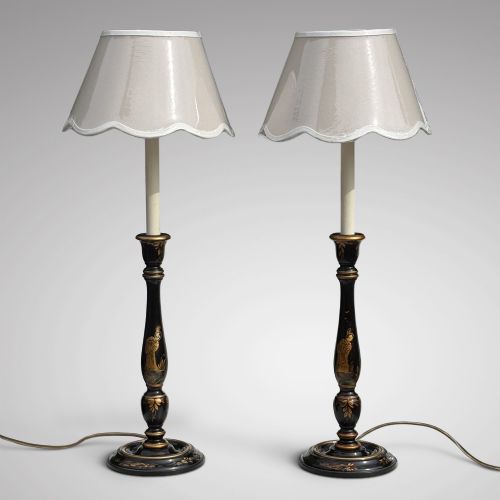
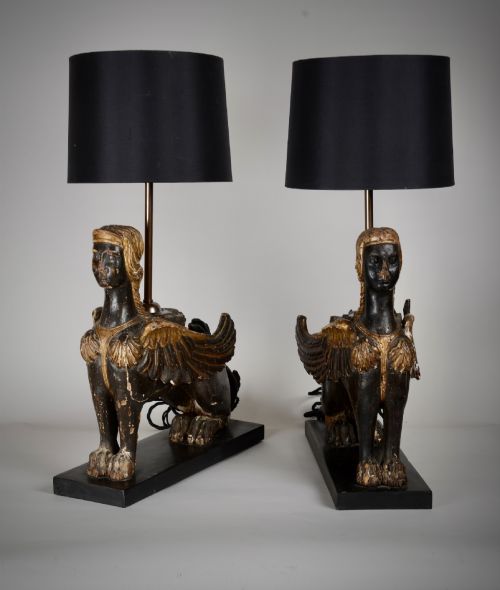
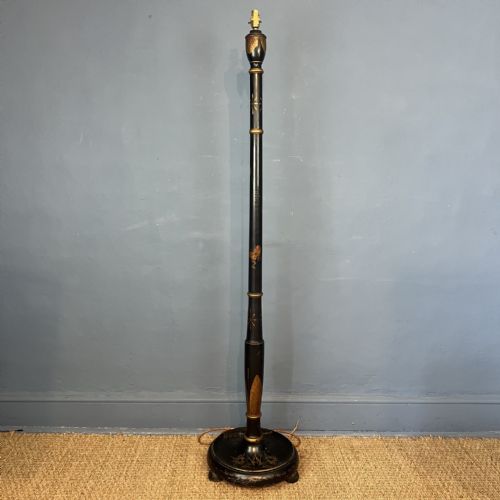
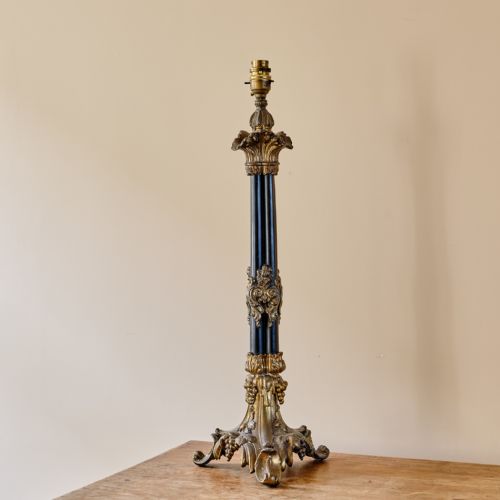
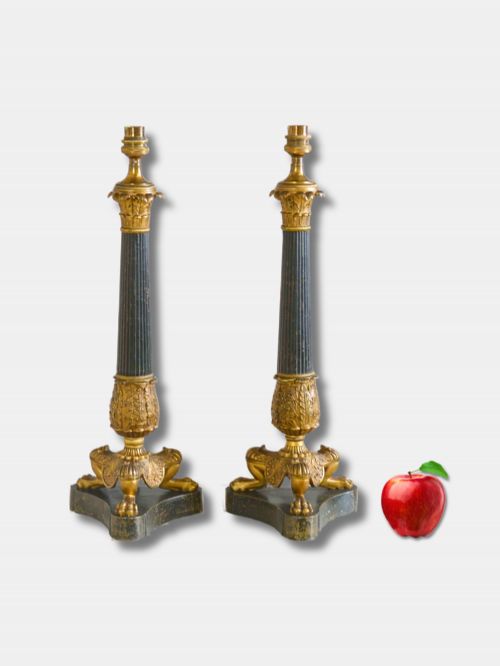
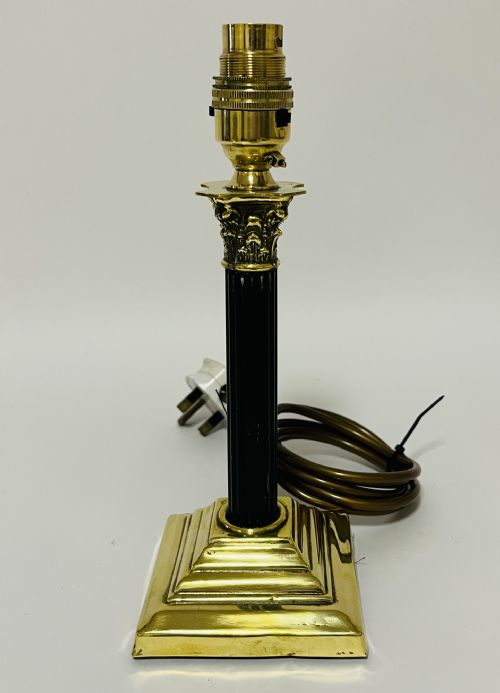
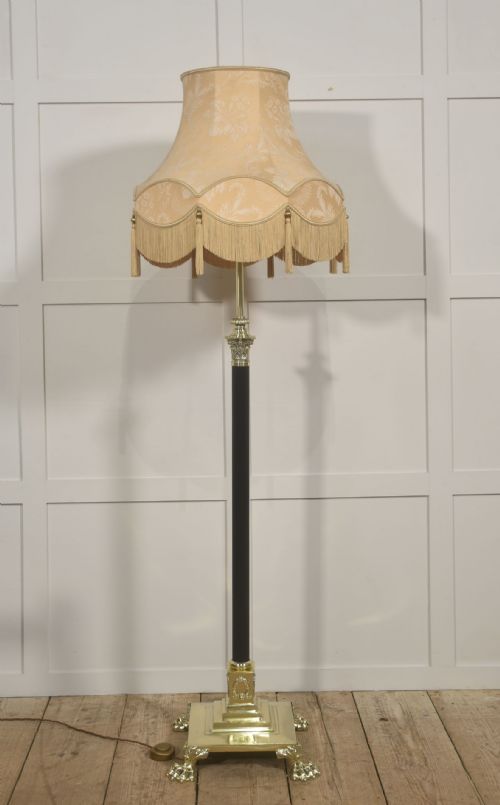
Black and gold lamps encompass a rich variety of lighting forms, ranging from towering floor-standing standards to compact table lamps and converted vessels. These pieces draw heavily on historical design vocabularies, frequently appearing in the records as Chinoiserie creations, neoclassical columns, and Empire styles. Collectors searching for black and gold lamps will encounter pieces that bridge several centuries of craftsmanship.
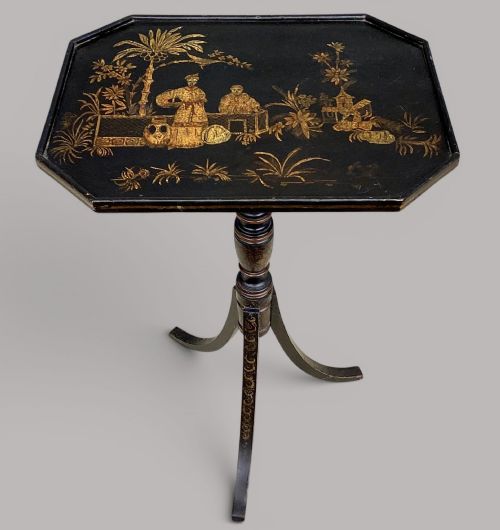
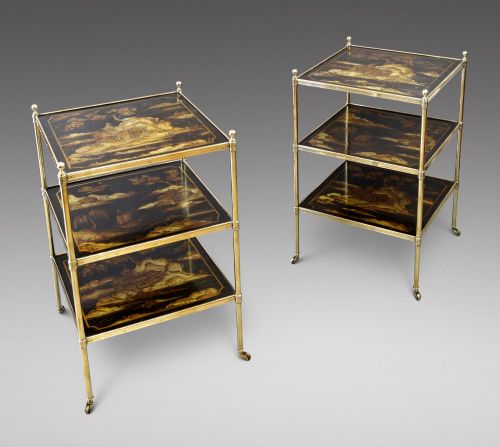
The selection leans heavily toward early twentieth-century interpretations, particularly the 1920s and 1930s, alongside nineteenth-century and Victorian examples. Alongside dedicated lighting, the listings reveal related furniture forms such as occasional tables and nests that share the same dark finishes and metallic highlights. This mix allows buyers to coordinate their lighting directly with matching surface tables.
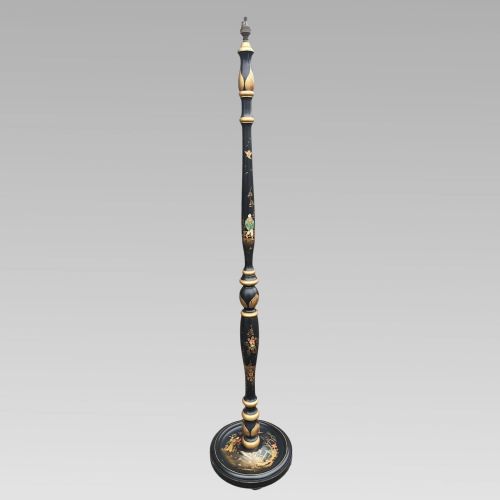
Chinoiserie remains a dominant aesthetic within this grouping, featuring hand-painted motifs on dark grounds that capture an eclectic historic taste. Neoclassical and Empire designs provide an alternative path through the material, utilising strict architectural orders and classical ornamentation. Each variation brings a distinct visual weight to an interior scheme, whether through slender column work or broad lacquer panels.
Materials and construction methods
Makers achieved the characteristic dark finish through the application of lacquer, ebonised wood, or black paint, often upon a base of solid timber or toleware. This dark ground served as a canvas for applied gold leaf, parcel gilt, or ormolu mounts, creating a high-contrast palette. Brass and gilt metal frequently appear alongside these painted surfaces, forming structural columns, feet, and decorative fittings.
The construction of these pieces often involves traditional cabinet-making and metal-foundry techniques appropriate to their respective periods. Wooden standards and table bases utilise turned and joined timbers, while metal elements rely on casting and chasing. The combination of lacquered surfaces with bright metallic accents required precise coordination between woodworkers and gilders.
Some nineteenth-century tea canisters found a second life as table lamps long after their tea-drinking days ended.
Distinctions in quality and execution
The distinction between standard examples and the finest pieces often rests upon the depth of the finish and the fidelity of the decorative work. Hand-painted Chinoiserie panels with intricate detailing and layered lacquer distinguish superior examples from simpler painted items. Similarly, heavy cast brass, genuine ormolu, and fire-gilt mounts demonstrate a higher level of material commitment than plated alternatives.
Proportion and architectural integrity also divide the range, particularly among neoclassical columns and Empire style standards. Pieces that maintain correct classical proportions and incorporate crisp, well-defined casting display greater workshop capability. The integration of functional elements, such as adjustable stems or secure weighted bases, further separates utilitarian output from superior decorative pieces.
The Black and Gold Lamps Glossary
- Chinoiserie
- A European decorative style influenced by Chinese artistic traditions, featuring hand-painted motifs on lacquered surfaces. It gained particular popularity during the eighteenth and early twentieth centuries.
- Toleware
- Enamelled or lacquered metalware, typically iron or steel, used to form durable lamp bodies and containers. The technique creates a smooth, dark surface suited to gilt decoration.
- Ormolu
- Finely chased and gilt bronze used for decorative mounts and fittings, highly characteristic of French Empire and neoclassical design. The technique involves applying a gold amalgam to a bronze base.
- Ebonised
- Timber that has been treated to resemble dense, dark ebony wood through staining or finishing. This process provides a uniform black ground for gilt highlights.
- Parcel Gilt
- A finishing technique where only specific portions of an object are highlighted with gold leaf or gilding. This creates a selective contrast against the primary painted or natural wood ground.
Black and Gold Lamps: Frequently Asked Questions
How do I date a black and gold lamp?
Dating relies primarily on stylistic clues, materials, and construction methods characteristic of specific eras like the Regency period or the 1920s. Examining wiring methods, base weights, and the application of lacquer can also provide helpful indicators of age.
Makers often drew on historical revivals, meaning an Edwardian piece might faithfully interpret an earlier eighteenth-century design. Comparing the decorative motifs and manufacturing techniques against known historical periods helps narrow down the timeframe.
Are these lamps suitable for daily use?
Most antique lamps function well for daily lighting, provided they have been safely rewired to meet modern electrical standards. Many examples feature standard bulb fittings that accommodate contemporary shades and LED bulbs.
Placing them on stable surfaces away from excessive moisture protects the delicate lacquer and gilt finishes. Routine dusting with a dry cloth keeps the dark surfaces and metallic details in good condition.
What is a standard lamp?
A standard lamp is a tall, free-standing lighting fixture designed to rest directly on the floor rather than on a table. These pieces often incorporate heavy weighted bases to ensure stability alongside their decorative columns.
In historical contexts, standard lamps served to illuminate specific corners or seating areas before overhead electric lighting became universal. Today they function as prominent vertical accents in a room.
How should I care for lacquered wood?
Lacquered surfaces require gentle handling to preserve the finish and any underlying gold decoration. Avoid using harsh chemical cleaners or abrasive cloths that could scratch the black ground.
Keeping the pieces out of direct, prolonged sunlight prevents the lacquer from fading or becoming brittle over time. A soft feather duster is usually sufficient for regular maintenance.