
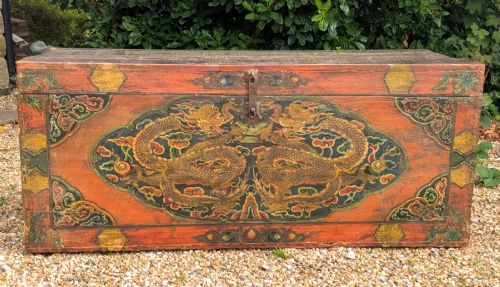
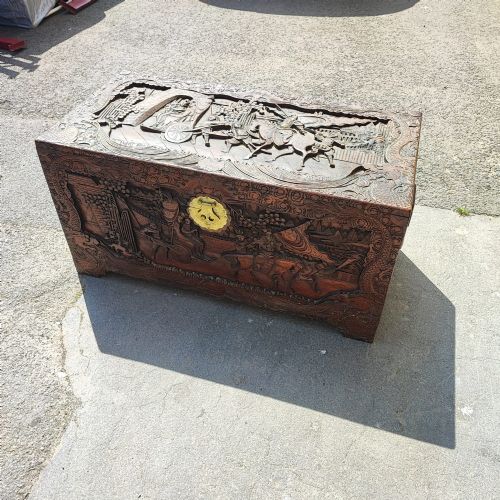
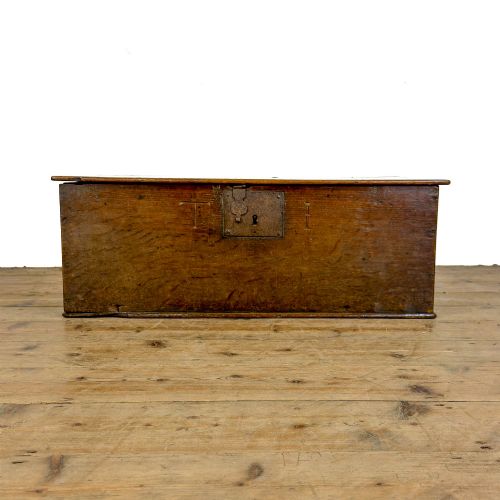
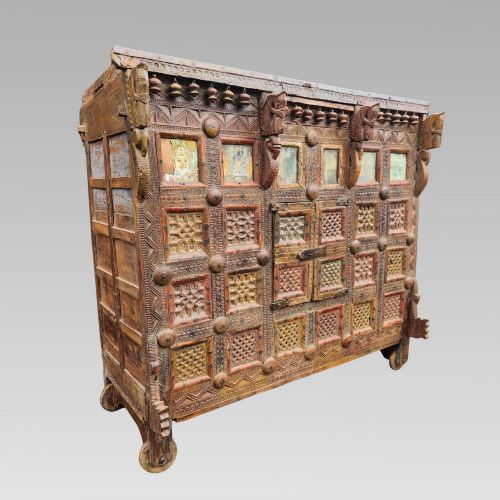


Hand Carved Storage Box
A hand carved storage box brings centuries of regional craft and timber into domestic life, offering a tactile receptacle for valuables and linens.
Hand Carved Storage Box
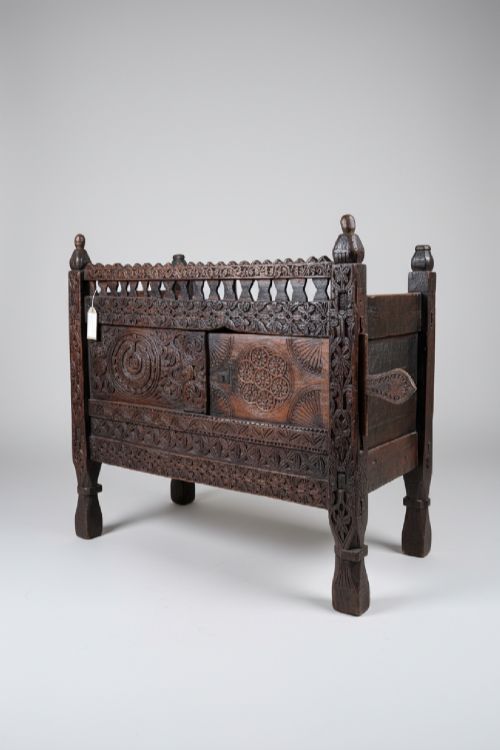
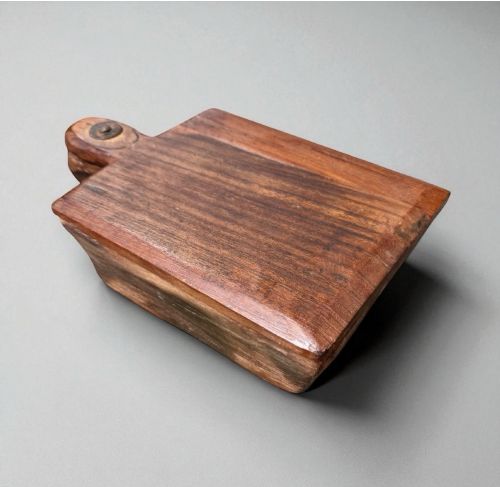
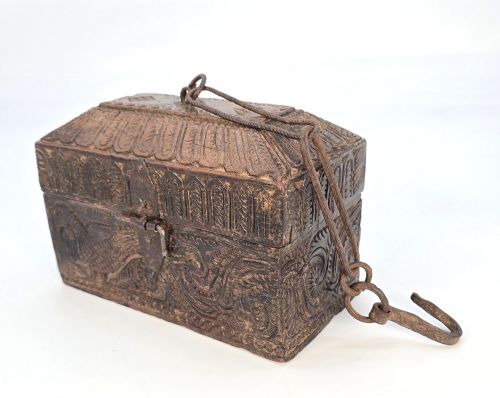
A hand carved storage box encompasses various utilitarian vessels, from small spice boxes and tea caddies to large camphor trunks, dowry chests, and oak bible boxes. The pieces on this page span the eighteenth, nineteenth, and twentieth centuries, originating from regions such as China, India, Spain, Italy, and Britain.
Buyers most frequently encounter oriental camphor wood chests and regional oak coffers alongside intricate Anglo-Indian and Chinese export boxes. Forms range widely between miniature trinket caskets and heavy marriage chests designed to store household textiles and valuables.
Each era brings distinct vernacular styles, including Arts and Crafts pollard oak coffers, tramp art boxes, and primitive shepherd coffers. The survival of these containers reflects their dual role as functional furniture and decorative focal points within historic interiors.
How they were made
Joiners and carvers utilised solid timbers such as oak, teak, camphor wood, padouk, sandalwood, and pine, shaping them with hand tools to construct rigid carcases and lidded boxes. Iron and brass hardware, including hinges, carrying handles, and latches, reinforced the heavier trunks and coffers.
Surface ornamentation relied on deep relief carving, turned elements, and applied mouldings, occasionally finished with paint, lacquer, or silver plating. Regional workshops employed traditional joinery techniques, such as pegged joints and dovetailing, to ensure the lids and panels withstood daily utility.
Secret drawers hidden inside heavy spice boxes offered an ingenious retreat for precious powders and tiny valuables.
What varies in quality
The distinction between standard utility items and finer examples rests on the depth and crispness of the hand carving and the selection of timber. Dense, figured woods like solid ebony or well-grained camphor and teak elevate the standing of a box compared to simpler pine or mixed-wood constructions.
Construction integrity, the survival of original brass or iron fittings, and the retention of interior partitions or drawers dictate the integrity of a piece. Finer regional boxes demonstrate superior command of proportion and decorative restraint, whereas coarser examples rely on simpler folk art execution.
Jack Grimble
The Hand Carved Storage Box Glossary
- Bible box
- A small lidded wooden chest historically utilised for holding sacred texts and documents. These pieces frequently feature carved friezes and sloping lids.
- Camphor wood
- An aromatic timber native to Asia, prized for insect-repellent properties and durability. It remains a primary material for storage trunks designed to protect textiles.
- Cassone
- A traditional large Italian marriage chest featuring elaborate paintwork or carving. Families commissioned these for domestic displays of wealth during nuptial ceremonies.
- Dowry chest
- A capacious container used to gather household goods for a bride. Examples appear in Indian, Spanish, and British traditions with distinct regional ornamentation.
- Tramp art
- A style of folk sculpture constructed from salvaged wood, often utilising chip-carving techniques. These boxes display layered geometric patterns built without metal fasteners.
Hand Carved Storage Box: Frequently Asked Questions
What were camphor trunks used for?
Camphor wood trunks provided secure storage for garments and blankets while deterring moths and insects with the natural aroma of the timber. Their sturdy construction also suited them for maritime transport.
Over generations, these chests transitioned from functional cargo holders into decorative domestic furniture used at the foot of beds or in living spaces.
How do you date an antique oak bible box?
Dating relies on examining the construction methods, tool marks, and style of carving on the oak panels. Eighteenth-century examples often feature pegged joinery and hand-carved friezes.
Interior fittings, such as small hidden drawers, also offer clues to the period of manufacture and the primary utility of the box.
Where were dowry chests placed?
Dowry chests occupied prominent positions within the main rooms of a household to display the accumulated wealth and linens of a family. They served as primary seating and storage.
In various cultural traditions, these large cabinets and coffers formed the centrepiece of domestic interiors before smaller chests became common.
What is tramp art?
Tramp art is a form of utilitarian folk craft where makers carved scrap wood into layered, geometric patterns using simple pocket knives. Boxes in this style display remarkable texture.
Originating in the nineteenth and early twentieth centuries, these pieces highlight individual resourcefulness rather than formal workshop production.